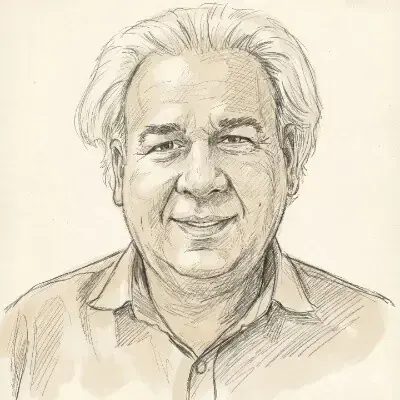
KARACHI: Despite the low attendance at the opening session of the Habib University Literature Festival titled Sareer-i-Khamah organised by the students of the university’s Araish-i-Khayal club on Friday, the young lovers of Urdu literature must be appreciated for the wholehearted effort that they put in to make the event possible. Also, it was thoughtful of them to pick Dr Nauman Naqvi as the keynote speaker who ably imparted the component of erudition to the daylong proceedings which is essential for such events.
Dr Naqvi, who is Assistant Professor Comparative Liberal Studies at Habib University, began his argument by claiming that literature and knowledge have a deep connection. Knowledge (ilm) cannot be communicated without [the use of] language. Since language has to do with communication between human beings, it inherently carries the element of morality or values (akhlaqiaat), which is also significantly related to literature.
Dr Naqvi said the young organisers had asked him to talk about the “need to overcome colonial legacies” in his address. In that regard he pointed out that colonialism had done us [the subcontinent] damage. Quoting a write-up of Munshi Premchand’s grandson that he chanced upon on Facebook, he said: “What does language have to do with religion?” This was the kind of thinking [of associating language with religion] that was transferred to us through the colonial educational system.
Similarly, racism entered the domain of knowledge. The scholar drew the attention of the audience towards how things are shaping up in India in terms of Hindu nationalism these days, arguing that the rise of fascism in India is “still the unfolding of the colonial period”. He underlined that colonial period is the most important period in our history, because it completely transformed the planet. He said nationalism inherited colonial ideology. Nationalism too cannot be understood without knowing colonialism. They are related to each other.
Dr Naqvi then shifted his focus to the title of the festival, Sareer-i-Khamah. The phrase is taken from Ghalib’s famous verse:
Aatey hain ghaib se yeh mazameen khayal mein
Ghalib sareer-i-khamah nawa-i-sarosh hai
[I receive these subjects for my poetry from the unseen Ghalib, the scratching sound of the pen is the call of angels]
He told the attendees that khamah is a [reed] pen which used to make a scratching sound on paper. That sound is called sareer. That pen had a certain ‘force’ which today’s ballpoints don’t have, because of which it sometimes tore the paper it was used on. Nawa-i-sarosh means the call of angels. Modern-day men would interpret the two lines as ‘inspiration’, a line of thinking that we have inherited from the romantic aesthetics of the 18th century. But, he cautioned, Ghalib is saying something else.
Dr Naqvi in order to make the students comprehend what the poet was trying to convey read an excerpt from the book What is Islam? — The Importance of Being Islamic by Shahab Ahmed. He argued that the ghaib is the world of meaning. “Can you see meaning?” he asked relating it to the unseen. “Meaning is literally in ghaib.” So the sound of the scratching pen points to the world of meaning, which literature is concerned with, he said.
Earlier, Asif Farrukhi, patron of the Araish-i-Khayal club, lauded the students for arranging such an event with great diligence. He said they saw a dream which came true on Friday. Connecting the dots as to how the festival became a reality, he first spoke about the kind of healthy literary activities that take place in classrooms and then highlighted that it was four years back that he joined Habib University; ever since a literature festival has been taking place.
President of Araish-i-Khayal Sara Khan briefly talked about the reason for putting up the fest and remarked that any knowledge or discipline that does not enable you to think about your prejudices is meaningless.
Yusra Afzal thanked the guests for coming to the event.
The festival had a pretty extensive programme in which various sessions were to be held simultaneously. They included sessions on topics such as ‘The pen is mightier than the swords — a discussion on literature and power’, ‘Urdu shaeri ke badalte rujhanat’ and ‘Urdu adab aur ghussey ki nai fasl’.
Published in Dawn, November 24th, 2019