‘Control population before it’s too late’
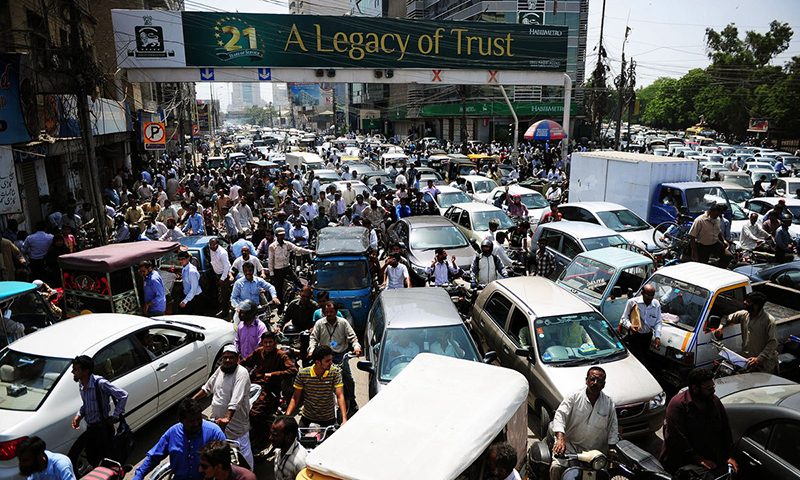

LAHORE: Speakers at a seminar on ‘Population Dynamics in Pakistan: Challenges and Opportunities’ at the Punjab University Institute of Social and Cultural Studies (PUISCS) said on Thursday unchecked population would not only hamper socio-economic development of the country but would also create certain issues beyond anyone’s control.
PUISCS Director Prof Dr Rubeena Zakar, Deputy Secretary of the Punjab Population Welfare Department Dr Ayesha Qureshi, Population Welfare Training Institute Principal Rukhsana Kausar, Assist Prof Rahla Rahat, faculty members and students were present.
Dr Rubeena said it would have far reaching consequences on development, environment, health and other relevant sectors in Pakistan if population growth remained uncontrolled.
She said investment on girl’s education was the best solution to reduce population growth in the country because of rapid increase in population, the next generation could face various challenges, such as unemployment, price hike, polluted environment, over-crowded urban areas, lack of natural resources etc.
She said the aim of the seminar was to sensitise students on population issues and small family norms and to mobilise them for raising awareness in their communities.
She said population issues were core concepts in teaching and research activities at the Institute of Social and Cultural Studies. Ms Kausar explained the salient features of the Punjab Population Policy of 2017 and informed the students about the crucial role of the Health Department in providing family planning services.
Also, PU Examinations Department has issued the schedule for submission of admission forms for BA/BSc Part-I and Part-II annual examination of 2020.
The last date for submission of admission forms for regular candidates of BA/BSc Part-II annual examination 2020 with a single fee is Dec 16, 2019, (by post) and Dec 23 (by hand) while forms can be submitted with a double fee till Dec 30 (by post) and Jan 6, 2020, (by hand).
Last date for submission of admission forms for late college/private candidates/improve division/additional subjects of BA/BSc Part-II annual examination of 2020 with a single fee is Oct 18 (by post) and Oct 24 (by hand) while forms can be submitted with a double fee till Nov 5 (by post) and Nov 8 (by hand).
Similarly, the last date for submission of admission forms for late college/private candidates having compartment in Part-I/improve division of BA/BSc Part-I annual examination 2020 with a single fee is Nov 8 (by post) and Nov 14 (by hand) while forms can be submitted with double fee till Nov 22 (by post) and Nov 26 (by hand).
Published in Dawn, October 4th, 2019