Germany seeks dialogue with country's 4.5 million Muslims


 19
19

The German government is reaching out to the country's 4.5 million Muslims by sitting down with community leaders, experts and imams to talk about improving their integration in the country.
German Interior Minister Horst Seehofer opened the “German Islam Conference” on Wednesday saying the dialogue with Germany's Muslims will tackle their “beliefs, convictions and traditions ... and how they can be put in line with the culture and values rooted in German society”.
Seehofer says training imams in Germany and ending financial support of mosques from abroad are two important goals.
He says the integration of the more than 1 million, mostly Muslim migrants who have arrived in Germany since 2015 needs to be improved and asked that the migrants contribute themselves by honoring Germany's basic values and learning the language.
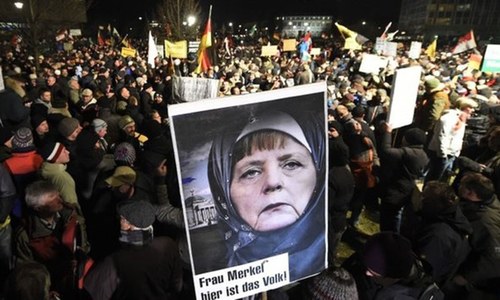
In March this year, the interior minister had declared that Islam is “not part of Germany”, setting off a political storm two days into Chancellor Angela Merkel's fourth term.
In an interview with Germany's top-selling Bild Daily, when asked whether Islam now belonged to the fabric of the nation, given the influx of Muslim migrants and asylum seekers over the past several decades, Seehofer had replied "no".
“Islam is not part of Germany. Christianity has shaped Germany including Sunday as a day of rest, church holidays, and rituals such as Easter, Pentecost and Christmas,” he had said.
“The Muslims who live among us are naturally part of Germany. But that of course does not mean that we, out of a false sense of deference, should sacrifice our traditions and customs.”
Merkel quickly contradicted her minister saying that despite Germany’s Judeo-Christian roots, more than four million Muslims now made their homes in the country.
“These Muslims are part of Germany and with them, their religion, Islam, is just as much a part of Germany,” she had told reporters.
Most of Germany’s Muslims are descendants of Turkish so-called “guest workers” invited to Germany in the 1960s and 1970s.
The community grew again when Merkel in 2015 opened the border to more than one million asylum seekers from war-torn Muslim-majority countries such as Syria, Iraq and Afghanistan.