WASHINGTON: A top US general has dispelled the impression that the United States and Pakistan were on a collision course, saying they valued the military-to-military relationship with Pakistan.
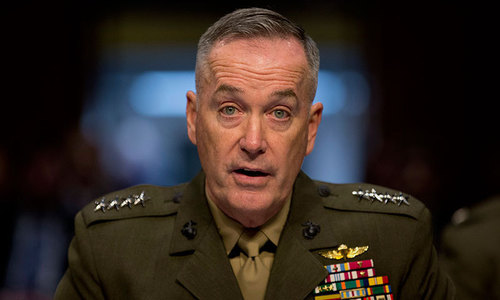
Gen Joseph Votel — who as head of the Central Command is responsible for all US military operations in the Pakistan-Afghan region — told a congressional panel on Tuesday that the US had preserved the valuable military-to-military relationship with Pakistan and attempted to increase transparency and communication with military leaders.
In doing so, the US continues to press its serious concerns about Pakistan’s alleged provision of sanctuary and support to militant and terrorist groups that target US personnel and interests, he added.
“Achieving long-term stability in Afghanistan and defeating the insurgency will be difficult without Pakistan’s support and assistance,” said Gen Votel while explaining why he believed maintaining this military-to-military relationship was important.
The US commander pointed out that the military had recently seen some “positive indicators” from Pakistan, which led to believe that Islamabad was becoming more responsive to US concerns about alleged militant safe havens in the country.
“Recently, we have started to see an increase in communication, information sharing, and actions on the ground in response to our specific requests — these are positive indicators,” Gen Votel told the House Armed Services Committee.
However, he said, Pakistan had not yet made a strategic shift, which could satisfy Washington. “Ongoing national counterterrorism efforts against anti-Pakistan militants throughout the country have not yet translated into the definitive actions we require Pakistan to take against Afghan Taliban or Haqqani leaders,” he added.
Gen Votel also told the committee that the “enduring tension between the nuclear powers of India and Pakistan remains unreconciled” and militants operating out of remote areas in Pakistan continue to threaten Afghanistan and India.
He said the Afghan problem was “compounded by increasing cross-border terrorist attacks and fires between Pakistan and Afghanistan,” which hinders both countries’ abilities to coordinate on border security.
Published in Dawn, March 1st, 2018