‘A book should have a market’


KARACHI: The Endowment Fund Trust (EFT) for Preservation of the Heritage of Sindh’s literature awards (2012-2016) were given on Saturday at the National Museum of Pakistan at a well-attended ceremony.
The awards for Creative Literature (Sindhi) went to Imdad Hussaini for his work Keethe Jharo Pal and Fazlullah Qureshi for Kujh Yadun Kujh Gaalhion.
Ustad Amir Ali Khan and Dr Fahmida Hussain won the two awards in the category Research (Sindhi) for Shah Jo Raag and Idiyon Aa’aon Athjaan, respectively. In the category of Research on Sindh (English) M. Salahuddin Qureshi got the award for Sindh: A Time Capsule of Heritage and Nasir Aijaz for Hur: The Freedom Fighter. The awards were given away by writer Amar Jaleel, CEO Dawn Media Group Hameed Haroon and Shams Memon.
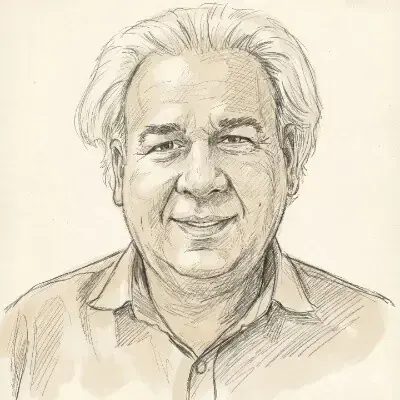
The final award of the evening was the Lifetime Achievement award for distinguished columnist and writer Amar Jaleel. He received it from his daughter Anam and Mr Haroon.
The second part of the event was a section titled An Evening with Amar Jaleel — Neth Goonge Galhayo! (Thus Spake the Dumb). Giving his impression of Amar Jaleel, Secretary EFT Hamid Akhund mentioned three aspects of the author’s life and work. The first was that he was a loner, introvert; the second was to do with the fact that he was an individual who wanted to write; and the third was the facet of his personality where people read his works and analysed them.
The introduction was followed by a question and answer session. Mr Haroon started off the conversation by referring to Saadat Hasan Manto’s short story ‘Toba Tek Singh’ that focused on lunatics. Mr Jaleel said: “We are sailing in the same boat” and did not know whether we were lunatics or the place we lived in was an asylum. The second question put to the writer was about the position of the genre of the short story in South Asian literary tradition.
He replied that the short story was a major genre in our part of the world. Apart from Krishan Chander, who wrote a number of novels and short stories, no other writer wrote novels in a big number. The short story was an effective way to communicate with people. In the context of the national language Urdu, he pointed out, there wasn’t a single magazine purely dedicated to literature. Today we didn’t have the readership that Saadat Hasan Manto or Krishan Chander had.
In a country of 200 million people, a writer published merely 1,000 copies, half of which he distributed himself for free. “A book must be sold, it must have a market,” he said.
In response to the query about the role of a short story writer in the age of social media, Mr Jaleel said writers should have the ability to condense their language.
Writer Asif Farrukhi also put a question to the eminent writer. Against the backdrop of the Manto story touched upon earlier he asked “Where is Pakistan?” and Mr Jaleel retorted, “Talash jari hai” (the search is on).
Mehtab Rashdi read out very moving excerpts from Mr Jaleel’s columns. She also said that it’s after reading his stories and columns that she was able to comprehend life and its issues. Replying to her question about his fascination with history and historic places, he said: “There is something indescribable between me and Taxila.”
After that Mr Jaleel read out a short story which he had especially penned for the occasion. Once the reading was done, another round of questions and answers began. Answering the question “why do you write?” the author said, “Because I can’t do anything else.” To another query about the impact of his stories, he said Pakistan wasn’t a Western country, and it was false to suggest that we had 54 per cent literacy rate.
Saleem Memon conducted the event.
Published in Dawn, August 20th, 2017