6
6


ISLAMABAD: The transgender community has welcomed the government’s decision to issue its first passport with a transgender category as an important milestone in the struggle against discrimination.
The government issued a passport last week to transgender activist Farzana Jan with an X to symbolise the “third sex” printed under the gender category of travel document.
Jan, who is president of the charity Trans Action Pakistan, said the introduction of the X classification — along with M for Male and F for Female — was a significant step in the community’s fight for legal recognition. “Men and women both have been given their identity, but we were deprived of this right. We are happy there is a growing realisation that we should be given our identity,” Jan said in a phone talk with the Thomson Reuters Foundation.
“We also want to see how the outside world is. But we have been facing many problems with regard to complications in our travel documents. But, thank God, this issue has now been resolved,” she said.
There is no official data on the number of transgender people in the country, but Trans Action Pakistan estimates they number at least half a million.
Transgender people technically enjoy better rights in Pakistan than in many other nations across the world, but in practice they are marginalised and face discrimination when it comes to health, education and jobs. They often face violence and stigma.
The Supreme Court has in recent years taken steps towards recognition of their basic rights. In 2009, the court ruled that “hijras” — which include transvestites, transsexuals and eunuchs — could get national identity cards as a “third sex”.
Since then it has also declared equal rights for transgender people, including the right to inherit property and assets, the right to vote and to be counted as a separate category in the census.
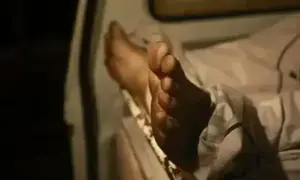
Last year there was a spate of attacks on transgender people in Khyber Pakhtunkhwa. After one attack, an activist died in hospital after being shot multiple times by a friend. Her friends accused the hospital of delays in her treatment, with staff unsure whether to admit her to a male or female ward.
“The main challenge for us is to change society’s behaviour,” Jan said. “We have largely been confined to the four walls of our houses because we are harassed, terrorised and ridiculed by the people.”
Published in Dawn, June 29th, 2017