13
13


AS the Soviet Union disintegrated in front of his very eyes, its last leader Mikhail Gorbachev uttered quite possibly the most prescient words of his entire political life: the demise of global communism would deprive the United States of its most visible enemy, the artefact justifying its imperialist adventures around the world. Gorbachev understood that Washington would have to devise a new ideological ‘other’ to retain a mandate to intervene whenever and wherever it wanted.
More than a quarter of a century later, one would have to be living under a rock to be unaware that ‘terrorism’ has become the great ‘other’ of the self-proclaimed ‘free world’ (read: the US-dominated world order). The same American-led ‘free world’ that once decried communism as the antithesis of human civilisation. Gorbachev’s warning was heeded, and how.
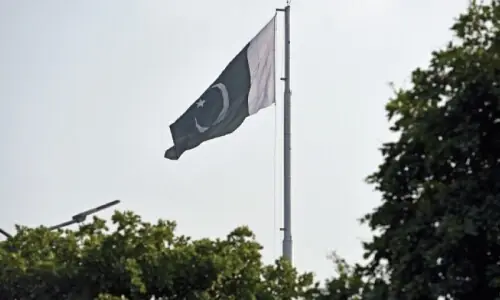
We Pakistanis were part of the anti-communist bandwagon then, just like we are part of the anti-terrorist bandwagon now. The irony of history is that at least some of the same proxies that we cultivated to wage holy war against the Soviet Union metamorphosed into terrorists that we want to hunt down now.
‘Terrorism’ is one of the vaguest terms of our time.
Which begs the question: what is ‘terrorism’? Given how ubiquitous the word has become in our daily lives, one would expect a great deal of clarity in our collective understanding of it. In fact, it is one of the vaguest terms of our time. On the surface it can be equated with the use of egregious violence to achieve political ends. But by this definition the state is by far the biggest terrorist force in history.
Cue Max Weber, who defines the state as an entity that enjoys a monopoly over legitimate violence. The implication is that the state is authorised to employ violent means against those it ostensibly serves. Non-state actors who resort to violence to achieve political ends have no claim to legitimacy whatsoever. In theory, the state either uses violence in avowed wars with other states, or against non-state actors that are challenging the state’s monopoly over coercion.
All of this is well and good, but things become more complicated when one reads between the lines. The US president Dwight D. Eisenhower openly admitted the collusion of his country’s military with the munitions industry in his farewell address of 1961, thus acknowledging the possibility that what he called the military-industrial complex could wage endless war as a means of securing endless profits.
You might argue that the notional citizen is now too informed to support mindless violence just because it serves the interests of businessmen, generals and other elites. But in recent decades we have seen time and again just how the powers-that-be, to borrow Noam Chomsky’s words, ‘manufacture consent’ for wars and the like that are based on exaggerated threats to civilisation that do not actually exist.
Take, for instance, the notorious ‘weapons of mass destruction’ drama that precipitated the invasion and occupation of Iraq. Or the various interventions undertaken by Washington and other Western powers in other Arab states like Libya and Syria. Are these countries rid of the ‘terrorist’ menace that these barely disguised imperialist adventures promised to eliminate? No matter how many ‘victories’ are won, ‘terrorism’ is never defeated.
Closer to home, it has now been 15 years since the Pakistani state initiated its own ‘war on terror’, and it is debatable whether any substantive gains have been made in weakening the material and ideological infrastructure that sustains right-wing militancy. Until a few weeks ago, the mood was relatively self-congratulatory, statements emanating from all quarters about the breaking of the terrorists’ proverbial backs.
The gruesome events of recent days have, however, confirmed again that the so-called ‘existential war’ will continue for some time yet, now under its latest guise of Operation Raddul Fasaad. Military courts are likely to be revived and more defence equipment bought. Media anchors, the pro-establishment intelligentsia and notable elements within political parties will continue to manufacture consent. And the show will go on.
What was once an endless war against communism did one day end, but that end was signalled by the demise of a state system with the USSR at its forefront. The bogeyman that is ‘terrorism’ is likely to last for much longer, precisely because it is so nebulous.
There is little doubt that right-wing militancy is amongst the biggest threats of our time, and there is an urgent need to think deeply about its causes and manifestations. But then that is what some of us were saying back in the day when today’s terrorists were defenders of the faith fighting with the rest of the ‘free world’ against communism.
As it was then, so now it is the blank slate that we provide to the state in the name of security that is as big a threat to our humanity as anything else that we confront.
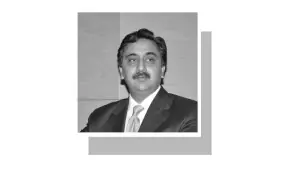
The writer teaches at Quaid-i-Azam University, Islamabad.
Published in Dawn, February 24th, 2017