OVER the years, I have often been asked by Pakistani friends about the power of lobbies and interest groups in Washington. I find everyone from the top policymakers down to average observers of US-Pakistan ties convinced that lobbying shapes agendas and choices of those who matter in Washington.
In response, I have urged a more nuanced view of the lobbying enterprise. Always trumping the magic of lobbyists are the US’s interests with a particular country. Lobbying tends to have a bit of a circular relationship with these interests: if US interests with a country are perceived as important and convergent, lobbying can play an important role in creating and cementing its positive perception. If interests don’t align, negative voices tend to gain more traction. Lobbying can then only play on the margins. It cannot fundamentally alter the tenor of the discourse about the country.
Take Saudi Arabia: despite being one of the most proactive players in the lobbying space, it has seen an unprecedented, bipartisan vote on Capitol Hill that has overridden an Obama veto and allowed Americans to sue it for its alleged connection to 9/11.
Pakistan’s challenge in Washington is also one of interests, not lobbying. Never before have I seen US-Pakistan interests diverge more than they do now. Even in 1990, when ties broke down completely, the divergence was on a single-point agenda of the nuclear programme. Today, the two sides have multiple nodes to fix, most interconnected in ways that make this task daunting.
Pakistan’s challenge in Washington is one of interests, not lobbying.
Start with India whose stock in Washington has risen exponentially over the past decade. The US priority for India is real. Barring unforeseen events, it is here to stay for the foreseeable future.
Pakistan’s best bet is to continue working out a relationship with the US on its own terms, irrespective of India. The US made this approach its policy after 9/11; Pakistan desisted but then came around. The problem is that the current mood in India leaves no space for a non-zero-sum equation.
India’s signal to Pakistan is clear: it is going to play hardball on all fronts, including an explicit effort to isolate it internationally. If so, any US propensity to entertain India and Pakistan individually, each in their own right, will directly undercut this Indian effort. It will try to keep a balance, but negative developments in Pak-India ties will make it harder for this US policy to stick. Based on my explanation of how lobbying works, if it comes to choosing, Pakistan will lose out further in terms of narratives in Washington.
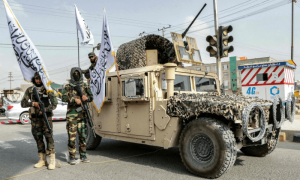
There is another angle. Recognising the impermissibility of major conflict under a nuclear overhang, experts are increasingly projecting that if Modi is serious about his hard-nosed approach, he will be led to actively contest the covert warfare space with Pakistan. Indian officials have hinted at this. In today’s regional environment, and seeing how the lines are being drawn on Afghanistan, it will be naïve to expect this competition not to spill over into Afghanistan. If this escalates into an active proxy war between the two on Afghan soil, it will challenge US interests there further. With Pakistan already reviled on the Afghanistan count in Washington, and India seen as a positive force, views on Pakistan will likely harden further.
CPEC is another complicating factor. As the US and Pakistan see growing divergences on issues like India and Afghanistan, Pakistan will feel compelled to lean even more on China. The US will slip further into its nothing-to-lose outlook when it comes to Pakistan’s Afghan policy and ratchet up more pressure on Pakistan to alter its choices in Afghanistan. The gap in approach will only grow.
Finally, the world’s lens on the nuclear project continues to be guided mainly by the perceived dangers of Pakistan’s arsenal falling into the wrong hands or of inadvertent use during a crisis with India. The growing conventional disparity between India and Pakistan will increase the latter’s reliance on its nuclear capability. The greater India’s success in getting US support for its military modernisation and isolating Pakistan internationally, the more dependent the latter will be seen as becoming on its nuclear programme. Again, US-Pakistan positions will continue to diverge.
Neither US nor Pakistani policymakers want ruptured ties. Yet, as one projects geopolitics and regional relations in South Asia, it becomes clear that their angst, and in turn negative perceptions of the other, are likely to grow further.
The Foreign Office recently turned to a professional lobbyist to boost Pakistan’s stock in Washington. It won’t work. At least not until the US and Pakistan can work out how to keep relations going despite divergences on virtually every issue they care about.
The writer is a foreign policy expert based in Washington, DC.
Published in Dawn October 4th, 2016