6
6

MORE than a month after most other countries in the world lifted sanctions against Iran, Pakistan has finally followed suit. It is a welcome step, even if it appears to have been reluctantly taken and has come rather late. As a contiguous neighbour, Pakistan ought to have moved faster and deeper down the road to restoring normal economic ties with Iran than most other countries. This is especially true given the natural complementarities between the economies of the two countries. Iran has a surplus of energy but is food deficient, while Pakistan is food secure but energy deficient. Nevertheless, the fact that our own raft of sanctions, mostly issued through the Foreign Office, has now been lifted has cleared the way for parties on both sides to start re-engaging with one another. And this is precisely the point where the road towards the resumption of normal economic ties comes into view before us.
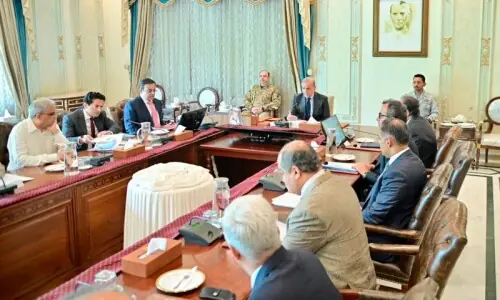
That road, it is becoming increasingly clear, is longer than what most might envisage. Even the act of lifting our own sanctions against Iran proved slightly more complex than imagined. The step was undertaken on prodding from the Iranian side during the prime minister’s visit to Tehran last month, at the time the UN Security Council endorsed the nuclear deal through Resolution 2231. The language of the draft notification issued by the Foreign Office to lift Pakistan’s sanctions then had to be vetted by various stakeholders within the government, such as the ministries of defence and law and the State Bank. This process could have begun sooner, considering that the IAEA had confirmed Iran’s compliance with the terms of the nuclear deal as early as Dec 2, 2015.
Now that the lifting of the sanctions has been notified by the Foreign Office, the hard part of actually rebuilding economic ties can commence. No further legal obstacles stand in the way of private-sector parties to start engaging with the neighbouring economy, but significant logistical obstacles still remain. Banks need to build counterparty arrangements with Iranian banks so LCs can be processed, the road linkages need to be upgraded significantly to handle the clearing of containerised cargoes, and a clientele needs to be developed by traders on either side of the border. A visa regime needs to be developed that will facilitate a growing and thriving trade relationship through easier visa rules and by enhancing people-to-people contact. In time, air and rail links must be expeditiously built as well. The road to a $5bn trade relationship is still a long one, and much work remains to be done. The private sector can be counted on to step up to the opportunities that will come its way, but at the moment it is the government that must shed the impression that it is being dragged reluctantly to the finish line.
Published in Dawn, February 21st, 2016