

IN the long, convoluted history of the Pakistani state banning militant groups, the present episode may be the most mysterious: a US government spokesperson has publicly and explicitly welcomed a decision by Pakistan to ban several more militant groups, even though absolutely no one in government here has made any such announcement.
If US State Department Deputy Spokesperson Marie Harf’s assertion in a news briefing on Friday proves true — “We welcome [the decision] to outlaw the Haqqani network, Jamaatud Dawa, and I think about 10 other organisations linked to violent extremism,” Ms Harf is quoted as saying — it would demonstrate that the bad old days of Pakistani leaders treating external powers as more relevant and important in matters of national security than, say, the Pakistani public or parliament have never really gone away.
Know more: US praises ban on Haqqanis
Even more problematically, the latest move — if, indeed, it is announced soon, as Ms Harf has claimed it will be — would bolster the perception that Pakistan is fighting militancy at the behest of others, especially the US, and not because this is a war that this country must fight and win for its own survival.
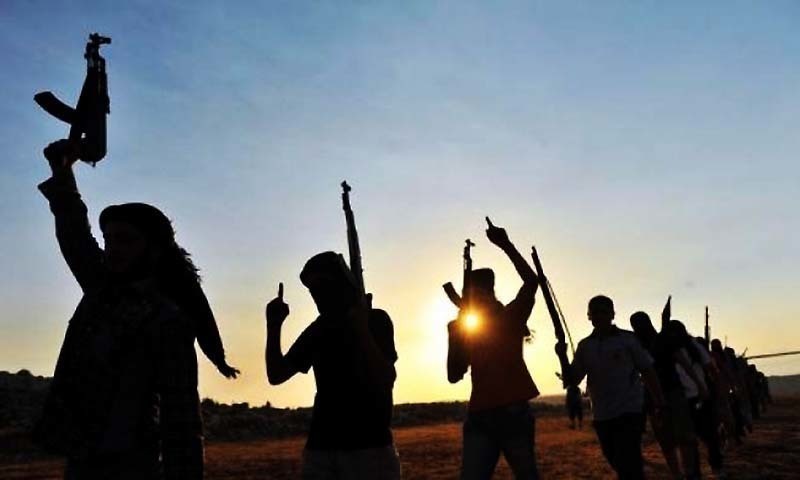
There is no doubt that the Pakistani state needs to do more against a much wider spectrum of militant and extremist groups operating its soil.
Focusing on simply the so-called anti-Pakistan militant networks such as the TTP will only produce medium-term results, perhaps, but guarantees long-term failure in the fight against militancy. This is both because of the overlapping nature of militant groups — operational, strategic and ideological — and because a long-term future where the state is in competition with militias for predominance inside Pakistan is not a future that ought to be acceptable to anyone in this country.
Also read: A paradigm shift?
So yes, the Haqqani network needs to be banned as does the Jamaatud Dawa and sundry more names that may come to light soon. But without a zero-tolerance policy against militancy, there will be no winning strategy.
Zero tolerance certainly does not mean simply military operations and heavy-handed counterterrorism measures in the urban areas; what it does suggest is a commitment to progressively disarm and dismantle militant groups and the wider extremist network that enables those groups to survive and thrive.
Of course, simply banning more groups will not mean much unless the previous bans are implemented, the new bans cover all incarnations of a militant group, and there are sustained efforts by the law-enforcement and intelligence apparatus to ensure banned organisations do not quietly regroup once the initial focus fades. That has never happened before.
And the present is even more complicated. What will a ban on the Haqqani network mean in practice given that the major sanctuary in North Waziristan has already been disrupted by Operation Zarb-e-Azb? What will banning the JuD mean for the Falahi Insaniyat Foundation? Will the government offer answers — to anything?
Published in Dawn, January 19th, 2015
On a mobile phone? Get the Dawn Mobile App: Apple Store | Google Play