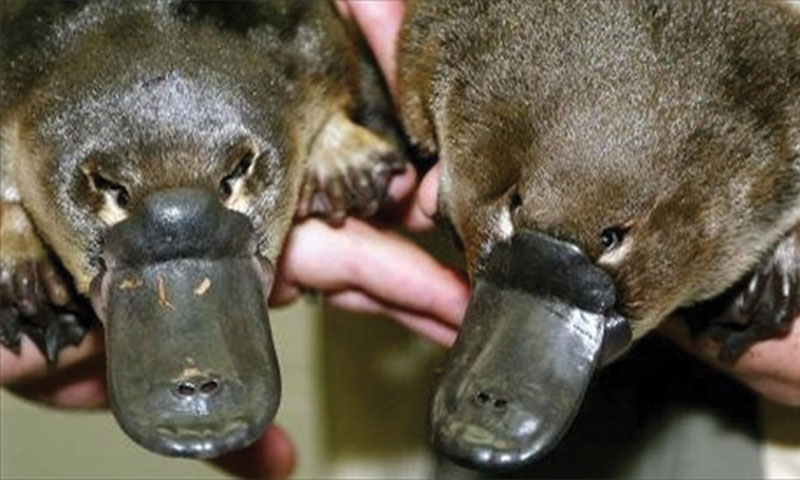

A GIANT extinct species of the platypus with powerful teeth has been discovered in Australia, with a scientist on Tuesday describing the duck-billed water animal as a Godzilla-like monster. The new species, named Obdurodon tharalkooschild, was identified by a single but highly distinctive tooth found in the Riversleigh site in the north-eastern Australian state of Queensland, a World Heritage area rich in fossil deposits. “We’d never seen anything this big, so it really knocked our socks off to think that platypus could get this big,” said Professor Mike Archer from the University of New South Wales, who described the animal as about twice the size of its modern relative. “Platypus Godzilla.” The modern platypus, a timid and nocturnal animal which lives in deep waterside burrows and is found only in eastern Australia, lacks any teeth as an adult. Scientists do not believe the newly discovered extinct species was an immediate ancestor. Archer said the extinct version would have been “positively dangerous” and turns on its head the idea of the creature as small, furry and “cute”. “We already know that the modern platypus has venom on the spurs of the hind leg that can be incredibly painful, that can stop a grown man in his tracks for hours,” said Archer. “If you scale that up to perhaps two to three times the amount of venom in an animal much larger than that, you suddenly start thinking about this animal as a predator.” Scientists had thought that the platypus, which combines bird, mammal and reptile characteristics, had gradually lost its teeth and become smaller over millions of years. But the latest find contradicts that theory because it is much bigger than older, toothed incarnations of the mysterious monotreme. Archer said he was confident that the single tooth, which was discovered by Rebecca Pian, a Ph.D candidate at Columbia University in the United States, was sufficient evidence of a new species. The tooth proved it was a platypus, and it was very different from any other toothed platypus seen. The extinct species is believed to have been a mostly aquatic animal like its modern descendant and would have lived in and around freshwater pools in the forests that covered the Riversleigh area millions of years ago. It probably fed on crayfish and other freshwater crustaceans, as well as small vertebrates such as frogs and turtles, said Suzanne Hand of UNSW's School of Biological Earth and Environmental Sciences. The find indicates that where there could have once have been more kinds of platypus, these have now vanished. — AFP