Growing up is not as simple as you think. One day, you may feel confident and the next, even the smallest thing might feel overwhelming. Tests, friendships, changes at home, sports competitions, or even scrolling through social media can make you uncomfortable.
You may not know why, but you feel uneasy and nothing makes you as happy as it should. So you wonder if you are okay… this feeling has a name and that name is anxiety.
With growing technology and social media, millions of young people around the world are feeling this way. Generation Z is often considered the most connected in history due to digitalisation, yet also one of the most anxious.
But anxiety does not have to control you; it is you who has the power to manage it. In fact, you can learn to understand it and grow stronger through it. The key ingredients are consistency and perseverance.
From school stress to social pressure, anxiety can affect anyone. Learn what it means, why it happens and how small habits can help you feel more in control
Why anxiety happens
Anxiety is like your brain’s built-in alarm system. It rings loudly whenever it perceives danger. If you are crossing the road and suddenly a car comes racing towards you, your mind prompts you to react instantly. Your heartbeat races, muscles stiffen and your body responds.
At times, the brain’s alarm may also shut down, leaving you feeling numb. Sometimes, routine situations like an exam, a declamation, a class presentation, or even a casual meeting may feel like “end-of-the-world” issues, even when they are not. This can lead to unnecessary distress. The body may react in ways you do not want, such as shivering, sweating or stomach aches.
Famous Roman Stoic philosopher Seneca explained this as, “We suffer more often in imagination than in reality.”
Anxiety feels different to everyone
Anxiety is not the same for everyone. The signs vary from person to person, as every individual develops mentally and physically at their own pace and through different experiences. These signals are not something to fear; they are your body and mind asking for care and attention.
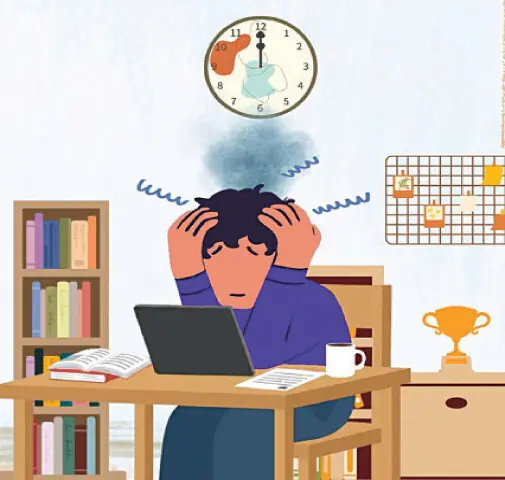
Some may experience sweaty palms, a racing heart, nausea, headaches or stomach aches, while others struggle with constant thoughts they cannot control. Your mind may fill with “what ifs” and worst-case scenarios, leading to poor concentration, fear of the future and avoidance of situations.
Mood swings may show up as irritability, frustration, sudden sadness or nervousness. Actions may include avoiding school, skipping activities, staying away from people, or making excuses to escape certain situations. In all such cases, conscious effort is needed to deal with anxiety.
Small steps that help
Here are simple and practical ways to deal with anxiety patterns. You can try on your own, but remember not to miss out on the two main components at every step: ‘consistency’ and ‘perseverance.’
Meditation helps
When you have anxiety, find a quiet space, close your eyes, practice inhaling through your nose for a few seconds, hold for a while and then exhale through your mouth. Gradually increase the duration. This helps relax the body and mind and encourages calm, positive thoughts.
Express it, do not fight it
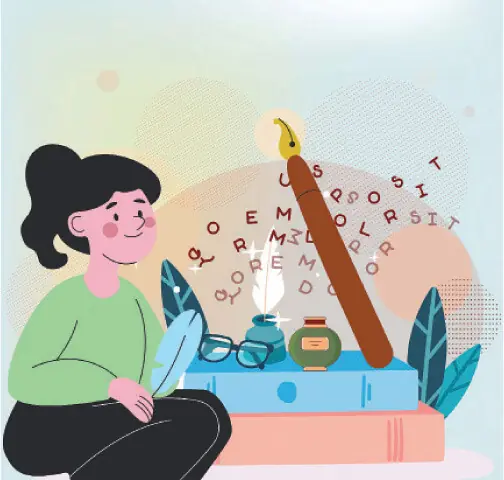
Writing can help you process your thoughts. When you feel anxious, write down your worries. You can scribble, draw, sketch or list your fears. Seeing them on paper makes them feel less overwhelming and gives you space to deal with them. You will notice your mind feeling lighter.
Repeating affirmations
It is a well-known fact that repetition ultimately leads your mind to accept what is being repeated. Therefore, replace negative thoughts with encouraging and positive ones, especially before sleeping or after waking up.
You can stand in front of a mirror and say, “I can do it,” “I am confident,” “I respect myself,” “I can face my fears,” “I am grateful,” “I have to take care of my mind and my body,” and “I do not give up.”
You can also create small notes and place them where you can see them often, as reminders to stay positive.
Feel-good habits
Run, jog, play, dance, stretch and laugh often. These simple movements may seem trivial, but they have a great impact on our health. When you move, your brain releases special chemicals called endorphins, nicknamed the ‘feel-good hormones.’ They make your mood better, lower your stress level, and help you to feel stronger from the inside out. These activities keep you physically active and help you to reduce your anxiety level.
Do not bottle up your feelings
Talk to a trustworthy person, maybe a parent, mentor, grandparent, a school counsellor, teacher, sibling, uncle, aunt or your best friend. Pressure of anxiety is much crushing when kept inside, but it does get relieved if shared with a trustworthy person.
Fuel your body well
What we eat has a direct impact on our health, and therefore, one of the simplest ways to feel relaxed during anxiety episodes is by taking care of our bodies through healthy eating patterns. Having a balanced diet which includes beans, fruits, vegetables, lentils, nuts and fish is necessary. Too much sugar, soft drinks or junk food can make you feel jittery and lethargic, leading to increased anxious behaviour. Just like a car runs best on good fuel, your body and brain work best when you eat healthy foods.
Rest and reset
Another tool to take control over anxiety is to sleep well because it is your body’s natural reset clock. During sleep, the mind gets time to rest and process emotions, reviving the defence mechanism to face and handle anxiety. Lack of sleep increases irritability, loss of concentration, your thoughts may race, your emotions may become dominant over you, and tiny problems may seem much bigger than they actually are. A good night’s sleep boosts energy level, helps you feel more patient, alert and focused. It supports emotional regulation at various moments of the day.
Anxiety is a signal that your body and mind need care. Taking care of yourself is a strength and it helps you face the challenges that are part of life.
Published in Dawn, Young World, May 2nd, 2026