0
0

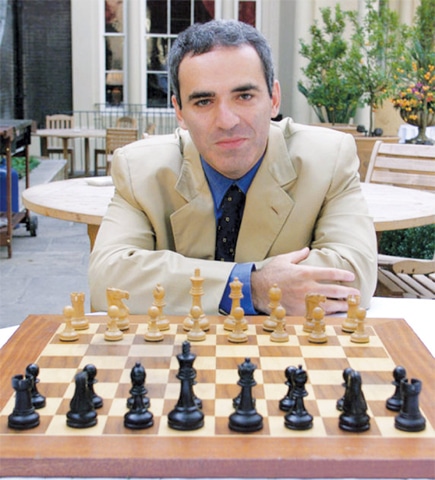
PARIS: US chess champion Bobby Fischer and the two ‘K’s — Garry Kasparov and Anatoli Karpov — have co-written the modern history of the game, with a chapter devoted to East-West confrontation.
In the 1970s and 80s, the un-telegenic, cerebral game came alive to capture headlines and become an instrument of Cold War diplomacy.
Fisher, who died in 2008 at the age of 64, was an aggressive player said to have an IQ higher than that of Albert Einstein.
He shot to fame in 1972 when he defeated Boris Spassky for the World Chess Championship in Iceland, ending a 24-year reign by grandmasters from the Soviet Union.
US national security adviser Henry Kissinger encouraged the quirky young prodigy and American media hailed his success.
But after a disagreement over match conditions, in 1975 Fischer withdrew from public view, became briefly involved with a religious sect and lived with very modest means.
In 1992 he emerged from reclusion to win an unofficial rematch against Spassky in what was then the Federal Republic of Yugoslavia — earning a purse of more than three million dollars — in violation of UN sanctions against the regime of Slobodan Milosevic.
Pursued by US justice officials, Fischer returned to a life of obscurity and exile. In 2001, he applauded the 9/11 attacks, expressing contempt for the United States. Following a brief stint in jail in Japan, Fischer moved to Iceland, where he died.
Soviet grandmaster Anatoly Karpov took over the vacant title of world champion in 1975 and defended it twice against Soviet dissident Viktor Korchnoi.
After reigning for a decade, Karpov, born in 1951 in the Urals region, was narrowly defeated in 1985 by Kasparov, who became the youngest world champion at the age of 22.
Kasparov was the undisputed king of chess for the next 15 years. Born in Azerbaijan, Kasparov has been described as “a monster with 100 eyes, who sees all”.
He quickly understood the interest in combining computers with chess and agreed to play against IBM’s “Deep Blue” supercomputer.
Kasparov won the first match in 1996 but lost the second a year later.
Who is the best?
Kasparov and Karpov competed five times in a row for the world title, and according to Kasparov, they played a total of 144 matches, of which 104 were draws, 21 wins for himself and 19 for Karpov.
In his memoirs, Kasparov describes the “K vs. K” matches as “the most intense in the history of sports”.
Kasparov’s impulsive, energised and attacking style contrasts sharply with the prudent, position-based defence of his “best enemy” and they have been described respectively as an eagle and a python.
They are political opposites as well. Kasparov defended the policies of former Soviet leader Mikhail Gorbachev, while Karpov was backed by the regime of Leonid Brezhnev.
Kasparov considered the International Chess Federation to be a mafia, while Karpov maintains excellent relations with it. Kasparov now lives in the United States after trying to run against Vladimir Putin in the 2008 Russian presidential election.
Karpov is a member of the Russian parliament close to the Kremlin.
Many specialists point to Fischer as the best of them all, including Kasparov, who has called Fischer “the greatest chess player of all time”.
A few others have also marked the past century, including Cuban Jose Raul Capablanca, who died in 1942, and Soviet Mikhail Botvinnik, who died in 1995.
Viswanathan Anand of India is still playing, and the current number one is a brilliant Norwegian, Magnus Carlsen.
At the highest levels, chess has remained a male activity for the most part, with one exception being Hungarian Judit Polgar, born in 1976 and ranked number 10 in 1996.—AFP
Published in Dawn, November 11th, 2016