26
26
TO the average citizen, the Nuclear Suppliers Group may be an obscure organisation of uncertain importance.
But the US-led push to grant India membership of the NSG, a 48-country cartel that oversees international trade in civilian-use nuclear materials with the purpose of ensuring that that trade is not diverted for military purposes, is a destabilising move that could have profound consequences for strategic and nuclear stability in South Asia.
Pakistan’s position is wholly correct: now that both India and Pakistan have formally applied for NSG membership, a criteria-based approach needs to be applied as opposed to a country-specific one. In short, the terms applicable to Indian membership should be the same as those extended to Pakistan.
But the US has made it clear that it is only interested in Indian membership — a position rooted in Washington’s growing convergences with India, but one that ignores the effects that unequal treatment in the global nuclear arena can have on Pakistan.
While proponents and opponents of Indian NSG membership can deploy a range of arguments — technical, pragmatic, and even principled — in support of their respective positions, the destabilising effect of Indian membership needs to be evaluated at two levels: practical and strategic.
Because of the nature of the deal that was struck between India and the US, it is simply the case that India can — whether or not it has thus far chosen to exercise that option — have an advantage over Pakistan when it comes to accumulating nuclear fuel for military purposes.
The Indian denials about the purpose of its fast-reactor breeder programme and the use of indigenous stocks of uranium are beside the point — Pakistan cannot be expected to calibrate its nuclear programme on the basis of Indian statements as opposed to its capabilities.
On the strategic level, NSG membership for India while excluding Pakistan would send a signal that Pakistan cannot expect to be given fair treatment in global governance structures, thus creating reverse incentives for Pakistan to seek collaborative, global solutions in the security arena.
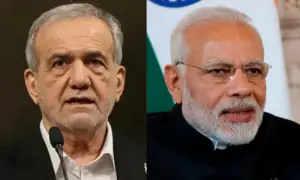
Nevertheless, with Indian membership still likely some way off — the meeting between US President Barack Obama and Indian Prime Minister Narendra Modi did not yield a major announcement — Pakistani policymakers must try and avoid the trap of letting unequal treatment of this country spark unreasonable policy choices.
Among the dangers of full-spectrum deterrence that has been officially adopted by Pakistan is the possibility that the nuclear response becomes the default option when faced with a change in the strategic and military equations between Pakistan and India.
More and more nuclear weapons, big and small, are not the answer to Pakistan’s long-term security needs; a more cooperative regional approach is.
If India, the US and a chunk of the international community are heedless to Pakistan’s legitimate security concerns, Pakistan should not automatically rush headlong into an unaffordable arms race with India.
Published in Dawn, June 9th, 2016