7
7
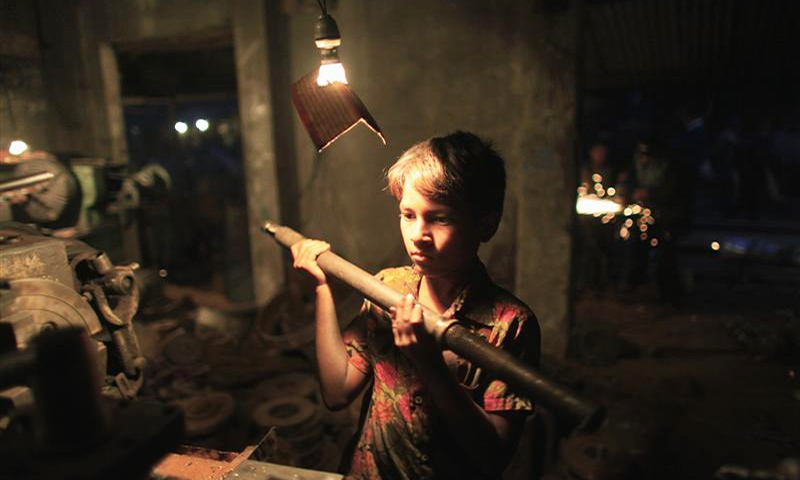
LONDON: Almost 170 million youths are trapped in child labour, deprived of education and facing a life without decent job, the International Labour Organisation (ILO) said on Wednesday.
From India’s brick kilns to the cotton fields of Uzbekistan and Bolivia’s sugar plantations, child labourers are more likely to have to settle later in life for unpaid work for the family or low-paying jobs, the ILO said in its annual “World Report on Child Labour”.
“Children who drop out of school and join the labour force early are more disadvantaged later in life because of a lack of education and basic skills,” said Patrick Quinn, a senior ILO adviser.
Take a look: Insurance against child labour: An admirable initiative by NRSP
Despite an overall decline in child labourers by one-thirds since 2000, some five million children remain in slavery-like conditions, making up a quarter of the world’s modern-day slaves, according to the ILO.
The Asia-Pacific region has the largest number of child labourers with almost 78m, or 9.3 per cent, while sub-Saharan Africa has the highest rate with 59m or more than 21 per cent.
Many of them are working under conditions that deprive them of a nurturing and protective environment, and expose them to stress and trauma, according to the report.
More than half of all child labourers — 85m — put their health at risk by working in hazardous jobs, such as mining and construction, said the report released ahead of the World Day Against Child Labour on Friday.
Rising youth unemployment, which stands at 75m globally, can also drive child labour as poor job prospects may stop parents from investing in their children’s education.
The ILO urged world leaders when they decide on new development goals in September to come up with a coherent policy to tackle child labour and the lack of decent jobs for youths.
Decent work means employment that is productive and delivers a fair income, job security, social benefits and equal opportunities.
A global push for access to primary education as part of the United Nations Millennium Development Goals had helped to push the overall child labour numbers down, Mr Quinn said.
The number of child labourers aged five to 14 dropped to 120m in 2012, from 186m in 2000, he said.
Published in Dawn, June 11th, 2015
On a mobile phone? Get the Dawn Mobile App: Apple Store | Google Play