7
7


AS the country commemorates today the resolution that 75 years ago laid the foundation for what was to become the independent state of Pakistan, there is much to reflect on in terms of how far the country has drifted from the ideals upon which it was founded.
First though, for all the difficulties on the security front, there is something to be said about the resilience and tenacity of the country for the state to be able to put on a Pakistan Day parade in Islamabad after a break of seven years.
Also read: After 7 year gap, Pakistan Day to see military parade in full glory
Parades, especially those dominated by shows of military strength, may seem, and in some ways are, anachronistic.
Celebrations of nationalism and patriotism engineered by the state usually hew a narrow and exclusive idea of what it means to be Pakistani.
But given the massive blows the country has suffered in recent years, it may be a good idea to demonstrate to the people that it is possible to envisage a future that in some, positive ways harkens back to a more internally secure and peaceful past.
Small steps that contribute towards rebuilding the public’s faith in state and society here can surely be welcomed – with the caveat that the state should not try and promote a distorted view of the past or false identities.
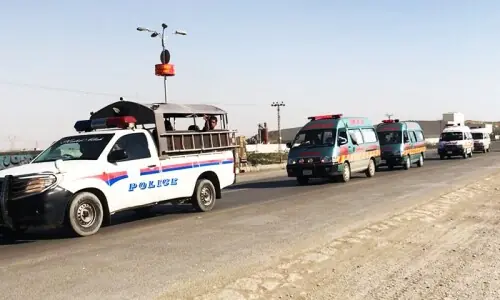
More concretely, as the country commemorates March 23, the military will be waging one of the fiercest battles it has fought to regain territory ceded to militant control.
The battle for Tirah, now dubbed Operation Khyber-II by the military, is arguably a pivotal moment in the counter-insurgency that has been waged across Fata.
From the congregation of many militant groups in Tirah to the impact the area has on stability on both sides of the Durand Line, if the military strategy – a vital part of which is coordination and coordination with security forces across the border – succeeds in Tirah, the short- to medium-term security outlook for the country could improve dramatically.
As ever, however, the gains made on the battlefield will only really be consolidated in the long term if the state moves away from a militarised strategy against militancy.
The assumption that after the guns have fallen silent, economic aid will somehow revive the area and militancy will forever be shut out is entirely unrealistic.
Militancy, terrorism and extremism will only be irreversibly rolled back if the state reverses its own decline and manages to provide the full spectrum of services that the public needs, from law and order to a reasonably efficient civil administration and from basic health and educational services to policies that encourage inclusivity and growth.
Surely, whether it is Fata or Karachi, Sindh or Punjab, Balochistan or Khyber Pakhtunkhwa, Pakistan will only become a stable and secure place if the state rediscovers how to help the population it represents.
Published in Dawn March 23rd , 2015
On a mobile phone? Get the Dawn Mobile App: Apple Store | Google Play