95
95



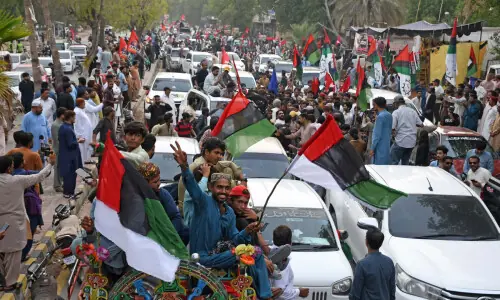
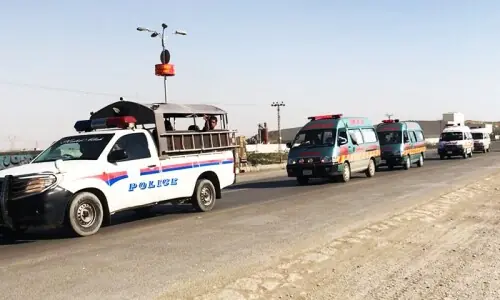
When an ambulance carrying the body of a Sipah-i-Sahaba Pakistan militant hanged in Karachi Central Prison is showered with rose petals by well-wishers — as pictured in this newspaper on Friday — it demonstrates how problematic the death penalty is in religiously inspired militancy and terrorism cases.
It clearly cannot be a deterrent for terrorists whose very missions either involve blowing themselves up or launching attacks in which death is a likely outcome.
Moreover, the hangings may only be inspiring other would-be militants given the faux martyr status bestowed by a certain fringe section of society upon those executed.
Read: SSP militant hanged for sectarian killing
All that the hangings have achieved so far is feed a growing appetite in society for vengeance rather than justice — turning an already wounded populace into cheerleaders of death.
More broadly, the question that is still unanswered is, what of the government’s National Action Plan and the range of other measures the government is meant to take to combat extremism and dismantle terrorist groups operating on Pakistani soil?
Also read: Arshad Mehmood: Hanged, then buried by crowds of well-wishers
Some initial steps have been taken, but nothing close to a coherent strategy has emerged yet and the government, for all its meetings and press releases, does not appear to have the will or the capacity to develop one.
Where there has been movement, it appears to occur largely because of the military’s initiative or insistence that the civilian-run side of the state take certain steps.
Surely, though, a militarised strategy to fight militancy and extremism cannot be a winning strategy.
Also read: Nawaz removes moratorium on death penalty
The PML-N government may have only reluctantly, and very belatedly, tried to own the fight against militancy, but being in charge of two governments — in Punjab and the centre — means the party leadership must play a central role. Where is the PML-N lacking?
In nearly every department, starting from the interior ministry, which is still in the hands of a minister who fruitlessly pursued peace talks with the very same militants that the ministry must now take the fight to.
The unwieldy committee approach to taking on militancy is another problem, with bureaucrats having an unhealthily large presence in many committees that could do with subject-specific expertise.
Why, for example, is the police leadership so under-represented in the multiple committees that the PML-N has created? There is still time to correct course, beginning with admitting that execution is no answer and what the government really needs to do is speed up other aspects of the fight against terrorism.
Published in Dawn January 18th , 2015
On a mobile phone? Get the Dawn Mobile App: Apple Store | Google Play