13
13
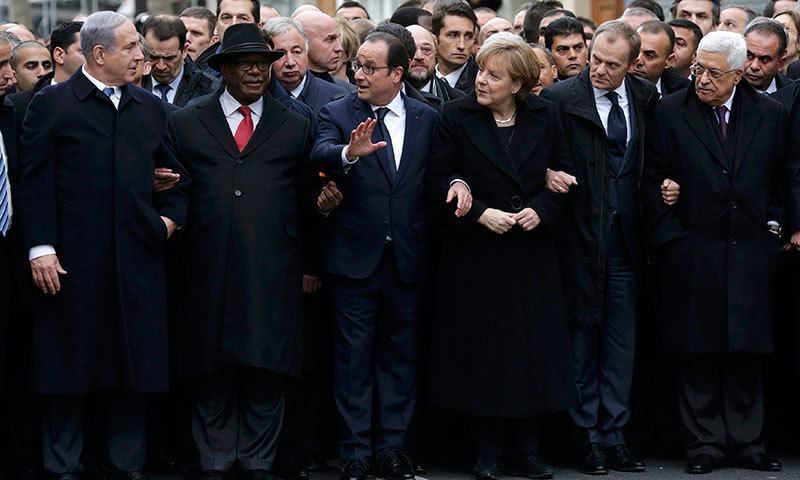
WHILE the debate on the limits of free speech has always been pertinent in a globalised, interlinked and interracial world, it has assumed greater urgency in the aftermath of the Charlie Hebdo killings last week.
Particularly so after the French satirical magazine’s latest edition once again included a depiction of the Prophet (PBUH). Pope Francis has also weighed in on the subject, saying that while murder “in the name of God is an absurdity”, freedom of speech should be tempered by respect for faith.
Know more: Pope on Charlie Hebdo: There are limits to free expression
Several Muslim countries have voiced disapproval of the latest affront to their beliefs. The massacre at Charlie Hebdo had given rise to expressions of unalloyed sympathy across the world, and rightly so, for no matter what the provocation, settling scores through violence is never justified.
From that sympathy, a unity of narrative — transcending divisions of faith, ethnicity and nationality — had emerged. This is a critical element in fighting the multi-dimensional scourge of religious extremism on a global scale, and it was perhaps that realisation which prompted President François Hollande to publicly acknowledge the fact that Muslims themselves are “the main victims of fanaticism, fundamentalism and intolerance”.
The statement, similar to the stance taken recently by German Chancellor Angela Merkel, is especially significant against the backdrop of worrying xenophobic trends in Europe.
A refusal to cave in to threats of violence can be deemed courageous, but the situation in this instance demands a more nuanced view.
Charlie Hebdo’s journalists, by re-offending, have opted for a narrow, parochial response instead of seeing resistance to extremist elements as a battle in a much bigger war.
As a result, the narrative against extremism has once more become fragmented, skewed towards the acts that insult faith, rather than the actions that violate the norms of all faiths, in this case murder in the name of religion.
Such a climate is conducive for voices on the margins to stir the cauldron of hate anew. Their impact is already being felt on the streets of Karachi with violent protests against the new cartoons.
Further afield, the lives of millions of peaceful, law-abiding Muslims across the world will become more precarious at the hands of those who conflate Islam with Islamist militancy.
Perhaps it is time for world leaders to come together and shape this debate along rational and non-discriminatory lines with a view to the long-term implications of unbridled free speech.
Published in Dawn, January 17th, 2015
On a mobile phone? Get the Dawn Mobile App: Apple Store | Google Play