0
0
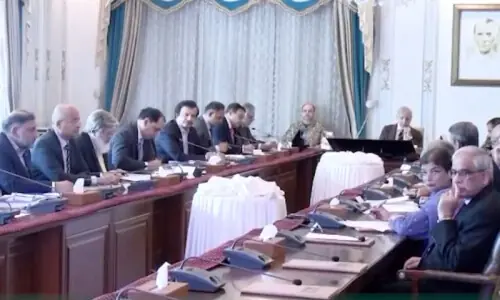
KARACHI: Raising serious concerns over proposed oil and gas exploration activities in the protected areas of Malir and Shah Bandar (part of Thatta district), representatives of non-governmental organisations, professional and academic institutions at a public hearing on Wednesday criticised the environment impact assessment (EIA) report of the project and termed it flawed.
Questions were also raised over the provincial environment watchdog’s capacity to devise a mechanism of independent monitoring of development projects.
The Sindh Environment Protection Agency (Sepa) had organised the EIA report hearing for a project of Pakistan Petroleum Limited (PPL), which contracted the SGS Private Limited to prepare an EIA report.
Giving a presentation on the project, SGS Private Limited representative Ammara Naqvi said the protected area of the Mahal Kohistan Wildlife Sanctuary fell inside the Malir block, where 20 species of mammals, 33 bird species, 13 reptile species and 42 plant species were recorded during field surveys. Of the fauna, 20 species were believed to be common, five less common and eight rare.
The PPL, she said, intended to perform both seismic and exploration activities. The Malir block located in districts of Malir and Jamshoro had a total area of about 956.24 square kilometres whereas the protected area falling under the block was 71,866 hectares.
“The population of 25 surveyed villages was found to be 2,139. The areas lacked proper facilities for education and health,” she said, adding that consultations were done with community elders as well as various stakeholders, including NGOs.
The Shah Bandar block, she said, was part of the Indus Flyway, covering a large area of mangrove forests (falling under the jurisdiction of the forest department and the Board of Revenue) and a wildlife sanctuary having a diverse range of flora and fauna.
The project activities, she said, might involve clearing of land for a campsite and access track and could cause dust emissions, land erosion and generation of construction waste, noise and damage to the surrounding structures.
“All this could be avoided with the help of an environment management plan (EMP) as has been suggested in our report. The camp and well sites should be preferably located outside the protected areas and solid waste disposal must not be allowed into the field.
“The no-hunting and no-trapping policy should be strictly enforced unless human life is under threat. We have also recommended an independent monitoring of the project to ensure implementation of the EMP,” she said while showing slides highlighting mitigation measures.
During the question-answer session, the audience that included many students from various universities expressed reservations over the EIA report and said that it didn’t contain information regarding the cost of environmental damage and its recovery. Such details, they said, were part of international documents meant to examine the possible impacts of development activities on environment.
There was also concern over the use of huge quantities of freshwater (1,700 gallons per day during the construction phase and seismic activities and 8,000 to 12,000 litres per day during operation/drilling), largely to be taken from underground resources, in water-scarce areas. This method, they said, could disturb the water table and caused problem for the agriculture-dependent communities already facing an acute shortage of potable water.
Replying to a wildlife department official’s claim that the EIA report greatly underestimated the number of fauna found in the areas selected for exploration activities, Syed Ghalib Ali, a seasoned wildlife expert who helped in the report’s preparation, said the report had only focused on the specific blocks where exploration activities would be carried out and not the whole area of the districts.
“The sanctuary in Malir block, part of the Kirthar National Park, is home to mammals such as urial, chinkara and ibex. As these species live on the top of hills and migrate seasonally to low land, it is expected that their population wouldn’t be affected by exploration activities,” he said.
Citing examples of ruthless cutting of mangroves and government inaction, speakers suggested that an independent board comprising experts from the private and public sector was needed to monitor the project execution.
Sepa director (technical) Waqar Hussain Phulpoto said the department would impose conditions on the company to prefer locals for skilled and non-skilled jobs, take steps to ensure conservation of flora and fauna and develop an emergency plan in case of a disaster.
A hearing of an expert committee on the same project would be held soon, he added.
Moin Raza Khan, Wahiddudin Ansari and Munir Kamal Jadoon, representing the PPL, also spoke.