HUMANITARIAN groups have expressed alarm at the lack of access to more than 300,000 civilians caught up in the fighting in the Central African Republic, where rebels have seized regional capitals and mining areas in the north east of the country.
The Seleka coalition of rebel fighters have advanced to within 75km of Bangui, the capital, since launching their assault on Dec 10. The rebels have said they will not attack Bangui and have agreed to peace talks in Gabon’s capital, Libreville, organised by African leaders.
“An estimated 316,000 people are living in the affected areas, and some 700,000 persons in Bangui are at further risk of an escalation in fighting,” the UN Office for the Coordination of Humanitarian Affairs (OCHA) said.
“There are reports of people fleeing their homes for safety from a number of areas… and across the borders to the Democratic Republic of the Congo and to Cameroon,” it said.
The UN secretary-general, Ban Ki-moon, and the Security Council have condemned the attacks.
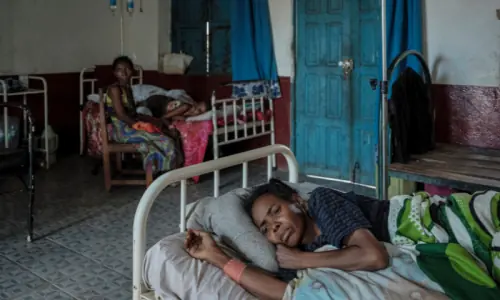
Aid agencies have pulled most of their staff out of the diamond-producing city of Bria, leaving just skeleton staff to deal with people who have fled the fighting.
“Internally displaced people are very much in need of health services and we are particularly concerned about women and children,” said Catherine Ainsworth, programme officer of International Medical Corps UK. “The key issue is limited humanitarian access. The one doctor we have in Bria is running out of stock of medication against malaria and diarrhoea.”
Ainsworth said Bria was already experiencing very high levels of acute malnutrition before fighting broke out last month.
International Medical Corps, which receives funding from the EU’s aid emergency arm, Echo, had been planning to step up its health programme, but that has now been disrupted by the latest upsurge in fighting in this chronically unstable and landlocked country.
Ainsworth said there was also concern at the disruption to the planting season. “If there is no planting, it can lead to a ruined harvest, as we saw in 2012,” she said.
The Central African Republic has been wracked by political unrest since gaining independence from France in 1960. Between 2002 and 2003, fighting between the national army, supported by armed groups from the Democratic Republic of the Congo, and rebels led to scores of civilian casualties in Bangui and throughout the country.
President Francois Bozize has offered to form a unity government and not run for a third term in the next presidential elections, scheduled for 2016. But he has rejected rebel demands to step down now. He came to power in a rebellion, backed by Chad, in 2003 and has since relied on foreign military help to face down a series of smaller insurgencies. He won elections in 2005 and 2011 despite opposition complaints of fraud.
The International Crisis Group has called on Seleka to publicly and fully commit to respect international humanitarian law and facilitate humanitarian and medical access to areas under their control. It urged the Economic Community of Central African States, the African Union and the UN to make clear that Seleka commanders will be held responsible for any violations of human rights in areas under their control.
The rebel coalition is made up of armed groups mostly from the northeast. They are united in their claims that Bozize failed to honour the 2007 Birao peace agreement and the 2008 Libreville agreement. Despite its mineral wealth, including uranium and diamonds, 60 per cent of the Central African Republic’s population live in poverty. — The Guardian, London