0
0
The historical role of fine arts as a value haven is enjoying a many splendored existence these days as buyers, collectors, investors and the art funding industry (hedge funds and private investment partnerships) scramble in to capitalise on its marketability. This change in attitude has been concurrent with the tremendous worldwide wealth creation over the past 15 years.
The average consumer may prefer to study market dynamics, and buy artworks that the market favours but it’s a small subset of the super rich, whom some economists call Ultra High Net Worth Individuals, or UHNWI’s whose economy, unlike the rest, is really booming.
In this alternate world, fine art as a percentage of the economy has stayed stable over the last decade, in part because a flood of new UHNWI’s in China, India and other developing nations has entered the art buying market with great enthusiasm. In 2003, the sales at Christie’s Hong Kong totalled $98 million. Last year, they were $836 million.
Findings from The International Art Market in 2011: Observations on the Art Trade over 25 Years revealed that China’s share of the global market raised from 23 per cent in 2010 to 30 per cent in 2011, as the region overtook the US for the first time.
Today, five Chinese artists feature in the world’s top 10 contemporary artists by revenue. Zeng Fanzhi (39.2m euro), Zhang Xiaogang (30m euro), Chen Yifei (283m euro), Wang Yidong (16.2m euro) and Zhou Chunya (14.5m euro) now each feature, ahead of the likes of Damien Hirst and Takashi Murakami.
Not only has wealth and the appetite for art in China increased significantly over time but the auction market has experienced dramatic growth. In 2010, data analyst Artprice revealed that China had become the world’s leading auction marketplace for fine art. It took only three years for China to climb to the number one ranking, positioning it ahead of the United Kingdom and the United States, which had been the global market leaders since 1950.
In fact, China now boasts seven of the world’s top 10 auction houses in terms of revenue. Even some of the most prestigious auction houses in the world, including the likes of Sotheby’s and Christie’s, are losing ground in the face of Chinese auction houses.
Up through 2008, art analysts had predicted that India would have a similar boom. But they did not realise how much of the Indian market was being driven by western speculations. This is the advantage in China: they are buying back their own culture. Chinese collectors and investors are not only financially sound but they are, in the large part, below the age of 50 and are fast becoming some of the most avid consumers of art produced by artists from their home regions and according to market specialists, they will be buying that back for a long time — this is not just a fad.
Yet another change is that today, the art world no longer has just two or three global centres. China is the market locomotive right now, but there is interesting art in other countries particularly Vietnam, Cambodia and Indonesia and it is being predicted that in 10 years, the most interesting scene will be Burma. The biggest difference between Indonesia and more developed markets like China and India is not the strength of the art but the strength of the infrastructure — the galleries and museums.
And that development is happening in various places. Asian galleries are opening other branches: ShangART and Tomio Koyama Gallery are both opening in Singapore. A national gallery is also under construction there and will open next year. At the same time, the Singaporean government is trying to encourage big collectors to open private museums.
With Chinese collectors, and with almost all Asian collectors, there is a buying pattern: First, they buy the works of local artists and then they buy the art of western and other art pundits since they feel it is important to build up the bridges between these art scenes, to promote Chinese buying Japanese artists, Indians buying Indonesian artists, and so on.
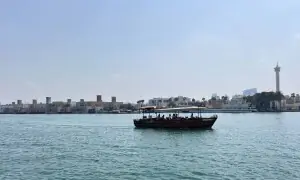
In the Gulf region, cultural development is occurring most rapidly in countries where the governments have declared their interest in the cause. Since Dubai started the Dubai Art Fair, the first important regional art event in 2007, in a way, it had a head start, and many galleries opened there. At present, Dubai has more than 64 galleries and Tehran has approximately 40. For the moment, western dealers express their presence mainly through art fairs rather than permanent spaces.
A number of fairs have sprung up in the region — in Lebanon and North Africa, for example — and have found quite a lot of trade, though not as high as in the West. A great deal of interest in buying regional contemporary art as a means to nurture local artistic expression and collector interest in international contemporary art is perking up as well.
The Qatar Museum Authority (QMA) recently mounted a show of Takashi Murakami. Collectors and particularly those in Doha, Dubai, and Abu Dhabi, are very interested in taking this kind of a global perspective.
Contemporary art from Pakistan compares favourably with current Asian art and our artists continue to win accolades abroad but political instability at home impedes growth of the necessary art infrastructure and global interest required to promote and elevate the profile of our promising, indigenous art.