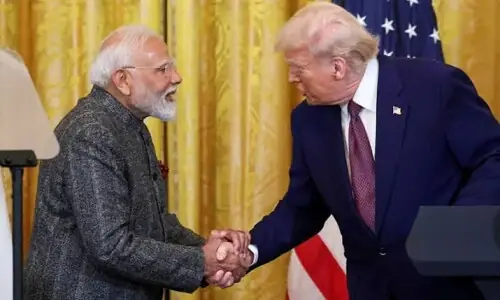
Nearly as striking to me was how many commentrs scolded me for having compared Imran to Obama. I hadn’t even mentioned Obama by name. What I had written was:
“Relying on a single charismatic leader to change everything for the better is a setup for embittered disappointment and disillusion. Pakistanis and Americans are very similar, not least in being idealistic; and I’m sorry to have to remind you and myself of how much hope we Americans put in a charismatic figure who promised definitive change here, four long years ago.”
As far as I can tell, the readers who scolded me had no real reasons to offer for why Imran and Obama have nothing in common, only wishful assertions. But wishing doesn’t make it so.
There might well be real differences in the personal character and mettle of the two men.
I think there are, in fact, and those favor Imran. He has been toughing it out in the political wilderness for more than 15 years, through many changes of circumstance and regime, when he really didn’t have to. He has earned his credibility the hard way, above all through his tireless and successful work building and funding the justly famous Shaukat Khanum Memorial Cancer Hospital in Lahore. Obama had accomplished nothing comparable to that before becoming President of the United States, and he still hasn’t.
But what the commenters failed – willfully, I would venture, if understandably – to appreciate is that I wasn’t comparing the men, but the phenomena. The questions both raise are: Why do desperate societies feel a need to invest their hopes in a single charismatic would-be leader? What is the best result we can hope for, when that happens? What are the dangers? If (more likely when) the leader disappoints us, is that his or her failure, or our own? Above all, what are we entitled to hope for?
I write these days under two rubrics: twice monthly on Fridays in Dawn on topics directly to do with Pakistan, and every Monday on my own website (excerpted in Dawn) in a series called Home Free, which will also be the title of the book I’m working toward, reporting from the grassroots and commenting on the current and coming crisis here in the USA. Sometimes it’s hard for me to see the line where one ends and the other begins, and indeed one of my standing aspirations is that anything I write should, ideally, speak in some way to anyone who reads English, anywhere in the world. This installment is a case in point.
So these musings are prompted in part by what I see as the dangerous over-investment of hope many Pakistanis are placing in Imran Khan. Expecting too much from him is not fair to him or good for the Pakistani nation and society. At the same time, what’s been on my mind is how the Republican presidential primaries have been dominating mainstream news coverage in the US for far too long now. What that shows is not only the infamously interminable quality of American elections in general, or even Obama’s all too real failure either to be the leader we elected him to be or to assert himself politically.
Beyond proximate contexts and personalities, what I’m sensing is a greater than usual disconnect between the ostensible and the actual, as American society atavistically clings to the vestiges of its formerly functional institutions.
A litany of these reads like a roll call of the institutions that defined the America I grew up in, from once-prestigious book publishers and record companies to General Motors to the nightly news to Hollywood to Schlitz, the beer that made Milwaukee famous. The truth we’re disinclined to face in our national politics is that not only have the Republican and Democratic parties become similarly vestigial and pointless, but maybe so has the presidency itself. What’s been lost along with all of the above is something intangible but that, now that it’s gone, we know to have been crucial. Call it community or share purpose, or at least a tacit agreement that we’re all on the same page. Also lost is a sense that we’re all in the same boat, traveling together to a destination that we believe to be worth the journey.
Read full article here.

The views expressed by this blogger and in the following reader comments do not necessarily reflect the views and policies of the Dawn Media Group.