0
0

Wild life programmes and documentaries are very popular television fare these days and from watching them people are quite likely to get the idea that antelopes only live in Africa, not here in Pakistan, but they are quite wrong!
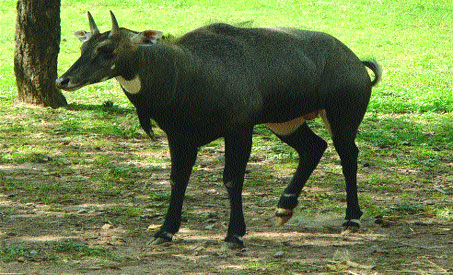
An antelope known as ‘nilgaye’ in Urdu, ‘blue bull’ in English and ‘boselaphus tragocamelus’ in Latin, is present in Pakistan in very small numbers and is currently listed as an endangered species here, although across the border in India it is numerous indeed.
Nilgaye is the largest Asian species of antelope and when the population of Pakistan was quite small with lots of huge, undeveloped wild areas, Nilgaye were quite often seen, especially in the plains of Punjab where both climate and vegetation suited their needs. Their Urdu name means ‘Blue cow’ which is a bit of a misnomer as the females (called cows) are a yellowish brown colour and it is the male (bull) which is a dark greyish blue.
Their favourite foods are the leaves of acacia trees, fruit, grasses, sugar cane and cultivated corn and wheat. Thus they are not very popular with farmers but are, sadly, extremely popular with hunters of both the legal and illegal kind. Only the male of the species, the bull, has horns and these are very small in comparison to the animal’s body size. A fully grown male can stand as high as 1.5 metres or five feet at his shoulders, measure two metres or six feet from head to the end of his body, have a tail 45-53 centimetres or 17–20 inches in length and weigh in at 300kgs which makes him a very large antelope indeed.
Having an average lifespan of approximately 12–15 years, Nilgaye breeds around the year and the female usually gives birth to twins. These days these beautiful, swift running creatures are occasionally seen on the Pakistan side of the border in Punjab and in the Thar desert of Sindh, but it is uncommon to spot more than one or two at a time. They used to be around in large numbers about 100 years ago but hunters considered them to be valuable targets and decimated their numbers to the point of extinction here.
A few sightings have taken place in Azad Kashmir in recent years and it is possible that they are breeding there which, if they are left alone, will be a wonderful thing. Meanwhile though, with chances of seeing Nilgaye in the wild pretty remote, you can probably view a few specimens in your local zoo.