0
0

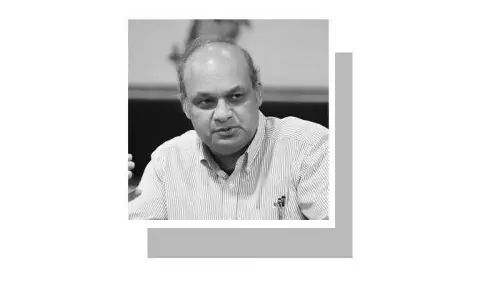
ISLAMABAD, Sept 12: Prominent educationist Dr Pervez Hoodbhoy has said tenants of the Okara Military farms, are being coerced to sign the lease agreement, according to which anybody can be asked to leave the land for their “anti-state” activities.
Speaking at a seminar organized by the Sustainable Development Policy Institute (SDPI), Mr Hoodbhoy, a known iconoclast, asked the people to visit the place to ascertain the ground realities, what he said misery could be seen in the eyes of the tenants.
In a sad tone, he said no political party had shown any interest in the plight of the tenants, who were struggling for their survival.
Mr Hoodbhoy narrated what he observed during his visit to the Okara Military farms, where the peasants were struggling to get ownership rights of the land which they had been tilling since 1913.
Giving his observations, he said a few days ago, when he reached Chak No 45, he found police and Rangers deployed there at various checkposts, which had been established to halt the resistance. The policemen, he said, were on the forefront and the Rangers were slightly behind, armed to teeth. Every checkpost, he said, was manned by about 20 persons.
“He was stopped at the checkposts but was allowed to proceed to another Chak 45, where the Rangers had gone to obtain signatures of the peasants on the new contract, ending their tenancy and turning it into lease agreement.”
He said he was taken to an Army Major who claimed that the tenants were voluntarily signing the lease agreements. “The Major told me that the Batai system was being replaced only after the refusal of the tenants to pay the rent they were required to pay,” he said. He added that the Major told him that the tenants had approached the Lahore High Court but failed to get any relief.
Mr Hoodbhoy said the Major claimed that the government had offered the tenants a seven-year lease agreement, which was very favourable to them.
He said about 100 people had gathered there and when he asked the people if they were signing the lease agreements voluntarily, they said no.
He said the Major claimed that no body was being tortured for signing the agreement. “But, the claim was instantly refuted by an elderly woman by removing her Dupatta (scarf) to show that the wound she had sustained due to Rangers’ torture was still bleeding.
He said the official responded that it was a two-year old wound, which the old woman was showing.
“Later, the Major said there are some mischievous elements, who create problems and the present situation is the outcome of their activities.”
Mr Hoodbhoy said when he came back to Chak No: 10 from where he had started the journey, he was told that the Rangers had arrested two persons. The villagers, he said, implored him to help them, as they had nobody to ask for help.
He said when he approached the policemen to inquire why they had arrested two persons, they showed their inability and asked him to talk to the Rangers.
When he approached a Rangers official, he could not offer any cogent reply. He said he saw the people in custody shivering. Then, he said, he made up his mind to see the high-ups of Rangers and travelled to Lahore to meet Maj-Gen Hussain Mehdi, the head of the Rangers.
He said the General repeated the same what he had heard from Major Tahir in Chak 45. The General was of the view that some anti-Pakistan NGOs were responsible for the whole mess. “The NGOs were dubbed as RAW agents.”
Mr Hoodbhoy said he asked the general to take sympathetic view of the situation and told him that what he had seen, reminded him of the atrocities being perpetrated by the Indian army against the people of Kashmir.
“The general, after giving background of his method of tackling such situations, said the farmers were there only because of his sympathetic view otherwise he could have evicted them in hours,” he added.
“General Mehdi repeated what he had done when he was assigned to conduct the Sohrab Goth operation.”
He said when he asked the general to handle the case legally, his response was interesting. “The general said the country was under the direct control of the army, as the President and the Chief of Army Staff was the same person and there was no question of any illegality as the army itself was the law.”
Admiral Fasih Bukhari (retired) said he too visited Okara but was not allowed to meet the tenants.
He said he spent about two hours in the military headquarter at the farms. He said that he was told by the Rangers that it was not safe to go around as Al-Qaeda elements were also there.
The Admiral said he was informed by the Rangers that the tenants were being supported from outside. He said the contract which was being offered to the farmers was “certainly” better from what was being offered to the tillers by the private land owners.
He said he had not made up his mind yet and wanted to study more on the subject including the judgment of the High Court. He said he had talked to a number of army officials and was scheduled to see the vice-chief of army staff within a day or so to discuss the issue.
He wanted to seek suggestions from the participants of the seminar which he would carry to the military high-ups. He was told by the participants that the relevant law was Punjab Tenancy Act 1950, under which the tenant had the first right to the land.
The participants said the land was of the Punjab government that had refused to hand it over to the defence ministry. “The tenant had more right than the military to own the land, as the tenants had been tilling the land since 1913 and the Army’s lease lasted for 15 years.
The admiral was also asked to study how Sir Chotoo Ram handled almost an identical issue when people of the Punjab, mostly the farmers, were being robbed by the Hindu Banias .