0
0

Living abroad, one marvels at—and actually dares to begin to place faith in—the efficacy of systems. Streets lie on a grid; postcodes make sense. Trees, carefully-trimmed, are found arranged in acquiescent rows. Buses, glistening red, submit themselves to the regularity of a timetable. When your elbow grazes the elbow of another on the street, you pause a moment, turn around, and apologise. Sorry. Please. Thank you. Excuse me.
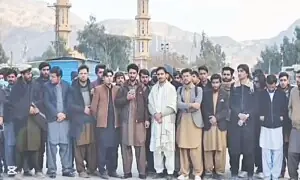
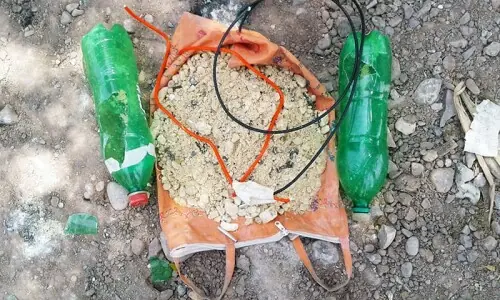
When the suicide-bomber jostled his way through the mass of black-clad mourners this past Monday, did he, do you think, mumble an apology to all those he brushed past?
•••••
The blasting of bombs has become so commonplace in Pakistan that it is difficult to know what to say that hasn't been already been said before. It is difficult to know, especially, what to say to foreigners “Yes, my family is safe,”, “No, no one I know has been affected,”, “The city has come to a standstill today, but things will continue as usual tomorrow.”
Of the Spanish Civil War, the Chilean poet Pablo Neruda said merely this
'Come and see the blood in the streets.
Come and see
The blood in the streets.
Come and see the blood
In the streets!'
We, in Pakistan, have stopped talking about things that matter, perhaps because we feel that what we say does not matter, not at least in the grand scheme of things (whatever that means). Perhaps we feel we've talked too much. Perhaps what stays on our tongues is the sinking, niggling fear that no matter what side we attempt to champion, we will end up feeling betrayed by it, and bitter. The world we live in is hardly a board of checkers, blocks of black and block of white. Black bleeds into white; the grey this creates scares us, catches us off-guard. And so we keep our mouths shut.
This reticence is natural. In troubled times, Yeats wrote, “The best lack all conviction, while the worst / Are full of passionate intensity.” However, as things fall apart, as the centre fails to hold, we cannot afford to stop talking. While we lie wrapped in our self-woven cocoons of complete and utter complacency, things are being done in our name, terrible things, and in the name of ideals that, in their purest forms, many regard precious Democracy, freedom, religion, justice. No, we cannot afford to stop thinking or talking, not now at any rate.
What is happening around us? What is it that we have lost? What does it mean to be Pakistani? What is it that we want? What is it that we think we want?
Come and see the blood in the streets.