|
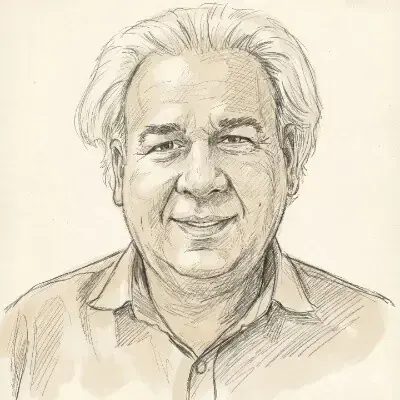
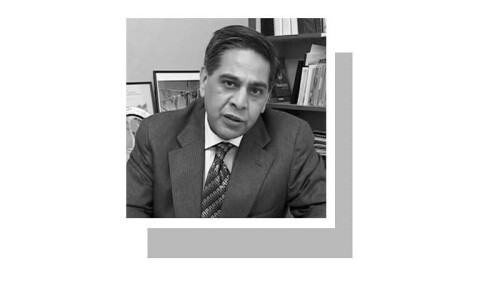
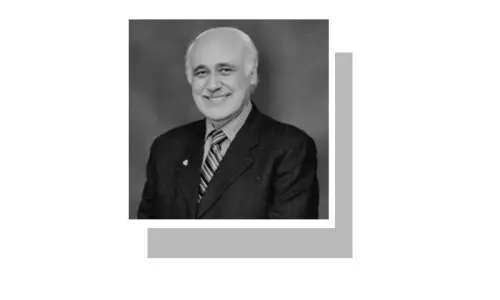
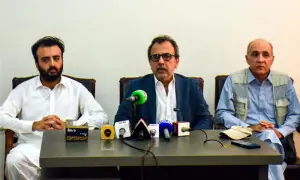
| Iftikhar Arif is a top-notch poet, a highly educated individual and a cultured human being. — White Star |
KARACHI Striking up a conversation with Iftikhar Arif is an enlightening experience, minus the moderation part. Reasons he is a top-notch poet, a highly educated individual and a cultured human being.
These days he seldom gets time to step out of Islamabad, where he is busy with his official duties heading the Muqtadara Qaumi Zaban (National Language Authority).
However, some time back he couldn`t stop himself from coming down to Karachi for the launch of his complete collection of poetry, Kitab-i-Dil-o-Duniya, published by Maktaba-i-Danyal. He looked quite happy at the Arts Council Karachi, where the book was being launched. Naturally one couldn`t help asking him why the need for the complete works when he is still going great guns and has recently turned 66.
`Sometimes what happens is that the avid reader of literature gets a chance to go through only those collections of writers that are readily available in the market. For example, there was a time when N.M. Rashid`s just one collection of poetry Mavara was available at bookstores, and readers tried desperately to get their hands on his other books such as Iran Mein Ajnabi, but couldn`t find them. This doesn`t have the total kind of impact of the poet`s works on the reader. I`m aware that the complete works of writers are often published posthumously, but trends have changed,` Iftikhar Arif said. But who came up with this idea?
`Hoori Noorani of Maktaba-i-Danyal is like a sister to me. She insisted that I go for it.` If one thumbs through Kitab-i-Dil-o-Duniya, one would notice that it`s divided into three parts (i) Baab-i-Aqeedat (spiritual poetry); (ii) Baab-i-Ghazal; (iii) and Baab-i-Nazm. Is their a logical connection behind it?
Iftikhar Arif explained `It`s not like that. The thing is that I am myself the epicentre of my poetic endeavours. My religious self is part of my existence. It`s also a component of my creative self. You find the Karbala metaphor prominent in my poetry, but it`s not there just as a religious reference. It is applicable to all times and situations. It`s my personal experience.`
`I was born in Lucknow where I was surrounded by the progressives. They had their influence on me. But with the passage of time Karbala came into my life by itself and became an integral part of me.`
Is that why his diction is grand or at least different from what his contemporaries use as an essential literary tool?
`The kind of poetry I indulge in requires strong symbolism, so language has to be commensurate with that,` Iftikhar Arif said. And then there is this endless debate on the tussle between `material complacency` and `creative accomplishments` that seems to nibble at Arif`s soul and is an essential subject of his ghazals and nazms.
He responded `The tug of war between matters of the heart and worldly affairs perturbs me. To be honest, I have never taken a shine to this mortal world. I have never really run after material gains. Yes, I do wish to see the entire world at my feet at times. But that`s it.`
In Kitab-
i-Dil-o-Duniya Arif has been deferential to the likes of Ghalib, Faiz and Jalib. Interestingly, he has also paid tribute to someone who is not in the league of those greats, and that is Jamal Ehsani.
Iftikhar Arif said `Jamal Ehsani was a fine poet. He knew how to create a startling couplet. I liked him. But his problem was that he wasn`t as parha likha as one would have liked him to be.`
What about the symbol of shaam (evening) that the book is suffused with? Shaam aa rahi hai doobta sooraj bataey ga/Tum aur kitni der ho hum aur kitni der...
`If you were born where I saw the light of day, you would know how evenings in villages turn you into a sad individual. They`re fraught with melancholy,` said Iftikhar Arif.