PESHAWAR, March 7: The Peshawar High Court has expressed its inability to assist the law reforms committee of the provincial assembly. Sources told Dawn the high court's registrar had not been assisting the committee over the issue of NWFP subordinate judiciary services tribunal.
The high court has informed the law reforms committee that its official is not bound to attend the committee's meeting, said a member of the committee. In this connection, a letter was sent to the committee by the high court about a month ago, he added.
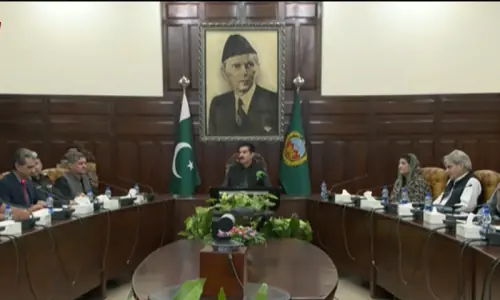
The committee would now send a reply to the high court in which it would clarify the constitutional position and even then if the high court stuck to its stand then the issue would be raised in the assembly, said a member.
Abdul Akber Khan, chairman of the committee, when contacted, confirmed that the committee had received a letter from the high court and the registrar had not been appearing before the committee.
He said the committee would decide in its forthcoming meeting what step should be taken to persuade the high court to change its stance. In its previous meetings, the committee held deliberations on different legal issues, especially functioning of the subordinate judiciary services tribunal (SJST) and appointment of judges on contract basis by the high court.
The committee has questioned the legality of the SJST as legal requirements under Article 212 of the Constitution were not fulfilled when the tribunal began functioning.
Under Article 212(1), the appropriate legislature may by an act provide for the establishment of one or more administrative courts or tribunals to exercise exclusive jurisdiction in respect of matters relating to the terms and conditions of persons who are or have been in the service of Pakistan.
A member of the committee told Dawn that under clause 2 of Article 212 of the Constitution, the provisions of this clause should not apply to a tribunal established under an act of a provincial assembly unless, at the request of that assembly made in the form of a resolution, parliament by law extends the provisions to such a tribunal.
"As far as we know after the enactment of the law in 1991 the resolution required under Article 212 was referred to parliament, but parliament has not yet extended these provisions to the tribunal," he added.