PESHAWAR: As Pakistan’s healthcare system undergoes significant structural changes, ranging from hospital autonomy reforms to the expansion of health insurance programmes and stronger regulation of healthcare safety, a new book seeks to address a critical gap: preparing healthcare professionals to effectively lead hospitals and healthcare organisations.
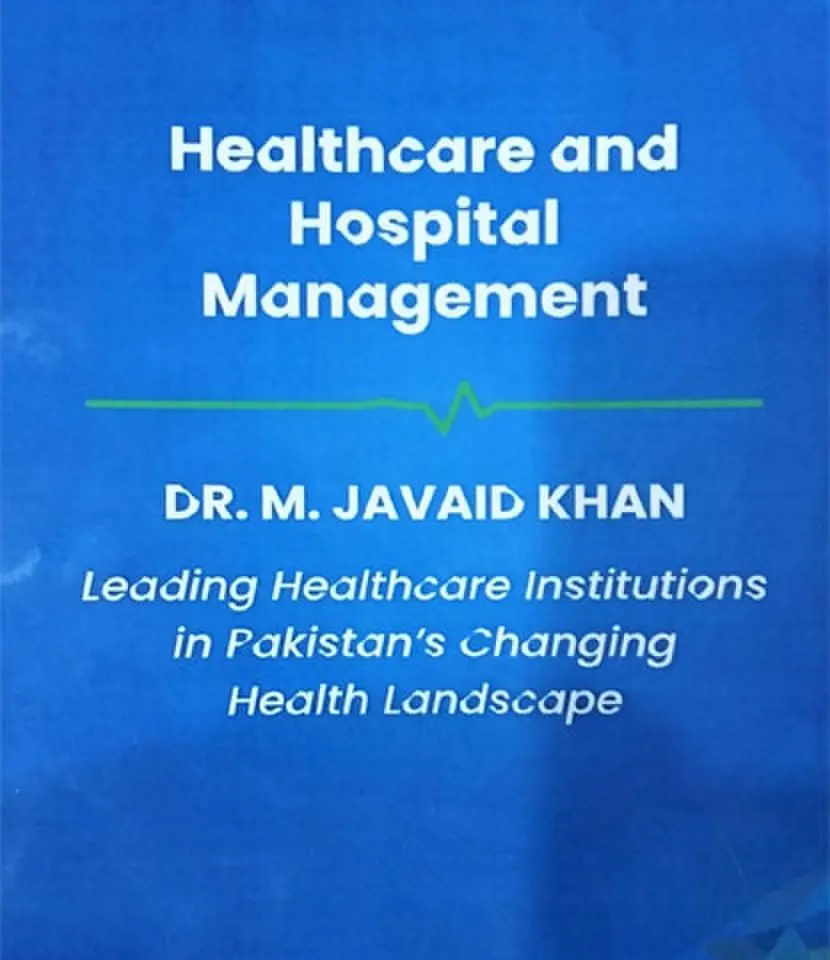
Titled “Healthcare and Hospital Management: Leading Healthcare Institutions in Pakistan’s Changing Health Landscape”, the book, authored by Dr Muhammad Javaid Khan, is being described as the first of its kind in Pakistan. It offers a practical guide for hospital managers, academicians, clinicians and policymakers navigating the complexities of healthcare leadership in an increasingly technology-driven era shaped by artificial intelligence (AI).
Drawing on his extensive experience in the Khyber Pakhtunkhwa Health Department and his tenure as Chairman of the Board of Governors of Nowshera Medical College, Dr Khan has highlighted key weaknesses in the healthcare system while proposing practical solutions. He holds a Master’s degree in Public Health from Australia and a Diploma in Health Economics from Cape Town, South Africa.
The book brings together essential principles, management tools and practical insights into running healthcare organisations in Pakistan, offering a resource rooted in the country’s institutional and operational realities. Its key areas of focus include decentralised hospital governance, public-private partnerships, outsourcing, the Sehat Card Plus health insurance programme and the management of institutions operating under severe resource constraints.
Drawing on his professional experience in health policy and planning, health systems reform, hospital management, health economics and institutional governance, Dr Khan observes that many of Pakistan’s brightest clinicians and healthcare professionals are appointed to leadership positions without adequate preparation in management.
“Better hospitals are built not only by investing more, but by leading better,” Dr Khan said, stressing that resources can be wasted in institutions lacking effective governance, managerial capacity and accountability.
Organised into 16 chapters across four thematic modules, the 295-page book examines institutional governance and autonomy, healthcare financing, budgeting and economics, hospital operations and quality management and strategic leadership.
Its coverage includes international best practices in the establishment and oversight of Boards of Governors, financial sustainability, procurement and supply chain management, clinical governance, infection prevention, patient safety, human resource development, crisis management and project implementation.
The book also explores Hospital Information Systems, data-driven decision-making and emerging applications of artificial intelligence, placing these developments within the context of Pakistan’s healthcare environment.
Dr Khan said his objective was to equip healthcare professionals with practical management skills and decision-making tools rather than merely introduce them to theoretical concepts.
“My sincere hope is that it will help prepare a generation of healthcare leaders to lead more thoughtfully, make better decisions and build stronger institutions, grounded in the realities of our own context,” he said.
He also acknowledged the contributions of his mentors, colleagues and friends, whose encouragement and support played an important role in bringing the book to fruition.
Published in Dawn, November 2nd, 2026