THE cost would be steep. We all knew that. An Islamabad-based think tank has now put figures to those costs. That gives a fiscal dimension to a debate that has largely been driven by political demands and promises of better administration.
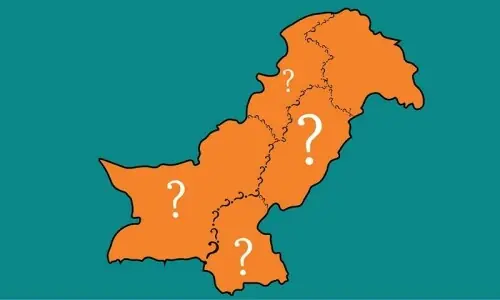
The Policy Research Institute of Market Economy estimates that creating two more provinces in Punjab could add Rs47bn to Rs57bn to annual recurring expenditure. The bill could rise to Rs610bn-Rs730bn if all the country’s 30 divisional units were turned into provinces.
Every new province would require a permanent administrative and political structure, including a governor, chief minister, assembly, secretariat and high court. Their salaries, operating expenses and overheads would have to be met year after year, leaving less money for development.
The figures expose a major weakness in the argument for creating more provinces: political and administrative restructuring is often presented as an inexpensive way to make government more responsive. It is not.
Smaller administrative units create another layer of government whose costs would be hard to justify. If a substantial portion of their allocations goes towards maintaining political and administrative establishments, little would remain for schools, hospitals and other essential services. Citizens promised better governance could end up paying for an expensive new tier without seeing much improvement.
There is, of course, a real case for reorganising provincial boundaries.
Punjab’s size and population, regional disparities and the sense of political and economic neglect in its southern districts cannot be dismissed. The demand for a separate South Punjab province reflects genuine grievances over unequal development. But these grievances cannot be resolved simply by creating new capitals, assemblies and secretariats. Nor should the fiscal argument be used to brush aside legitimate demands for political representation and administrative autonomy.
Can the same objectives be achieved through empowered local governments?
Political parties’ record of repeatedly suspending, delaying or weakening elected LGs suggests that the problem is less the size of provinces than the reluctance of political leadership to devolve power and resources.
Functional LGs, with predictable funding, elected representatives and clearly defined responsibilities, could take decision-making nearer to citizens without multiplying provincial overheads.
Any proposal for provincial restructuring must show how it would improve public services. It must also establish how new units would finance recurring expenditure. The creation of provinces is a long-term fiscal and constitutional commitment. Political parties demanding new provinces must explain how they intend to pay for them and what improvements citizens can expect.
Published in Dawn, November 1st, 2026