Defence diplomacy
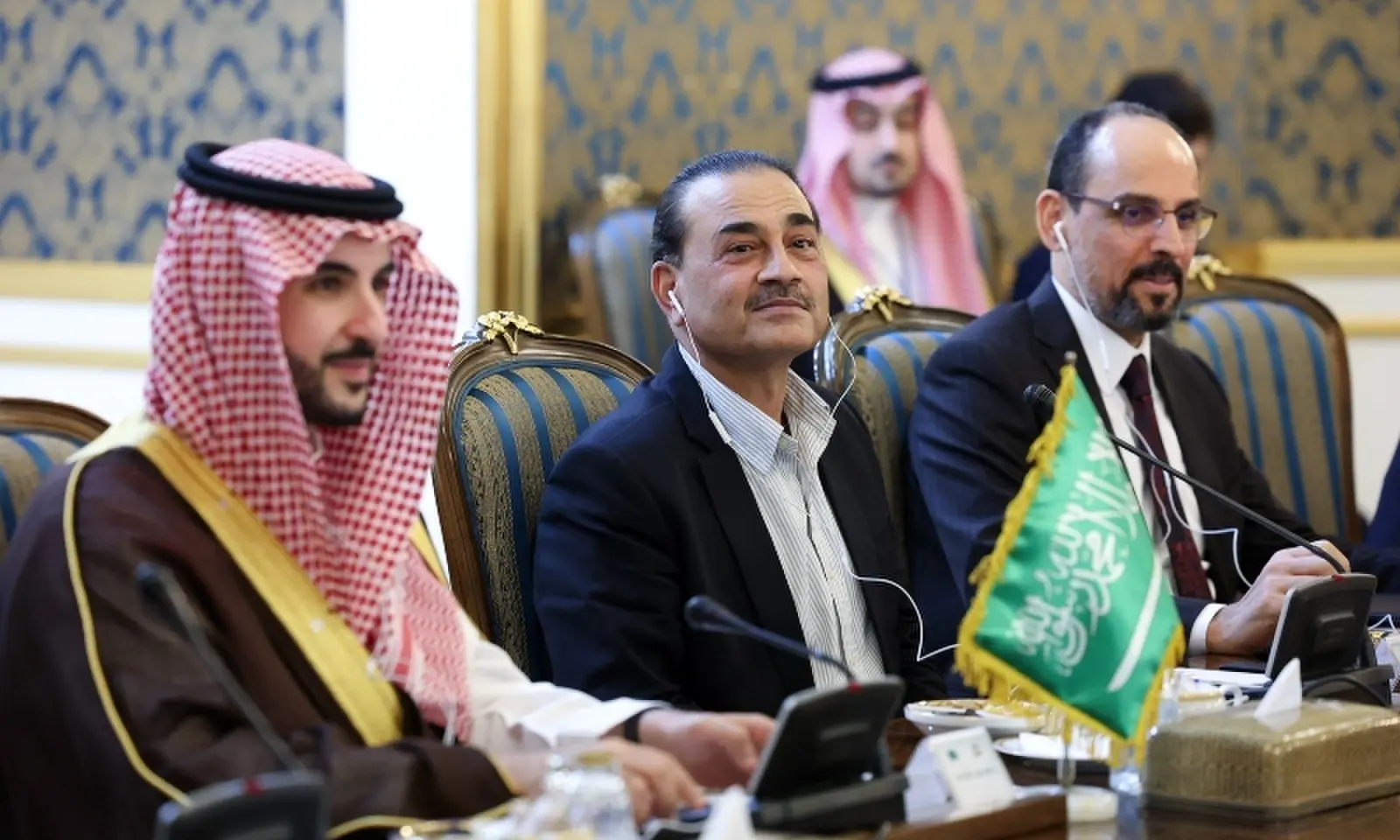
When Saudi defence minister Prince Khalid bin Salman, Field Marshal Asim Munir and Türkiye’s intelligence chief Ibrahim Kalin sat down in Tehran on Monday with President Masoud Pezeshkian, Foreign Minister Abbas Araghchi and Mohsen Rezaei, secretary of Iran’s Supreme National Security Council, they came as guarantors of the Kingdom’s security, three weeks after activating collective deterrence against those attacking it. Riyadh said the visit was meant to open channels to “prevent the return of military escalation”. That is diplomacy from a position of strength, and the right use of the common defence architecture.
My proposition is simple. Pakistan is a guarantor of Saudi security, and its commitment under the Strategic Mutual Defence Agreement and the Mecca Joint Defence Agreement is firm.
These pacts are shields for the Kingdom, not swords against any neighbour, and a shield is only as strong as the resolve of those who hold it in their common interests. That resolve gives Pakistan’s diplomacy its weight, and Islamabad should use it to press for a regional non-aggression framework that includes Iran. Deterrence keeps the peace when no one doubts it will be honoured.
Reading between the lines
Consider the texts. In September 2025, Saudi Arabia and Pakistan signed the Strategic Mutual Defence Agreement, whose published summary states that “any aggression against either country shall be considered an aggression against both”. Pakistan’s Foreign Office said at the time that it was “defensive in nature and not directed against any third country”. Defensive does not mean tentative: an attack on the Kingdom is an attack on Pakistan and vice versa.
The second instrument, the Mecca Joint Defence Agreement signed by Saudi Arabia, Türkiye and Pakistan on August 7, 2026, is more detailed. Article 2 provides that “an externally originating armed attack against any of the ‘Parties’ shall be considered an attack against all”, and the parties “shall determine the scope and nature of the support to be provided following an objective assessment” and act “within the limits of their available resources”. Article 12 preserves obligations under earlier treaties. These are the clauses of a serious alliance: a clear commitment to collective defence, delivered by joint decision.
Neither text names an adversary, and the only invocation shows what the alliance is for, and that it acts. On October 5, after Houthi strikes on the Kingdom, the partners agreed to “activate collective deterrence measures … in response to the attacks and all those responsible for them”. That decision moved the alliance from paper to posture. The threat is the missiles and the drones fired at Saudi cities and infrastructure.
On Monday, as the delegations met in Tehran, the Houthis claimed fresh strikes on Riyadh airport and the East-West pipeline, claims Saudi Arabia has not confirmed and which remain unverified. Egypt’s parliament the same day authorised military support for the Kingdom.
Washington has raised no objection. Asked about Turkish and Pakistani deployments, President Donald Trump said: “I think they want to help Saudi Arabia, and I think that’s good.” An alliance that stands behind Riyadh without alarming Washington speaks to anyone with authority.
Iran’s position
Iran’s posture is the other half of the equation. In August, Foreign Ministry spokesman Esmaeil Baghaei said: “We have not received a formal invitation [to join the alliance], but proposals have been raised for dialogue with these countries on matters related to collective security in the region.” Formal membership is not realistic: Tehran’s preference for “security originating from within the region” implies an order without American forces, which the signatories do not necessarily share. But structured dialogue is realistic, and it is precisely what Pakistan, Saudi Arabia and Türkiye carried to Tehran.
The diplomatic gap between Washington and Tehran remains wide. The US wants enrichment curbed and IAEA inspectors back; Iran wants the naval blockade lifted and a return to the June memorandum of understanding.
An Iranian official told Iran International that nuclear issues would not be discussed until Tehran’s demands were met. Two unnamed US officials said that forces could strike “within 96 hours” of an order. The US midterm elections fall on November 3. The window for diplomacy is narrow, and it is closing.
That is why the Tehran meeting deserves more credit than its modest outcome — an agreement to keep talking — suggests. A senior Pakistani security official said the aim was “a regional non-aggression network.” Pakistan brought Riyadh, Ankara and Tehran to the same table at a moment of acute danger, as the Kingdom’s defence partner, not a bystander.
What next?
First, the alliance should resource its defensive tasks: air and missile defence, intelligence sharing and rotational presence to protect the Kingdom from attacks by non-state actors. Egypt, whose foreign minister says accession is under “serious consideration”, should be welcomed on the same terms.
Second, a non-aggression track with Iran should run beside the alliance, not inside it, so that dialogue never dilutes deterrence. Pakistan, Saudi Arabia, Türkiye and Qatar are well placed to act as its guarantors and facilitators. Regular contact among defence and security chiefs would lower the risk of miscalculation in the Gulf and in Yemen.
Third, Pakistan should keep its channels credible in both capitals. Its value to Washington and to Tehran lies in being trusted by each, and its commitment to Saudi Arabia rests on the Kingdom’s security. Pakistan shares a long border with Iran and a deep bond with Gulf; its stake in the stability of both flanks is matched by its resolve to stand by its partners.
Islamabad’s course, then, is to keep its treaty commitments firm and its deterrence credible, so that restraint is never mistaken for hesitation, while strengthening the confidence of Riyadh and Ankara and the security of Pakistan’s western frontier.
That is what Field Marshal Munir’s presence in Tehran signalled: Pakistan stands with the Kingdom, and the path away from escalation runs through respect for its security. For Pakistan, diplomacy backed by deterrence is strategy at its most disciplined. The lasting measure of power is not only the wars a state can fight, but the wars its strength and judgement deter.