Closure of Riyadh airport extended after deadly Houthi strikes
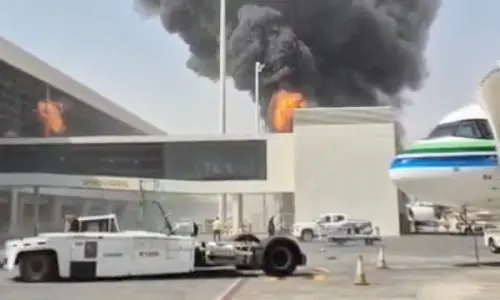
Saudi authorities said on Monday they were extending the suspension of operations at the international airport in the capital, Riyadh, after deadly weekend attacks by Yemen’s Houthis.
Operations at King Khalid International Airport, Saudi Arabia’s second-busiest airport after Jeddah, were suspended to “allow for the completion of procedures to ensure the safety and operational readiness of the airport’s facilities”, the Saudi civil aviation authority said in a statement.
The airport has been shut since an attack on Saturday that killed 13 people and wounded more than 300, the deadliest in the kingdom in more than a decade. On Sunday, another attack killed one Pakistani and injured nearly a dozen others.
The attacks marked one of the most significant disruptions to Saudi aviation in years, adding to pressures on an industry already grappling with conflict across the Middle East.
The airport cancelled 99.7 per cent of all scheduled flights on Sunday, according to aviation analytics firm Cirium. An air traffic tracker from Flightradar24 showed no planes over the city.
The disruption has forced airlines across Europe and Asia to suspend services, while the Federal Aviation Administration advised US carriers on Sunday to exercise caution when flying to or over Saudi Arabia.
Lufthansa Group has cancelled all flights to Riyadh until October 16, while Air France-KLM has extended a previous suspension of services to and from the Saudi capital until the end of the month.
Abu Dhabi’s Etihad Airways was among the airlines that further extended Saudi flight cancellations, affecting around 20 flights to Riyadh, Jeddah and Dammam on Monday and Tuesday.
The escalation with the Houthis has raised concerns over the broader economic impact. Saudi Arabia’s real gross domestic product is projected to contract by 3.6pc this year, reflecting a combination of factors including lower oil activity.
The attacks have put events scheduled in Riyadh this month under pressure, including the kingdom’s flagship investment conference and the WPC Energy Congress, where several top oil executives were dropped from the programme.
Video released by Saudi authorities shows moment of Saturday blast
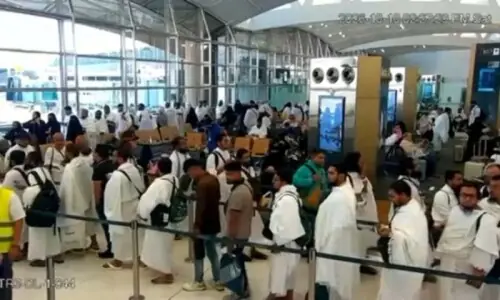
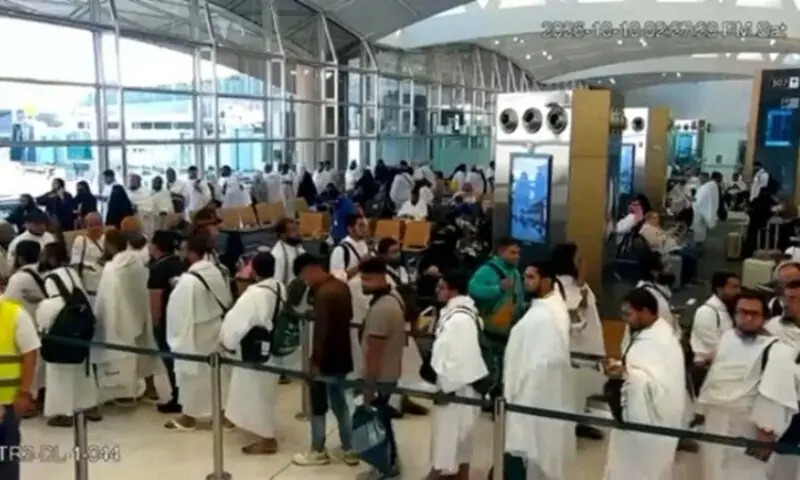
Muslim pilgrims wrapped in white garments queued for a document check at Riyadh’s international airport, when a powerful explosion brought chunks of the ceiling down on their heads, footage released on Monday by Saudi authorities showed.
Gate workers dived under their desks as passengers scrambled away from the direction of the blast, in dramatic security camera footage released by the Saudi media ministry showed the moment of the deadly strike on Saturday.
Smoke and debris cloud the images, leaving only a sudden fire visible, while some blurry figures appear too shocked to flee.
Many of the passengers in the video released by Saudi authorities appear to be pilgrims headed to Makkah on Umrah, the high season of which is just beginning as the intense summer heat starts to ease in Saudi Arabia.
Saudi authorities have warned of potential legal consequences against witnesses speaking out about strikes and have restricted media from accessing attack sites to independently report on them.
The official release of footage from the deadliest attack on Saudi soil in a decade is a notable development after the government for weeks offered few public details on the extent of Houthi strikes on the kingdom.
The Saudi Gazette said the footage underscored “the danger posed to innocent travellers whose journeys are dedicated to worship”, adding that the attack “raises serious questions about the Houthis’ claims to religious legitimacy”.