'Can sacrifice development, not security': Governor Kundi, Naqvi chair KP apex committee meeting
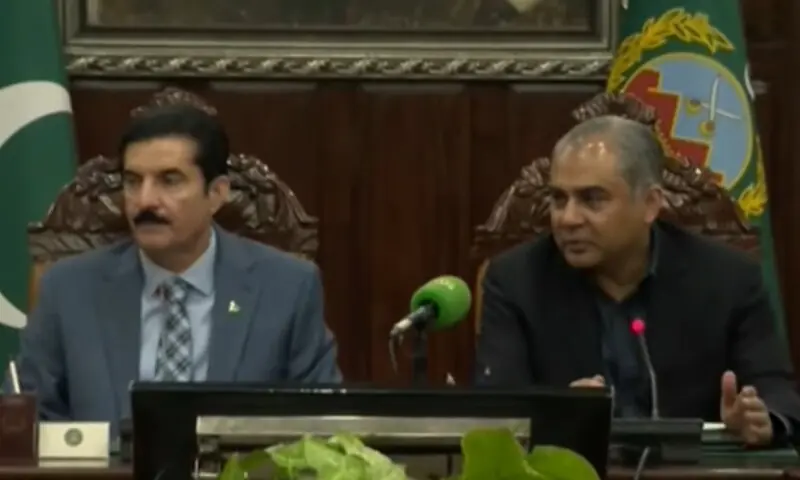
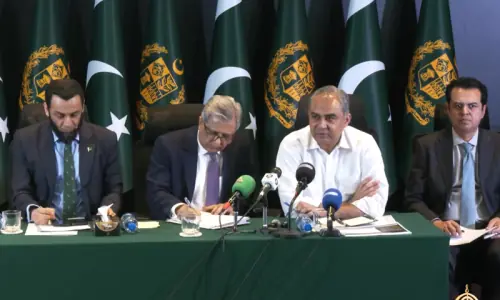
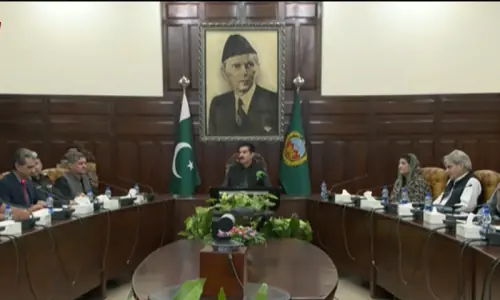
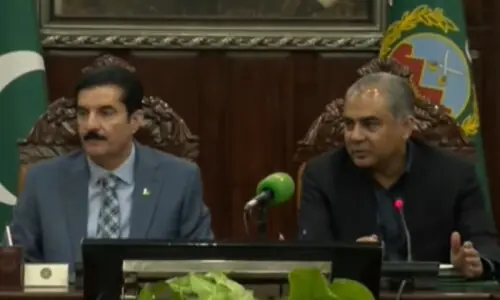
Khyber Pakhtunkhwa Governor Faisal Karim Kundi and Interior Minister Mohsin Naqvi on Monday co-chaired a meeting of the provincial apex committee, a day after the imposition of governor’s rule and an emergency in the province.
Addressing the meeting, Kundi — who is now in charge of running the province — asserted that under the new set-up, tackling terrorism would be the priority.
“We can sacrifice our development, but never security,” Kundi vowed as he noted the “lack of synergy” in counterterrorism efforts in the province.
“Now it will show that there is (synergy),” he said, adding that the administration will “fulfil the demands of the Counter-Terrorism Department and police”. He stressed that the administration will “work 24/7” as the federal government and the “people had put their faith in us”.
“We have to show the difference,” he said, adding that there was no time for holidays or weekends. He stressed that the administration was moving towards “result-oriented” actions, rather than cosmetic measures.
Noting the scourge of terrorism in the province, Kundi said that the “people have no freedom to live, travel and do other things” in districts such as Dera Ismail Khan, Tank and Waziristan.
He called for working towards restoring freedom of movement for people in terrorism-affected districts.
“People from our province also want peace, prosperity and development,” he said. Kundi expressed the hope that the new administration be remembered well.
“It should be written in history that these people came and restored peace in the province,” he said. The governor added that he will hold apex committee meetings regularly.
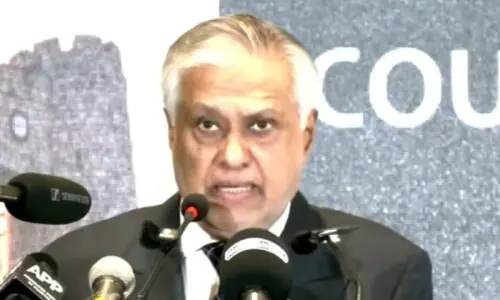
Co-chairing the meeting alongside Kundi, Naqvi remarked: “Today is the first time I can proudly say that the federal and the provincial governments are on the same page.
“In the past 2.5 years, we have seen many ups and downs,” Naqvi said. The minister stated that the most difficult work was that the war against terrorism was being fought with “no backend support”.
Criticising the PTI-led government, he said: “It was the [provincial] government’s job to lead the war against terrorism, but they did not do it. They kept bowing their heads only because they did not want to compromise.
“But any war, no matter how many resources you have, cannot be won until the government leads it,” he stressed.
“Not once, not twice; we requested them to work with us dozens of times,“ Naqvi emphasised.
“One thing I will ask you to note is that this is the same force, these are the same people, but the only difference you will see is that … the same people will show you results.”
He further said: “It’s not like things will change in a day; there will be difficult times. But all of us, including the governor, police, administration, and the federal government.
“We have to face and defeat them together. Our intentions are pure; God will help us produce results.“
A day earlier, Kundi addressed the first meeting of the KP Advisory Council — formed by the federal government after the imposition of emergency and governor’s rule — where he outlined similar directions.
“We have to fast-track things. There will be zero tolerance for corruption. Things should be done in a timely manner,” he said, adding that they would have to demonstrate a clear difference from the work done by their predecessors.
Kundi also stressed that the first order of business was the law and order situation, adding that there should be no hesitation in taking inspiration from other provinces.
Sunday’s directives came after a meeting of the federal cabinet deliberated on the security situation in PTI-led KP. During the meeting, the cabinet noted the provincial government’s “deliberate disengagement from the fight against terrorism”.
Subsequently, the federal government imposed emergency under Article 232 and the governor’s rule under Article 234.
Soon after, it also authorised the deployment of Pakistan Army troops and assets in aid of civil power in the province. On the ground, shipping containers were placed around the city of Peshawar to block several roads, with heavy police deployment.
Meanwhile, federal ministers alleged that the PTI-led government in KP had a “nexus” with terrorist groups, as the Centre sought to explain that the province’s security situation necessitated the imposition of emergency there.
The Centre and the PTI have been at odds over various issues, particularly on the counterterrorism policy, which was one of the main reasons behind the breakdown of their October 3 talks.
The PTI has said it was being left out of security decisions concerning KP, which the Centre has denied. It also calls for reviewing the counterterrorism policy and opposes military operations.
On the other hand, the Centre has been criticising the KP government’s efforts to combat terrorism in the province and objects to its stance on dialogue with the Afghan Taliban.