The advertising business in Pakistan is undergoing a fundamental change. For decades, marketing was relatively straightforward. A company launched a product, appointed an advertising agency, produced a television commercial, bought airtime, put up billboards and perhaps hired a celebrity as its brand ambassador. The consumer has moved.
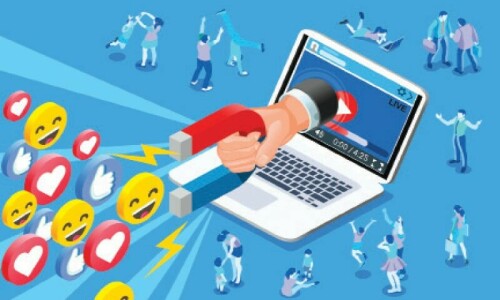
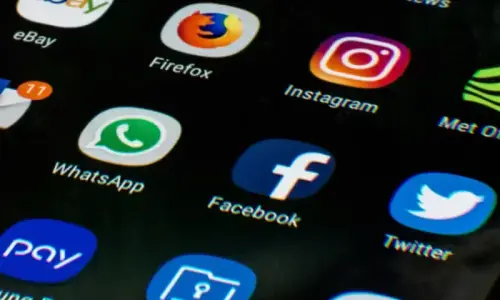
The advertising rupee is beginning to follow. Pakistan now has around 80 million adult social-media user identities. TikTok alone has an advertising reach approaching 80m adults, while YouTube reaches around 54m and Instagram around 22m. More importantly, Pakistanis are spending increasing amounts of their media time on these platforms.This has created a new industry: the influencer economy.
Consider the numbers. Jannat Mirza has over 25m followers on TikTok. Ducky Bhai has over 10m YouTube subscribers. Rajab Butt’s family channel has around 9m. Hania Aamir has crossed 20m followers on Instagram.
There are then thousands of smaller influencers specialising in fashion, food, beauty, technology, travel, gaming, automobiles and financial services. Why should companies care?
Content creators themselves will become businesses employing videographers, editors, and sales teams
Because advertising has historically been about renting somebody else’s audience. A brand paid a television channel because the channel had viewers. It paid a newspaper because the newspaper had readers. It paid for a billboard because people drove past it.
An influencer also owns an audience. The difference is that the relationship with that audience can be considerably more personal. If a television commercial tells me a restaurant serves excellent food, I know I am watching an advertisement. If someone whose food reviews I watch every week visits the restaurant and recommends a particular dish, the communication is different. The advertiser is effectively borrowing the influencer’s credibility.
Influencers get paid in several ways. The simplest is a fixed payment for a post, reel or video. Smaller influencers may receive a few thousand rupees or simply free products. Established creators can charge tens or hundreds of thousands of rupees. Celebrity influencers can command considerably more.
But the more interesting models are performance-based. An influencer can receive a commission for every product sold through a unique link or promotional code. Instead of paying Rs1m for an advertisement and hoping consumers buy the product, the company can pay according to actual sales.
Thus, advertising is becoming measurable distribution. Imagine a clothing company working with 100 influencers. Each receives a different promotional code. Within days, the company knows that influencer A generated 500 sales, Influencer B generated 50 and Influencer C generated none. The next marketing budget practically allocates itself. This also changes the economics for small businesses.
A new Pakistani cosmetics brand cannot compete with multinational spending but it can identify 50 beauty influencers whose followers match its target customer, send them products and compensate them partly on sales.
It also explains why follower count is becoming less important. An influencer with 50,000 followers interested in motorcycles may be more valuable to a motorcycle manufacturer than an entertainer with 5m followers. The question is not how many people follow you. It is whether they are the people I want to sell to — and whether they buy.
The next stage is live commerce. China has demonstrated how powerful the combination of influencers, entertainment and e-commerce can become. The influencer does not simply advertise a product. He or she demonstrates it live, answers questions, creates urgency and allows the customer to purchase immediately.
Pakistan has most of the ingredients required: smartphones, social media, digital payments, e-commerce logistics and, most importantly, a young population comfortable buying through a screen. An influencer can therefore move from being an advertiser to becoming a retailer. However, there are risks.
The first is transparency. Consumers frequently cannot distinguish between an independent recommendation and paid promotion. If an influencer is compensated that relationship should be disclosed. This becomes particularly important when influencers promote financial or health products. Trust cannot become a substitute for consumer protection.
The second problem is fake influence. Followers can be purchased, views can be generated, and engagement can be manufactured. Companies therefore need to stop measuring influencer marketing primarily through followers and start measuring it through customer acquisition cost, engagement, conversion and repeat purchases.This will also professionalise the industry.
Pakistan will increasingly see influencer agencies, talent managers, analytics companies, affiliate networks and technology platforms connecting brands with creators. Influencers themselves will become businesses employing videographers, editors, researchers and sales teams.
Traditional advertising will not disappear. Television remains powerful, billboards work, celebrity endorsements will continue, but the monopoly has disappeared. A Pakistani with a smartphone can now build an audience larger than many traditional media properties without owning a television station, printing press or an advertising agency.
And once you own the audience, you own something advertisers want. Pakistan’s next important retail channel may not be a shopping mall, television station or e-commerce website. It may simply be someone you follow.
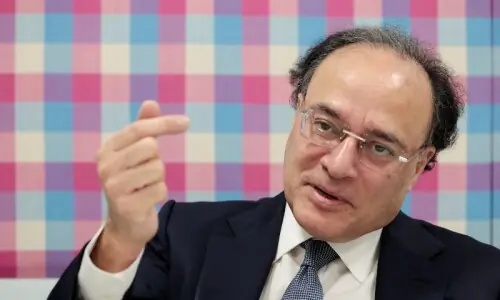
The writer is the Chairman of the Pakistan Fintech Network
Published in Dawn, The Business and Finance Weekly, October 12th, 2026