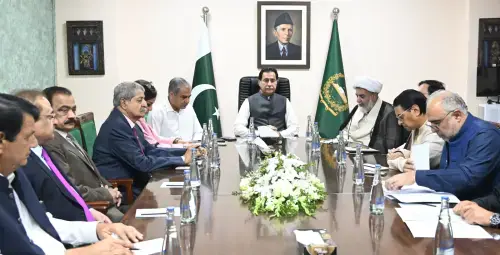
DG ISPR says Pakistan acting as an ‘honest broker’ in US-Iran war
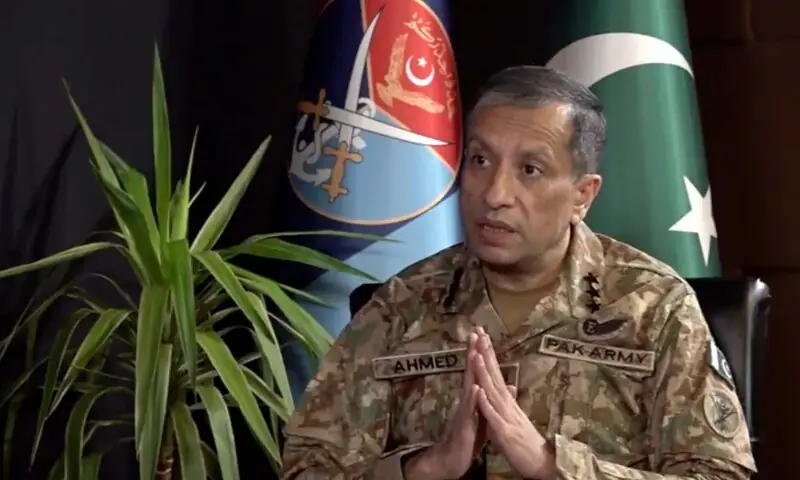
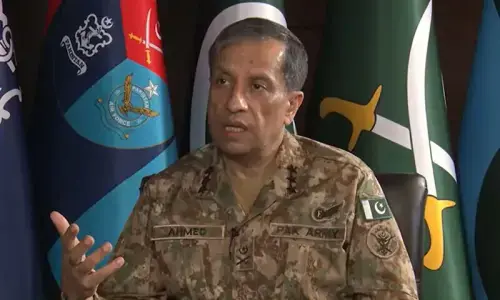
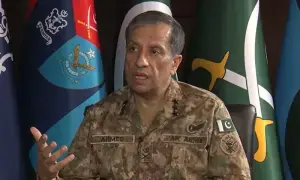
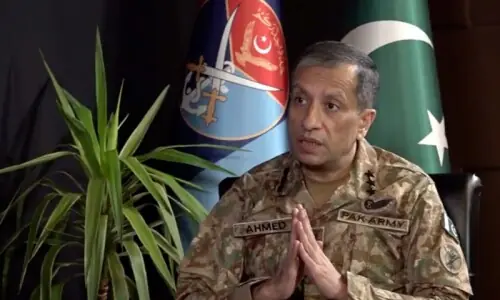
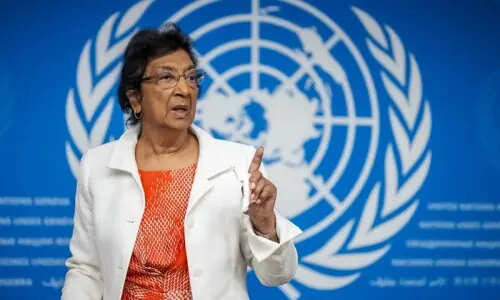
Inter-Services Public Relations (ISPR) Director General Lieutenant General Ahmed Sharif Chaudhry has said Pakistan is acting as an “honest broker” while mediating between the United States and Iran, reiterating the commitment to a “negotiated and peaceful” outcome.
The military’s spokesperson made the remarks in an interview with CNN correspondent Ivan Watson, who posted a small clip of the interview on his X account.
During the interview, Lt Gen Chaudhry was asked whether Pakistan can “still play a neutral role [in the US-Iran war] when Iran has targeted Saudi Arabia in the past, with the Makkah alliance, and now you have an Iranian ally — the Houthis — attacking Saudi Arabia”.
“Can Pakistan be a neutral broker?” Watson asked.
In response, Lt Gen Chaudhry said: “Pakistan has been exhibiting that we are a very honest broker … everything stems from honesty. We have been very clear on where Pakistan stands with all our partners”.
He recalled that when the US-Iran war began, Pakistan had openly condemned Israeli attacks on Iran and also condemned Iran’s retaliatory campaign in the Gulf.
“So we have been honest about that. We don’t mince our words; we have a stake in regional peace and stability. We tell all that nobody benefits from expanding this war,” he said.
Lt Gen Chaudhry said Pakistan was committed to a “negotiated and peaceful” outcome to the conflict. He stressed that the country was doing “whatever is possible, whatever is necessary so that the gap narrows”.
“We want that the conflict should not expand horizontally or vertically.”
In a small clip of the interview released on Wednesday, Lt Gen Chaudhry was asked about deployment of Pakistani troops in Saudi Arabia under the Makkah defence alliance. In response, he said Pakistani troops were in Saudi Arabia, adding that they had been in the kingdom “for decades” and across multiple domains.
In a longer clip of the interview posted by state-run Pakistan TV on X on Friday, the military’s spokesperson said that such questions were dwelling on the operationalisation of the force.
“The Makkah accord, its actualisation and whatever effects it achieves, that will be purely defensive. That’s how the partners, that’s how the principles have agreed, that’s how it is going to manifest itself,” he said.
“How that will be done, which component will go there, how it will be employed, that’s for the operational commander to decide. And the operational details, because it’s a military conflict … no participating country starts disclosing how and where I am going to employ my forces,” he said.
“So how and when they will be employed, you will see [for] yourself,” he said. However, Lt Gen Chaudhry hastened to add that it would be “defensive in nature”.
He went on to say that under the United Nations charter, all countries had the “right to self-defence”.
“It is best, that rather than the threat [manifesting] into an actual operation or a military conflict, you ward it off through collective deterrence,” he said.
He went on to say that the signatories of the Makkah defence pact, Pakistan, Saudi Arabia and Turkiye, had potent military and diplomatic capabilities.
“So, then anyone who is having some funny ideas against any other will hopefully think twice, thrice or multiple times. So, that stops something terrible [from] happening. That is how collective deterrence works,” he said.
The remarks by the military’s spokesperson come amid escalating Houthi attacks on Saudi Arabia and as the US-Israeli war on Iran, in which Islamabad has been playing the role of a mediator, shows no signs of abating.
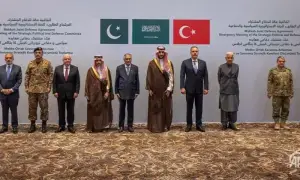
Meanwhile, the defence pact between Pakistan, Saudi Arabia and Turkiye, signed on Aug 7, aims to strengthen collective deterrence and empower its signatory states to treat an attack against one of them as an attack against all of them.
On Monday, the three countries agreed to the deployment of military forces and capabilities rapidly in the kingdom during an emergency meeting of alliance in Riyadh.