THE IMF’s staff-level agreement with Pakistan on the fourth balance-of-payments and the third climate financing reviews came with little drama — which itself says something.
The mission spent two weeks in Islamabad, wrapped up the 2026 Article IV consultation, and left with a deal that releases $1.2bn once the IMF Executive Board approves it. Nobody expected a different outcome. The Fund is unlikely to push hard against a borrower that is hitting its fiscal targets. Compare this with March, when talks went virtual, ended without an agreement, and dragged on until the Board cleared funds in May. The recent round made fewer headlines because the hard bargaining over the budget had already been done. The current budget is built around a primary surplus of 2pc of GDP, and the lender is now collecting on that commitment. A programme that has settled into a routine reassures markets. It also shows how little room Islamabad has to depart from the script.
The lender’s own assessment is generous. It says the authorities have successfully navigated the fallout of the Middle East conflict and that policies have preserved stability. Reserves stand at about $21.5bn and inflation has eased from its May peak. Yet, a closer look shows that, at 10.3pc in September, inflation remains well above the State Bank’s medium-term target range. Last year’s growth of 3.6pc, with an annual population growth of nearly 2pc, leaves per capita gains thin.
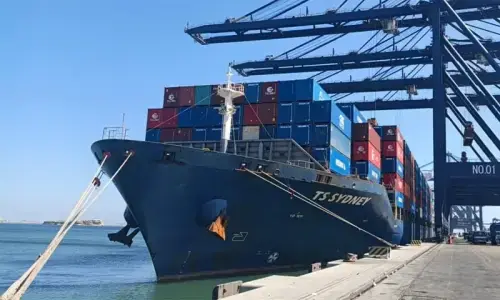
The World Bank put poverty at about 42.4pc for 2025, and said growth was too weak to prevent an additional 1.9m people from slipping below the line in a single year. Exports tell the same story. Goods exports fell about 6pc to $30.1bn, of which textiles accounted for $17.9bn. Imports rose 8pc to $69.8bn, widening the merchandise trade deficit to $39.6bn. Growth in IT services kept total exports near $40bn, which though welcome, is no substitute for a manufacturing base that sells more abroad.
The recommendations deserve more attention than the headline figure. The lender wants the fuel support scheme phased out, calling it costly and too broadly targeted. Unwinding a broad subsidy is politically harder than agreeing to end it on paper. It also wants timely tariff adjustments so that the circular debt does not return, a medium-term tax strategy, private participation in power distribution, better governance of SOEs, and progress on privatisation. Many who have read the earlier review statements will recognise the list. When the same agenda is repeated, the question one must ask is: how much has changed? The Fund’s language of commitment does not answer it. The tranche will arrive. What the government has yet to demonstrate is an economy that grows fast enough to cut poverty and sells more abroad — an issue that cannot be put off much longer.
Published in Dawn, October 9th, 2026