Pakistan joins Saudi Arabia, Turkiye in ‘all for one’ pact


• MBS, Shehbaz, Erdogan sign Makkah Joint Defence Agreement to boost ‘collective deterrence against any aggression’
• PM hopes accord will serve as ‘shield of peace’; Erdogan says alliance is open to other friendly nations • Saudi minister insists new bloc no threat to ‘any country’
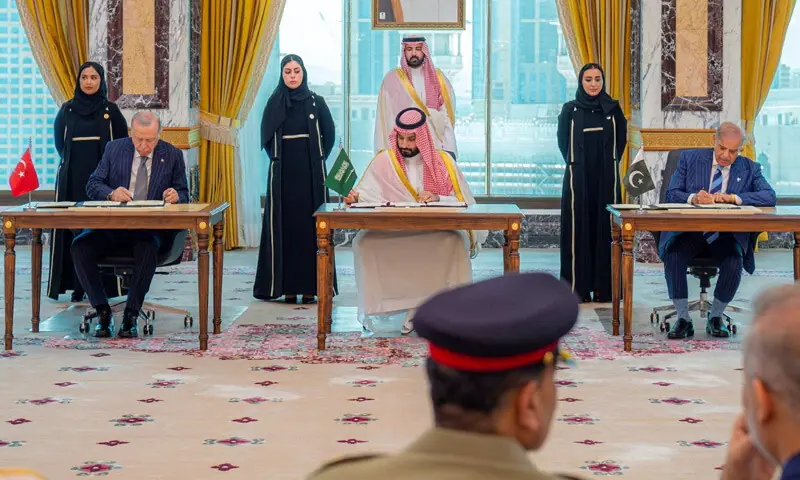
ISLAMABAD: Pakistan, Saudi Arabia and Turkiye on Friday signed a joint defence pact in the holy city of Makkah, which empowers member states to treat an attack against one of them as an attack against all.
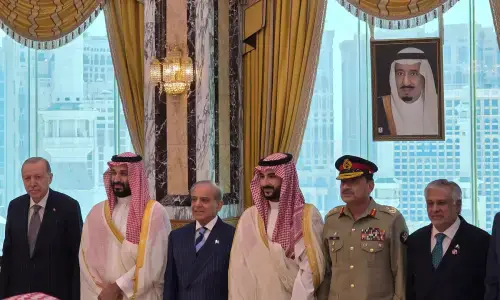
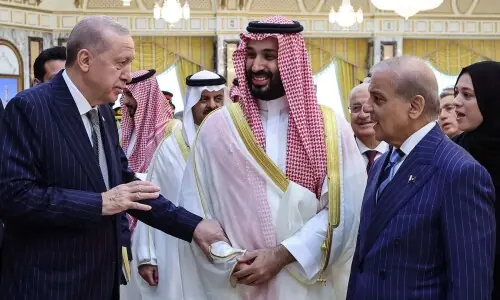
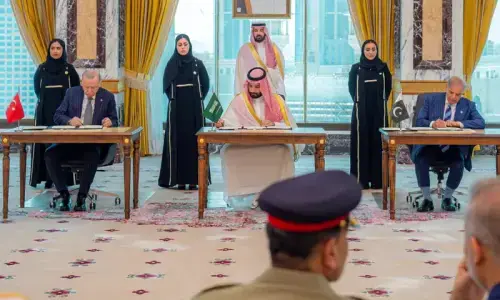
The Makkah Joint Defence Agreement, which seeks to strengthen the collective security of the three states, was signed by Prime Minister Shehbaz Sharif, Saudi Crown Prince and PM Mohammad bin Salman, and Turkiye’s President Recep Tayyip Erdogan at the Al-Safa Palace.
The signing of the agreement was announced by three countries through a joint statement, which was published by Pakistan’s Foreign Office (FO) and Saudi Arabia’s official SPA press agency.
It said the pact reflected the three countries’ “shared commitment to further strengthening their collective security and to promoting peace, security, and stability in the region and beyond, in pursuit of a secure and prosperous future”.
“The agreement is intended to strengthen collective deterrence against any act of aggression, and stipulates that any armed attack against any one of the three states shall be regarded as an attack against them all.”
It also “provides for the enhancement of all aspects of defence cooperation” among the three countries, the statement added.
The agreement is “guided by the longstanding historical ties among the three states, based on the enduring bonds of brotherhood and Islamic solidarity that unite them, and building upon their shared strategic interests and longstanding defence cooperation”.
During the Makkah Summit for Joint Defence, the “distinguished relations” between the three countries were reviewed, “along with a number of issues of mutual interest”, the statement noted.
From Pakistan’s side, Chief of Defence Forces (CDF) and Chief of the Army Staff Field Marshal Asim Munir, Deputy PM and Foreign Minister Ishaq Dar, and Defence Minister Khawaja Asif were also present at the signing ceremony.
The defence and foreign ministers of Saudi Arabia and Turkiye were in attendance as well.
Following the formal signing of the pact, photos released by Saudi media showed the world leaders offering prayers at the Al-Safa Palace, overlooking the Holy Ka’aba.
‘Shield of peace’
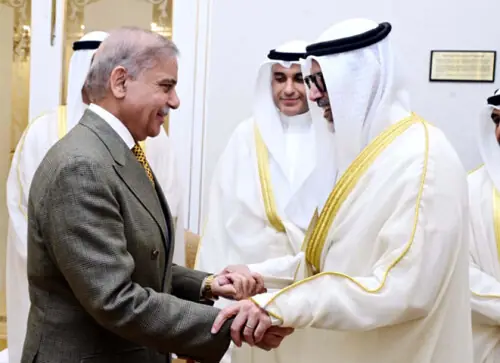
PM Shehbaz Sharif described the signing of the Makkah Joint Defence Agreement as a “historic pact”, saying the three countries were united by faith, friendship and a shared commitment to peace and security.
In a post on X, the prime minister said he was honoured to sign the agreement alongside the Saudi crown prince and the Turkish president.
He said the pact would serve as a “shield of peace” for generations and expressed hope that it would bring prosperity to the three countries and the wider Muslim world. Shehbaz also appreciated Field Marshal Asim Munir’s efforts and dedication towards the agreement.
Saudi Foreign Minister Faisal bin Farhan said that the signing of the joint defence agreement by the crown prince, the president of Türkiye and the prime minister of Pakistan underscored the depth of the fraternal and strategic relations between the three countries.
He said the agreement marked an important milestone in their defence cooperation and reflected their shared desire to coordinate efforts to address challenges and threats affecting regional security and stability. He added that the pact embodied the three countries’ shared political will to safeguard security, support a more secure regional environment and pave the way for greater development and prosperity.
Saudi Arabia’s Deputy Minister for Public Diplomacy Rayed Krimly said the agreement “does not represent an effort to establish a military axis or a sectarian bloc”. “Nor is it linked to any nuclear ambitions or arms race; rather, it is focused on building sustainable capabilities,” he wrote on X.
He noted that the deal “does not constitute a threat to the security of any country in the region, nor does it represent an escalation of tensions between any two states”. The Saudi official further said the agreement “does not supersede or replace any existing bilateral or multilateral agreements between these countries”.
‘Open to other nations’
Turkish President Erdogan also reiterated this sentiment, saying that the pact targets no country and remains open to participation of other friendly nations seeking peace, prosperity and stability in the region.
In a post on the Turkish social platform NSosyal, Erdogan said on Friday the agreement, based on the principle of collective deterrence, would strengthen security and defence cooperation, joint defence industry projects and counterterrorism efforts. He said the agreement also reaffirms the right to self-defence as defined under Article 51 of the UN Charter.
“The agreement does not target any country and is open to the participation of all brotherly countries seeking peace, prosperity and stability in our region,” Erdogan said.
Türkiye, he added, would firmly maintain its principled stance in favour of resolving conflicts and crises through dialogue and diplomacy, based on respect for international law and in line with its vision of regional ownership.
Published in Dawn, August 8th, 2026