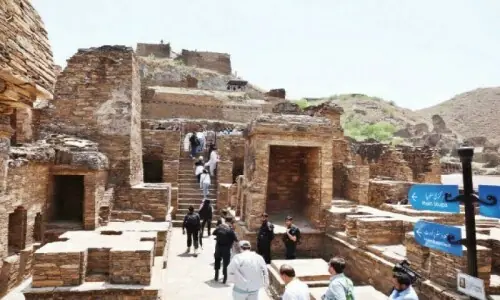
PAKISTAN’S request to Unesco to consider Rani Ghat and Banbhore for the World Heritage List is welcome. It follows the recent expansion of the country’s tentative list from 25 to 37 properties, with 12 new cultural and heritage sites added this year.
Both Rani Ghat and Banbhore speak to civilisations that flourished on this land long before the modern state existed, and greater international recognition could help attract scholarship, tourism and conservation funding.
Plans to take Gandhara exhibitions abroad, establish “Gandhara Corners” and facilitate longer visits to Buddhist sites are also sensible. Pakistan has for too long treated its archaeological wealth as a niche interest rather than a cultural and economic asset. But enthusiasm for adding names to Unesco’s list must be matched by equal seriousness about the six Pakistani properties already inscribed on it.
Similar vigilance is required at Lahore Fort and Shalamar Gardens, where planning and development around the property must not compromise its heritage value.
The record there is mixed. The World Heritage Committee this year acknowledged conservation progress at Mohenjodaro and Makli, while making clear that considerable work remains. Mohenjodaro still requires attention to drainage, salinity and an integrated management plan; Makli needs sustained conservation and adequate financial and human resources.
Recognition cannot become an end in itself. Federal and provincial authorities should publish conservation plans and budgets for every listed site, maintain specialist teams, improve visitor facilities, signage and access, and promote these places intelligently and consistently at home and abroad.
Tourism revenues should be transparently reinvested in preservation, with local communities given a stake in protecting the sites. Seeking recognition for Rani Ghat and Banbhore is worthwhile.
But Pakistan’s strongest case for adding new treasures to the World Heritage List is to show that those already recognised by the world are being cared for as if they matter.
Published in Dawn, September 4th, 2026