Pakistan seeks regional support to shore up energy security

• Minister says govt focusing on domestic exploration, greater refining capacity
• Insists fuel price relief possible if international rates remain stable
• Global firm tasked with developing long-term energy security mechanism
• Turkish Petroleum to invest around $120m in offshore drilling
• Dar says Makkah defence accord purely defensive
• Pact open to other regional countries willing to uphold its principles
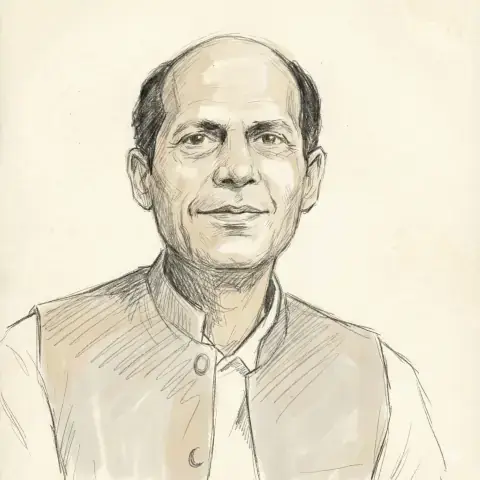
LAHORE / ISLAMABAD: Pakistan is stepping up efforts to strengthen its energy security through regional cooperation, domestic exploration and greater refining capacity, Petroleum Minister Ali Pervaiz Malik said on Sunday, pointing to planned Turkish investment in offshore drilling and a strategy to reduce the country’s heavy dependence on imported energy.
Mr Malik, who also held out the prospect of relief in domestic fuel prices if international rates remained stable in the coming days, said Pakistan should leverage its growing strategic and economic cooperation with Saudi Arabia and Turkiye to pursue sustainable economic growth.
Pakistan currently imports around 90 per cent of its energy requirements, while domestic oil production meets only a fraction of demand.
His remarks came as Deputy Prime Minister and Foreign Minister Ishaq Dar described the newly signed Makkah Joint Defence Agreement among Pakistan, Saudi Arabia and Turkiye as a “purely defensive” arrangement aimed at promoting regional peace, stability and prosperity rather than targeting any country.
Speaking to voters in his constituency and later to the media in Lahore, Mr Malik said Pakistan’s next goal should be economic progress following recent gains in the country’s regional and global standing.
“As Pakistan became an atomic power … we should today feel proud of the Makkah defence pact among Pakistan, Saudi Arabia and Turkiye,” the minister said.
He said Pakistan had also played a role in efforts to end the US-Iran war and facilitate an agreement, adding that the country should now focus on putting its economy on a sustainable growth path.
Mr Malik said Pakistan had emerged as a “net security provider” in the region and could play an important role in shaping regional economic and strategic cooperation.
He said the economic strength of Saudi Arabia, Turkiye’s development experience and Pakistan’s defence capabilities could complement one another and contribute to regional growth.
He said Prime Minister Shehbaz Sharif had taken a number of difficult decisions to steer the country away from a serious economic crisis.
“There was a time when people used to ask whether Pakistan would default or cease to exist,” he said, adding that the discourse had now shifted towards finding ways to put the country on the path to development.
Mr Malik said Pakistan had faced major challenges because of the conflict between Iran and the United States, particularly through volatility in international oil markets, but maintained that the country should now consolidate the gains made so far and create conditions for sustainable economic development.
Turning to petroleum prices, he said international markets had witnessed severe volatility during the conflict, leading to higher fuel costs and creating difficulties for consumers.
He said Pakistan had, however, avoided the kind of acute fuel shortages and long queues witnessed in some countries in the region, attributing this to government planning and the prime minister’s instructions to ensure round-the-clock availability of fuel at filling stations.
“Certainly, many challenges came before us,” Mr Malik said, adding that despite limited resources, the government had tried to provide relief to consumers.
He said people could hear “good news” about petroleum prices in the coming days if international rates remained stable.
“If you see the Ogra website, the average prices are being calculated on the basis of daily prices in a week. In the last two days of this week, per-barrel petrol prices came down to $112 and then $108, and today the price is $100. So if this continues, you can understand well what will happen in the coming days,” he said.
The minister said the government had made every effort within its means to control petroleum prices and minimise the burden on consumers.
He added that the prime minister had promised to introduce a “fair and transparent” mechanism for determining petroleum prices.
Mr Malik pointed out that Pakistan imported around 90pc of its energy requirements, making the country highly vulnerable to fluctuations in international energy markets and geopolitical shocks.
He said the government had made the petroleum pricing mechanism more transparent, with relevant pricing sheets now available on Ogra’s website.
The minister questioned why Pakistan had remained dependent on imported energy for decades and why successive governments had failed to adequately develop domestic oil and gas resources.
He said Pakistan’s daily oil requirement had reached around 500,000 barrels, while domestic production stood at only about 70,000 barrels a day.
Mr Malik also questioned why petroleum levies had continued to be collected over the years without the country developing adequate strategic reserves.
He said PM Shehbaz and Field Marshal Asim Munir had tasked a major international company with developing a mechanism to address the country’s long-term energy challenges. “The mechanism will be presented to our leadership in the coming months,” he said.
The minister said the federal cabinet had already approved the refinery policy, describing it as an important step towards strengthening domestic refining capacity and reducing vulnerabilities in the energy sector.
He also questioned whether international companies could be expected to invest in Pakistan when local oil companies had allegedly been denied payments of more than Rs1.5tr over the years.
“If we have not paid our oil companies more than Rs1,500bn for years, will any company come here and work?” he asked.
Highlighting regional cooperation in the energy sector, the minister said Turkiye’s state-owned Turkish Petroleum would undertake offshore drilling in Pakistani waters, with an expected investment of $120m.
He said the initiative would form part of efforts to develop indigenous resources and reduce the country’s dependence on imported energy.
Mr Malik added that the tendering process for liquefied petroleum gas was scheduled to open on Monday (today) and that the government had also made arrangements for new gas connections as part of efforts to address long-standing issues in the gas sector.
Makkah accord ‘purely defensive’
Meanwhile, Deputy Prime Minister Ishaq Dar said the Makkah Joint Defence Agreement signed by Pakistan, Saudi Arabia and Turkiye was purely defensive in nature and was not directed against any country.
In a statement posted on X, Mr Dar said the accord, signed in Makkah on Friday, reflected the depth of brotherly relations between the leadership and peoples of the three countries.
His remarks came amid speculation that the framework could constitute a security mechanism directed against Iran.
Mr Dar said the Makkah Accord was the culmination of years of discussions and coordination and reflected a common desire to strengthen strategic cooperation in addressing peace and security challenges and advancing regional peace, stability and prosperity.
“The Makkah Accord is purely defensive in nature. It is not targeted against any country and its sole purpose is to further strengthen our ongoing efforts towards peace, stability and prosperity in the wider region,” he said.
He clarified that the accord did not abrogate or replace any existing bilateral or multilateral agreements between the three countries or with other countries and organisations.
Under the agreement, any external armed attack on one of the three countries would be considered an attack on all, consistent with the inherent right of individual and collective self-defence under Article 51 of the UN Charter.
Mr Dar said the accord remained open to any country in the region willing to uphold its fundamental principles and resolve differences through mutual respect, cooperation and peaceful means.
“The Makkah Accord is consistent with the fundamental pillars of our foreign policy,” he said. “Pakistan looks forward to continuing to work closely with all brotherly countries in the region towards lasting peace and stability.”
Published in Dawn, August 10th, 2026