Muttahida calls for countrywide referendum on new provinces
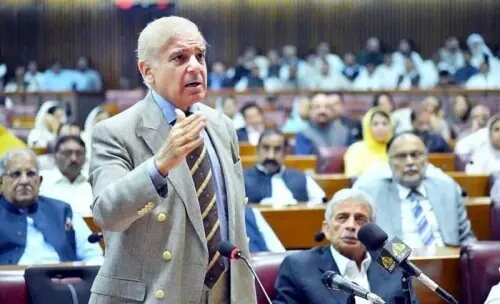
KARACHI: With the debate over administrative restructuring gaining momentum following the military’s call for a “governance reset” and Federal Interior Minister Mohsin Naqvi’s support for the creation of new provinces, the Muttahida Qaumi Movement-Pakistan (MQM-P) on Saturday reiterated its longstanding demand for new administrative provinces, demanding a countrywide referendum on the contentious issue.
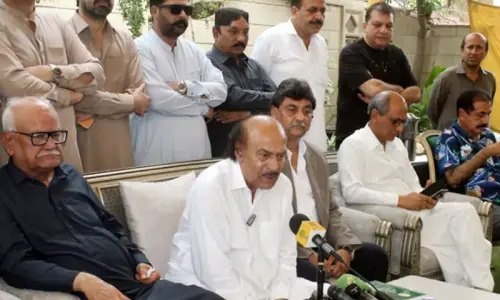
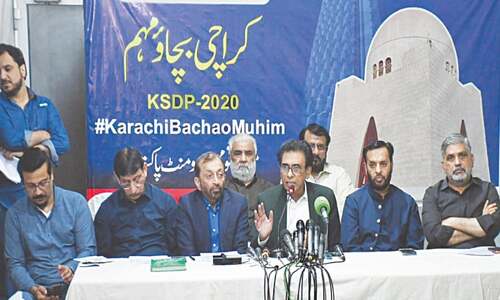
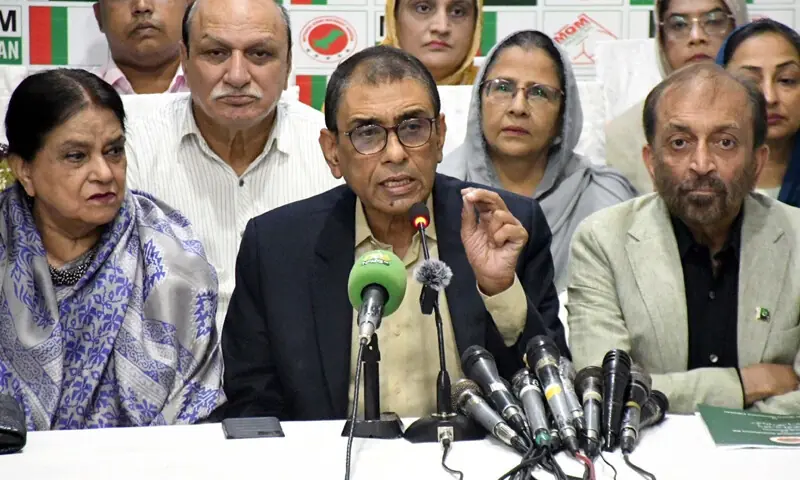
Addressing a press conference at the party’s Bahadurabad headquarters alongside senior leaders, MQM-P Chairman Dr Khalid Maqbool Siddiqui said the country’s existing political and administrative structure had failed to meet public needs and required fundamental reforms.
“Provinces are not sacred or immutable boundaries. If new administrative provinces are not created, the country cannot move forward,” Mr Siddiqui said, adding that administrative reorganisation should be viewed as a governance measure rather than a political controversy.
Accompanied by senior leaders Dr Farooq Sattar and Nasreen Jalil, he said the party believed Pakistan’s leadership should shift from hereditary political elites to the descendants of the country’s founders and the educated middle class.
“To save Pakistan from decline and put it on the path of progress, the reins of leadership must be entrusted to the ideological heirs of the founders of the nation and the capable middle class, rather than to traditional feudal and dynastic elites,” he said.
Dr Siddiqui maintained that creating new provinces would strengthen the federation by bringing government closer to the people. Commenting on Sindh, he claimed that a transparent population census would significantly alter the province’s political landscape.
Dr Sattar called for the implementation of Article 140-A of the Constitution, which provides for the devolution of political, administrative and financial responsibility to elected local governments.
He also demanded a countrywide referendum on the creation of new administrative units.
Dr Sattar said that Pakistan needed to move beyond decades of temporary and ad hoc policymaking and instead pursue structural reforms that empowered local governments and provided greater opportunities for young people to participate in national leadership.
Published in Dawn, August 2nd, 2026