Pipelines to bypass the Strait of Hormuz
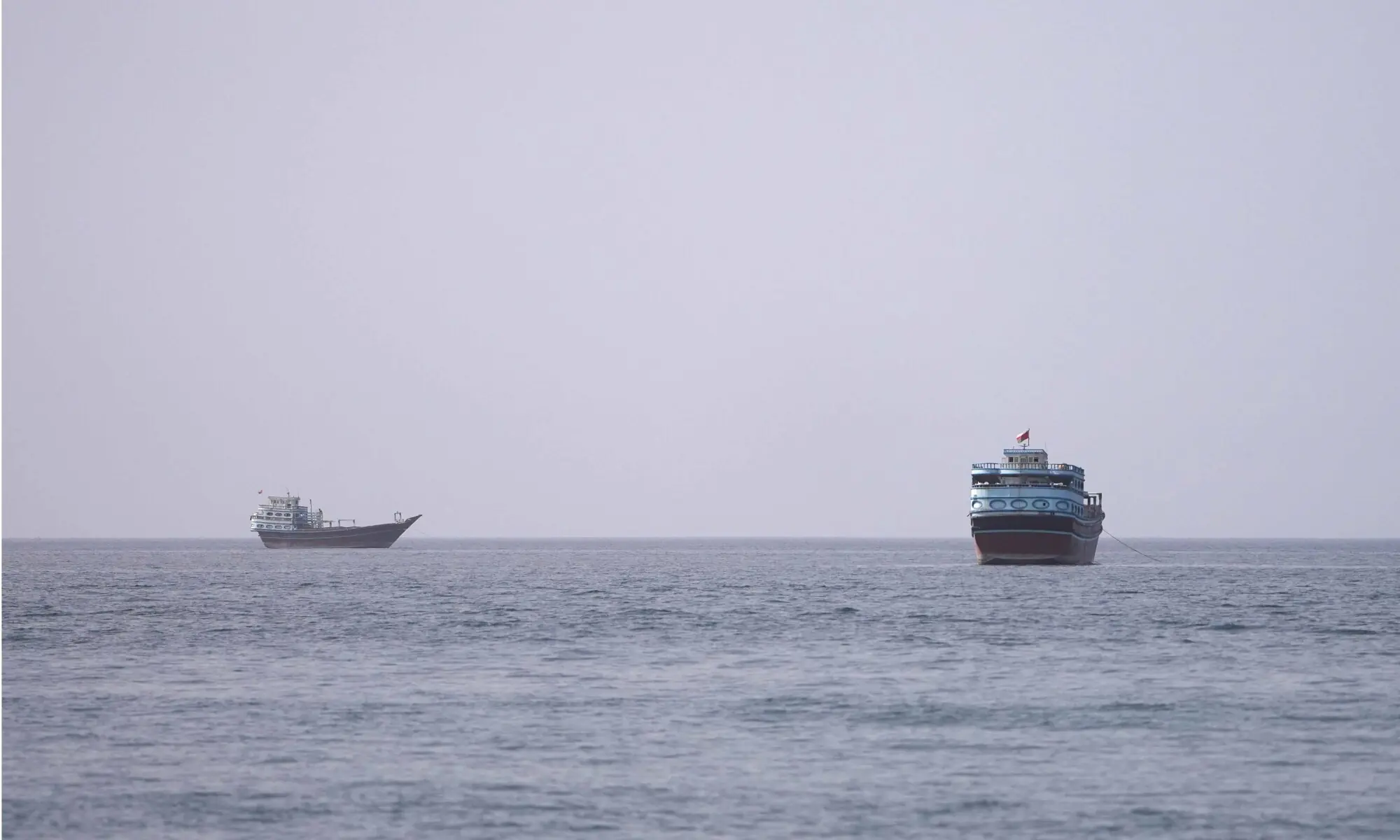


The battle for Hormuz, the growing possibility of greater Iranian influence on the critical passageway, question marks about the reliability and security of crude supplies from the Middle East, and the subsequent quest to divert oil shipments away from the crucial shipping chokepoint are reshaping global energy flows.
Efforts are underway to decouple and desensitise global crude markets to events in the Strait of Hormuz. Several new pipelines projected to carry oil from the Middle East to markets bypassing the strait are on the drawing board.
In a note released a couple of weeks ago, analysts at Goldman Sachs estimated that seven new pipelines are currently under discussion in the oil-rich Middle East. Once operational, possibly by the end of 2028, these pipelines could carry roughly 14 million barrels per day (bpd). This is about 60 per cent of the oil that was being shipped through the strait, Goldman estimated. Before the war, roughly 23m bpd were passing through the Strait of Hormuz.
Efforts to bypass Hormuz are on. The blockage of the Strait has impacted crude exports from Saudi Arabia. With Hormuz becoming a no-go area, Saudi Arabia was forced to use its East-West pipeline to carry crude to Yanbu port on the Red Sea coast to reach its markets.
Analysts at Goldman Sachs estimated that seven new pipelines are being considered that could carry about 60pc of the oil that was being shipped through it
Yet there is a limit to this alternative route. The pipeline’s maximum capacity is 7m bpd, and that has been attained.
Now, of this, some 2m bpd is needed for Saudi domestic refineries in the western region of the Kingdom. That meant, at best, some 5m bpd were available for export. That is considerably less than it was exporting before February 28.
Saudi Arabia is reportedly now considering expanding the capacity of this crude oil pipeline to 9m bpd. Sources told Reuters that the kingdom is in preliminary talks with its neighbours on the project that would enable it to transport more oil, bypassing the Strait of Hormuz.
The UAE, in the meantime, has also fast-tracked the construction of another West-East pipeline that would bypass the Strait of Hormuz. This new pipeline is due for completion in 2027.
The pipeline will double the UAE’s export capabilities, adding to the capacity of the already existing Habshan-Fujairah pipeline, which bypasses the Iranian stranglehold on the Strait. Once completed, the 252-mile pipeline would run parallel to the existing Fujairah pipeline and double the country’s overland capacity to 3.6m barrels a day.
The UAE is also seeking to establish a new port. This new port will further reduce its dependence on the Strait of Hormuz. The Financial Times reported that a Dubai-based supply chain operator was in talks to build a new port and container terminal in the coastal area of Fujairah, where the existing Habshan–Fujairah Pipeline ends.
Iraq’s exports have also been badly hit by the closure. Due to limited pipeline options to bring its oil to global markets, Baghdad has to rely on its southern Basra port on the Persian Gulf. Yet, Basra is within the range of Iranian projectiles. Over the last couple of weeks, Iranian drones have hit a vessel and the Basra port infrastructure.
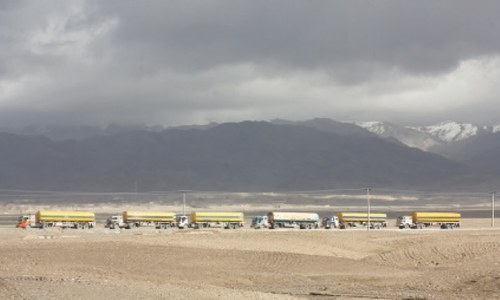
The war has made Iraq’s oil production fall by more than 50pc to about 1.9m bpd in June compared with around 4.2m bpd in February before the US and Israel attacked Iran, according to the Organisation of the Petroleum Exporting Countries data. Since April, Iraq has been transporting crude through Syria by truck to circumvent the closure of the strait.
Iraq needs alternate routes to export its oil. It is working on two pipeline projects. One route would continue through Kirkuk oil fields to Turkey’s Mediterranean port of Ceyhan, and the other envisages rebuilding the old Kirkuk to Baniyas pipeline, transporting crude oil from Kirkuk to the port of Baniyas on Syria’s Mediterranean coast.
Last week, Iraq and Syria signed an agreement to rebuild this old oil pipeline, stretching from Kirkuk in northern Iraq to Syria’s Mediterranean coast with a nameplate capacity of 700,000 bpd. The pipeline has not been in use since it was damaged during the US invasion of Iraq in 2003.
Iraq’s state news agency reported that Chevron would carry out the project. Thomas Barrack, US Ambassador to Turkey, said the oil pipeline agreements would lead to a program “that will make the Strait of Hormuz an afterthought.”
TotalEnergies CEO Patrick Pouyanne said earlier that Syria could become an “important transit country for oil coming from Iraq to the Mediterranean,” especially with the need for “alternative routes” given the closure of the Strait of Hormuz.
A much more ambitious project is already underway in Iraq on a 435-mile-long Basra-Haditha oil pipeline. The pipeline would carry 2.5m bpd. The project was approved in 2024, and construction began in May this year, two months after the start of the US-Iran war.
Upon completion, this pipeline will connect oil fields around Iraq’s southern city of Basra to Jordan’s Red Sea port city of Aqaba and link up with projects through Syria and Türkiye.
Reports say Qatar, a major global LNG player, is considering several alternative routes for its exports, including via Saudi Arabia, Reuters said, quoting three sources.
Kuwait is almost completely dependent on the Strait of Hormuz. They are now evaluating pipelines to bypass the strait. “We are in discussions with our brothers in Saudi Arabia and in the Emirates to look at how to expand the pipeline system that they have to accommodate Kuwaiti barrels,” Kuwait Petroleum Corporation CEO Sheikh Nawaf al-Sabah told the Atlantic Council Global Energy Forum last month.
Interestingly, to reduce its complete dependency on Kharg loading station, Iran itself has built a Hormuz bypass: a 1,000-kilometre pipeline from Goreh at the head of the Gulf to a terminal at Jask on the Gulf of Oman. It is designed for 1m bpd. But in practice, sanctions and the unfinished terminal infrastructure have kept actual throughput at a fraction of design.
The US Energy Information Administration estimated that, in summer 2024, less than 70,000 bpd were flowing through the pipeline. Loadings stopped altogether in September 2024. According to Kpler, only a single tanker — around 2m barrels — has loaded at Jask in the war so far.
In the meantime, a tussle for a greater share of the global oil markets between the traditional suppliers in the Middle East and other stakeholders is also on. Guyana and Brazil are already in the race. Canada, the world’s fourth-largest crude producer, has announced plans to develop the required infrastructure and increase its export capacity. A new 1,259-kilometre pipeline to carry crude from Alberta, the Canadian oil hub, to a proposed supertanker marine terminal in British Columbia has just been announced.
And despite questions about feasibility, another 3,300-km pipeline carrying oil from Alberta, Canada to Sarnia in Ontario has also been announced in the past weeks.
Pipelines are a complex and time-consuming business. It is not going to serve the objective of bypassing the strait tomorrow. And, by the time these pipelines become operational, what the global demand structure will be remains a big if. The International Energy Agency is already hinting at demand destruction, while the lack of a perception of supply security from the Middle East and its impact on the global supply lines is another unknown variable impacting the global energy equation at this moment.
But for now, the very idea of pipelines bypassing the Strait of Hormuz seems very much in vogue.
The writer is an energy analyst and has delivered talks at the Department of Energy in Washington and the International Energy Agency.
X: @rhusainsyed
Published in Dawn, The Business and Finance Weekly, July 27th, 2026