HYDERABAD: The Hari Conference, organised here on Sunday by the Sindh Agricultural General Workers Union, has called for the immediate and full implementation of all rights guaranteed to farmers and peasants under the Sindh Industrial Relations Act (SIRA), 2013.
Delegates at the assembly stressed that a comprehensive, state-wide survey of all agricultural workers must be conducted swiftly, ensuring that their legal status as recognised labourers is formally documented in official government revenue records. The union is a registered entity officially affiliated with the National Trade Union Federation (NTUF).
The high-profile gathering featured addresses from prominent labour figures and social activists, including Comrade Sabhagi Bheel and Comrade Lal Bux Lalan of the Sindh Agricultural General Workers Union; Nasir Mansoor and Comrade Gul Rehman of the NTUF; hari leaders Faiz Kerio and Fatima Leghari; Comrade Sajad Zaheer Solangi representing the Progressive Writers Association; and Comrade Zehra Khan of the Home-Based Women Workers Federation, alongside several other peasant advocates.
Economic distress & feudal exploitation
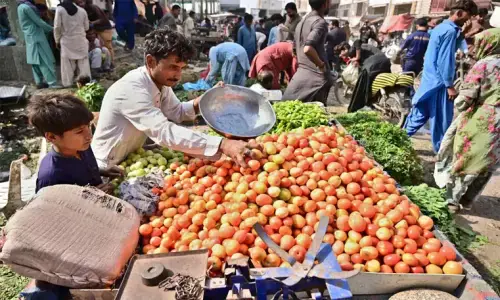
Addressing the conference, speakers painted a stark picture of the agrarian landscape in Sindh, stating that local peasants are currently enduring exceptionally difficult times. A confluence of acute water shortages, plummeting crop prices, soaring fuel costs and ever-increasing prices for essential farm inputs has rendered everyday farming economically unviable.
Speakers noted that although government authorities had previously announced financial relief packages for farmers, genuine haris (tenant peasants) rarely benefited due to the total absence of an effective, streamlined system for registering and recognising agricultural workers. Consequently, these state-funded relief benefits were systematically intercepted and grabbed by influential landlords rather than reaching the haris who till the soil.
Expressing grave concern over the ongoing water crisis gripping Sindh, delegates condemned the inequitable distribution of water from the Indus River, the construction of new canals without the explicit consent of Sindh and the compounding impact of climate-induced changes. They warned that these developments have devastated regional agriculture and endangered the livelihoods of millions of rural peasants. In response, the conference demanded the absolute protection of Sindh’s historical water rights in strict accordance with the 1991 Water Apportionment Accord, calling for a just, sustainable water policy that prioritises vulnerable farming communities above all else.
Turning to environmental disruptions, speakers pointed out that climate change continues to trigger recurrent floods, prolonged droughts, extreme heatwaves, and related natural disasters that routinely destroy farms. Landless haris and female agricultural workers bear the brunt of these catastrophes, receiving little to no financial compensation or state assistance for rehabilitation. The conference urged both federal and provincial governments to immediately establish a comprehensive climate adaptation, disaster relief and financial compensation programme tailored explicitly to smallholders, tenant peasants and women agricultural workers.
HR violations, call for land reform
The assembly highlighted a growing economic divide, observing that while influential landlords and corporate agribusiness interests accumulate substantial wealth from manual labour, peasant families remain trapped in persistent poverty, systemic indebtedness and chronic insecurity. This overwhelming economic distress has pushed numerous peasants and female farm workers into deep despair, amid harrowing reports of suicides across the region. Speakers lamented that despite generations of back-breaking hard work, there has been virtually no improvement in the socioeconomic conditions of the agrarian workforce.
Furthermore, the conference strongly condemned ongoing incidents of human rights abuses, including abductions, forced evictions, violence and systematic intimidation perpetrated against peasants by influential landlords and armed groups.
The union urged the Sindh government to intervene decisively to protect the lives, security and human dignity of haris and women agricultural workers. They insisted that legal authorities prosecute those responsible for acts of physical violence, forced labour and the illegal occupation of peasants’ homes and farmland.
Resolving the deep-rooted agrarian crisis, speakers argued, is impossible without meaningful land reforms. They called for democratic and redistributive agrarian measures aimed at dismantling the concentration of land ownership, granting secure land rights to landless peasants, distributing surplus and state-owned land among genuine haris, and guaranteeing security of tenure for tenant farmers so they may cultivate the land with dignity and without the constant fear of arbitrary eviction. Delegates reminded the government that SIRA 2013 formally granted agricultural workers in Sindh the legal right to organise and form trade unions — a right that must now be fully respected and enforced.
Resolutions
To conclude the event, the conference formally adopted a series of binding resolutions outlining concrete demands for the provincial and federal governments:
Immediate implementation of SIRA 2013 Rights: Full granting of all social protection rights guaranteed under the 2013 Act, including formal registration with Social Security and the Employees’ Old-Age Benefits Institution (EOBI), alongside access to death grants, marriage grants, educational scholarships and wider labour welfare provisions.
Comprehensive agrarian & labour survey: A thorough, state-conducted survey of all haris and female agricultural workers across Sindh to officially record their employment status in provincial revenue records. The survey taskforce must include designated representatives from the labour department, revenue department and active hari trade unions.
Judicial & political representation: The establishment of dedicated district-level hari courts to guarantee rapid, accessible justice for agricultural workers; the reservation of special legislative seats for peasants within representative assemblies; and the official issuance of a dedicated “Hari Card” strictly to genuine agricultural workers rather than wealthy landlords and large landowners.
Water rights & climate resilience: Strict enforcement and protection of Sindh’s historical allocation under the water accord; the immediate withdrawal of all public policies and engineering projects that threaten Sindh’s agricultural viability, water resources, and local environment; and the rollout of a comprehensive climate resilience, disaster relief and financial compensation scheme.
Feudal abolition & land redistribution: Radical agrarian reforms to completely abolish the feudal system; the immediate transfer and distribution of vacant, surplus state-owned land to landless haris; and the rigorous, uncompromising enforcement of the Sindh Tenancy Act.
Law enforcement & recovery operations: Urgent government action and police recovery operations to secure the safe return of Pirya Kumari and all other abducted girls; the granting of permanent home ownership rights to haris who have continuously resided on and cultivated land under the same landlord; legal action against individuals responsible for the harassment, violence and economic exploitation of female farm workers in the fields and the formal, legal classification of agricultural labourers as recognised industrial workers by the state.
Published in Dawn, July 27th, 2026