KP health dept’s request to medical teaching institutions about sharing dengue data falls on deaf ears
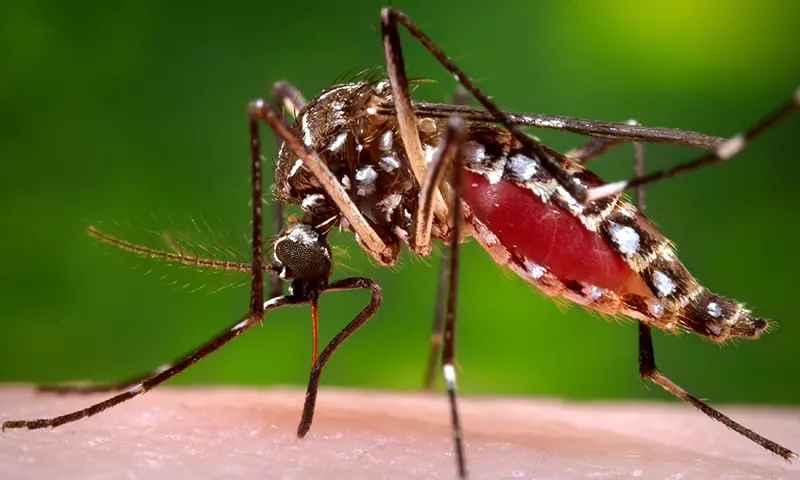

PESHAWAR: Health department has been facing lukewarm response from medical teaching institutions (MTIs) regarding its request for sharing line-list of suspected and confirmed dengue cases so that a comprehensive strategy is put in place in provincial capital, which has seen several outbreaks of the mosquito-borne ailment, according to sources.
They said anti-dengue work was ongoing throughout the provinces, especially in hot spot areas that were identified through detection of larvae or patients. On the basis of detection of larvae and patients, plans were implemented to prevent outbreaks, they added.
Meanwhile, dengue infections in Khyber Pakhtunkhwa reached 219 this week. The number of last week’s dengue cases in the province was 178.
A total of 1,175 suspected patients have been tested for the virus in the province. Peshawar has recorded 114 cases, Kohat 39, Bannu 11, Bajaur eight, Hangu seven and Swabi six while Karak, Mardan and Mohmand registered five cases each.
Officials say record of cases vital for taking preventive measures
According to experts, most dengue patients visit MTIs in Peshawar and health department has been persuading MTIs to share their data with it. In the past, several violent outbreaks had been recorded. In 2017, the vector-borne disease sent thousands of people to hospitals in Peshawar and patients were treated in corridors.
The surveillance staff has destroyed larvae in 11 districts mechanically and chemically. According to the latest report released by Integrated Disease Surveillance and Response System, more than 82,000 awareness sessions about causative agents and preventive measures of dengue were organised so far wherein women from the affected areas also participated.
It said that trained workers were deployed in villages to do away with larvae found in 911 out of total 11 million containers and 136 sites to deny breeding space to mosquitoes, the carriers and transmitters of the virus.
Officials said that Peshawar was reporting the most dengue cases every year, except 2026 when outbreak of the disease in two union councils infected over 1,000 people in Charsadda district. Peshawar required more attention and health department was focusing on it due to its history with regard to dengue, they added.
They said that monsoon rains were likely to leave stagnant water pools and provide breeding space to mosquitoes that could increase dengue cases.
“The people in Peshawar visit Lady Reading Hospital, Khyber Teaching Hospital and Hayatabad Medical Complex for their health-related problems. More than three months ago, meetings were held with directors of MTIs to request them to send data about dengue patients on regular basis but all such requests fell on deaf ears,” said officials.
Prior to implementation of Medical Teaching Institutions Reforms Act in 2015, the teaching hospitals in Peshawar operated under health department directly and the department issued directives to them regarding public health issues that were responded instantly. However, now the teaching hospitals have become MTIs and the department has lost direct control over them as these are run by respective Board of Governors (BoGs).
Officials said that MTIs also received most of the patients in case of outbreaks but they should inform the department about the burden of cases along with the addresses of patients so that preventive measures could be taken to put brakes on spread of the ailment.
They said that private hospitals were also not sharing data with the department despite requests. They said that all district health officers and medical superintendents were asked to send specimens from probable patients to Public Health Reference Lab in Khyber Medical University through courier service.
“The provincial government has started work on Dengue Action Plan 2026 in January but record of cases is extremely important to devise mechanism to deal with the situation,” they said.
Published in Dawn, July 27th, 2026