2026 FIFA World CupBy Omair Alavi: A new champion is crowned
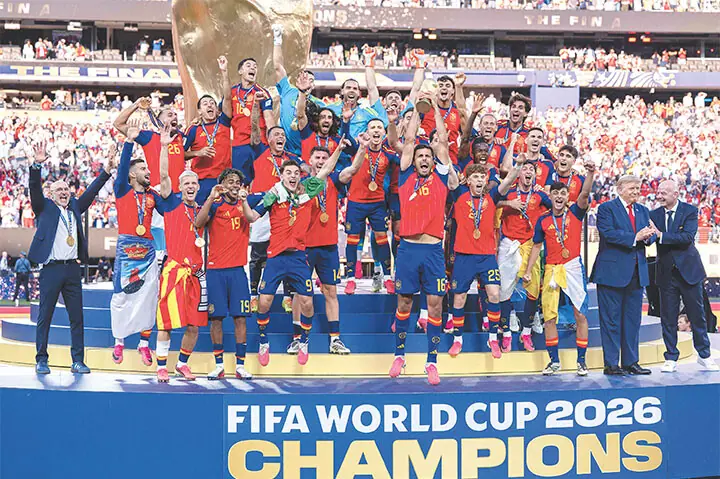
The FIFA World Cup 2026 delivered everything football fans could have hoped for — thrilling matches, unforgettable goals, surprise results and the rise of a new generation of stars. Held across three host nations — the United States, Canada and Mexico — this edition was the largest in the tournament’s history, featuring 48 teams and more than 100 matches for the first time.
After weeks of exciting football, Spain lifted the coveted trophy, proving that teamwork, discipline and fearless attacking football remain the perfect recipe for success. They defeated defending champions Argentina 1-0, but only after extra time, following a goalless 90 minutes.
The grand finale confirmed what many had believed before the tournament — that Spain were among the world’s best teams. Not only did they outclass their opponents, but they also became world champions after an extraordinary unbeaten campaign. It was only the second time in their football history that they had won the trophy, the first being in 2010, when they defeated the Netherlands in the final in South Africa.
Even more impressive was their defensive record. Spain conceded only one goal throughout the tournament, demonstrating remarkable consistency from the opening match to the final. Not only did they keep Argentina at bay, but they also extended their unbeaten run to an incredible 38 matches, cementing their status as one of the most dominant international teams in recent years.
From Spain’s historic triumph to unforgettable performances, emotional goodbyes and the emergence of football’s next generation, the FIFA World Cup 2026 had everything fans could have wished for
Much of Spain’s success centred on teenage sensation Lamine Yamal, whose dazzling performances made him one of the tournament’s biggest stars. Despite his youth, he played with remarkable confidence and maturity, creating chances and troubling defenders throughout the tournament.
England claim third place
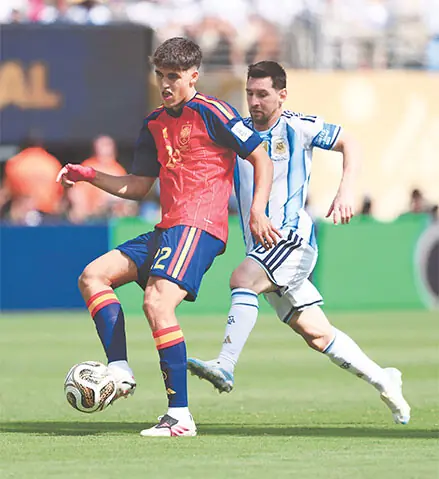
While Spain celebrated the title and Argentina finished as runners-up, England finished third, reaching the podium for the first time since their 1966 World Cup victory. They had reached the semi-finals in 1990 and 2018, but failed to finish in the top three. In 2026, however, they defied the odds to do just that.
Their third-place playoff against former champions France was easily the most exciting match of the tournament, producing 10 goals. Harry Kane’s England finished their campaign on a high by defeating Kylian Mbappe’s France 6-4, thanks mainly to Bukayo Saka’s timely hat-trick. Even though France lost, their skipper Mbappe had the last laugh, going home with not one, but two individual award.
And the awards go to…
Every World Cup creates new heroes, and the 2026 edition was no exception. The tournament honoured the best performers with the prestigious Golden Ball and Golden Boot awards, recognising the best player and the top goalscorer, respectively.
The Golden Ball was awarded to Spain’s Rodri for his brilliant performances throughout the tournament, while Argentina’s Lionel Messi and France’s Kylian Mbappe received the Silver and Bronze Balls, respectively.
The Golden Boot, awarded to the tournament’s top goalscorer, went to Kylian Mbappe, who not only scored 10 goals but also provided four assists to help his team. Lionel Messi, with eight goals, won the Silver Boot, while England’s Jude Bellingham won the Bronze Boot after scoring seven goals and providing one assist.
For his excellent performances, Spanish goalkeeper Unai Simón was named the tournament’s best goalkeeper, winning the Golden Glove, while his teammate Pau Cubarsi won the FIFA Young Player Award. Even though the Netherlands didn’t reach the quarter-finals, their sporting spirit was recognised with the FIFA Fair Play Award.
Fans also witnessed four memorable hat-tricks during the competition. Football stars Lionel Messi, Jonathan David, Ousmane Dembele and Bukayo Saka each scored three goals in a single match, adding to an already spectacular tournament.
Farewell to football legends
For several football icons, this tournament marked the end of the road because, by the time the next World Cup takes place in 2030, they will be in their 40s, which is not considered the ideal age for international football, even if you are Lionel Messi or Cristiano Ronaldo.
Besides these two players, fans also watched Croatia’s Luka Modric, Germany’s Manuel Neuer, Brazil’s Neymar Jr and Mexico’s Guillermo Ochoa make their final appearances on football’s biggest stage.
Their careers have inspired millions, and they leave behind remarkable legacies that will be very difficult for future generations to emulate.
A new generation takes over
While several legends said goodbye, a new generation announced its arrival, led by Spanish teenagers Lamine Yamal and Pau Cubarsi, who showed maturity far beyond their years.
Young stars such as Norway’s Erling Haaland, Brazil’s Vinicius Junior, France’s Ousmane Dembele, England’s Jude Bellingham and Spain’s Mikel Oyarzabal thrilled supporters with their standout performances. Who can forget the Viking celebration that made Erling Haaland even more famous among football fans?
The tournament was not without heartbreak. Football fans around the world mourned the tragic death of South African player Jayden Adams shortly after he represented his country at the World Cup. His passing reminded everyone that life is far more important than sport, and tributes poured in from teammates, opponents and supporters worldwide.
Looking ahead
Even though the World Cup was marred by controversies over refereeing decisions, the introduction of hydration breaks and visa issues for participating teams and their fans, the ceremonies before and during the grand finale drew criticism for all the wrong reasons.
The opening ceremony before the final, in which Hollywood actor Tom Cruise delivered a supposedly motivational speech, was followed by a Super Bowl-style halftime entertainment show. Neither was well received, as both distracted the players and their fans.
In a bid to add a new dimension to the tournament’s biggest match, the organisers roped in Shakira, Madonna, Justin Bieber and Korean boy band BTS, among others. However, their half-hour performance failed to resonate with many fans, who hoped future World Cups would focus more on football and less on lengthy ceremonies and other interruptions.
As one unforgettable World Cup comes to an end, football fans can already begin counting down to the next one. The 2030 FIFA World Cup will be hosted primarily by Spain, Portugal and Morocco, with special centenary matches also held in Uruguay, Argentina and Paraguay to celebrate 100 years since the first FIFA World Cup.
If the 2026 tournament proved anything, it is that football continues to unite people across continents, create lifelong memories and introduce new heroes with each generation. Spain may be the new world champions today, but the race for football’s greatest prize has already begun once again.
Published in Dawn, Young World, July 25th, 2026