0
0

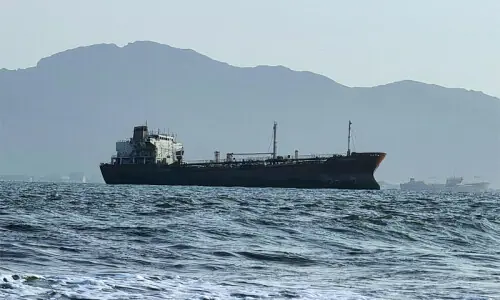
WITH free transit of vessels through the Strait of Hormuz blocked due to the US-Iran conflict, a new chokepoint has emerged in the region: Bab al-Mandeb on the Red Sea. If free flow of marine traffic is also blocked through this passage, the impact on global commerce would be catastrophic, while the hostilities in and around the Gulf would surely spread to the Red Sea and its environs.
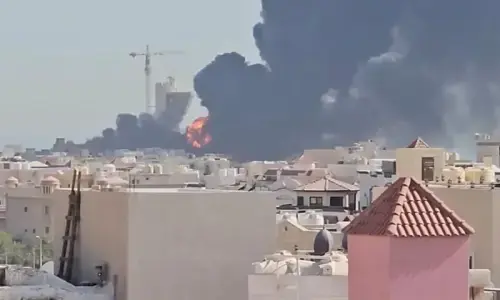
Yemen’s pro-Iran Houthi militia had announced a blockade of Saudi ships after Sanaa airport was bombed on July 13, and an aircraft flying in from Iran was diverted to Hodeida. The Houthis have blockaded the Red Sea before, stopping all traffic to and from Israel after the Gaza massacre started, in solidarity with the Palestinians. But the latest closure may have a much wider global impact, considering the situation in Hormuz. It is keeping this in mind, as well as its own dependence on Bab al-Mandeb for energy supplies, that Pakistan on Wednesday condemned the closure, and warned against any attempts to target its vessels. Prime Minister Shehbaz Sharif also expressed his solidarity with Saudi Arabia during a call with Crown Prince Mohammed bin Salman yesterday.
Considering the dangers of a wider conflict, and the body blow the global economy would receive if Bab al-Mandeb remains closed, the Houthis should reverse their decision. As they are part of Iran’s ‘Axis of Resistance’, Tehran should use its influence with the Yemeni group and advise them to reconsider the blockade. Moreover, since Pakistan has maintained active channels with Iran, Islamabad should suggest to Tehran that closure of the Red Sea route is not a good idea, and will, in fact, further complicate the situation.
If anything, efforts need to be made to revive the Houthi-Saudi ceasefire before the largely frozen Yemen conflict restarts. Already, US President Donald Trump has said that he will hold Iran responsible for Houthi attacks. It would be unwise to give the Americans further excuses to expand their war on Iran.
The current crisis — from the Gulf to the Red Sea — can be traced back to the disastrous US-Israeli attack on Iran. Tel Aviv and Washington severely miscalculated in this instance, though the Israelis seem only too happy to fight Iran to the last American. Yet while these fires may have been lit by outsiders, it is up to the countries of the region to defuse tensions and prevent a devastating conflict in their neighbourhood.
An immediate ceasefire in the Gulf is critical, while efforts need to be made to prevent escalation between the Houthis and Saudi Arabia. In this respect, Pakistan must put its diplomatic efforts in overdrive and, together with other regional powers, attempt to stop the flames of war from consuming the wider Middle East.
Published in Dawn, July 24th, 2026