Planning Minister Ahsan Iqbal reaffirms Pakistan's commitment to sustainable development at UN forum
Federal Minister for Planning, Development and Special Initiatives Ahsan Iqbal on Monday reiterated Pakistan’s commitment to sustainable development, international cooperation and development diplomacy in meetings with senior United Nations (UN) leadership, according to a press release by the Permanent Mission of Pakistan to the UN.
Iqbal and Alexander De Croo, administrator of the UN Development Programme (UNDP), “reviewed the longstanding Pakistan–UNDP partnership and discussed avenues to further strengthen cooperation in support of Pakistan’s national development priorities”, a press release from the country’s permanent mission to the UN said.
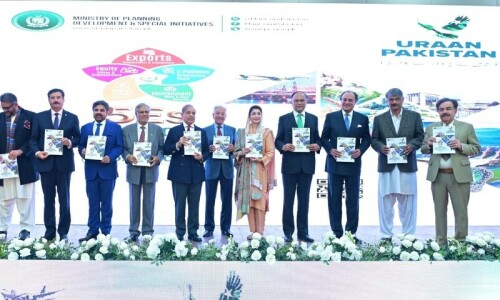
Iqbal said that Pakistan’s development agenda is guided by URAAN Pakistan, an initiative by his ministry that is designed to advance crucial projects and reforms set forth in the 5Es National Economic Transformation Plan.
He also appreciated UNDP’s longstanding support in advancing Pakistan’s sustainable development agenda, strengthening provincial implementation mechanisms and supporting national policy dialogue, the press release said.
The minister further emphasised the need for “enhanced international support to help developing countries address shrinking fiscal space, debt burdens and the growing impacts of climate change.”
Iqbal also acknowledged UNDP’s partnership in Pakistan’s post-flood recovery and construction efforts and called for expanded collaboration in climate resilience, disaster preparedness, poverty reduction and employment generation.
“Both sides reaffirmed their commitment to deepening cooperation at both country and headquarters levels in pursuit of the 2030 Agenda for Sustainable Development.”
Iqbal also discussed Pakistan’s partnership with the UN development system in a meeting with the UN Deputy Secretary-General Amina J. Mohammed.
He also emphasised the importance of preserving strong country-level coordination through the Resident Coordinator system.
Iqbal further stressed that reforms should strengthen the effectiveness of the UN’s development support while remaining responsive to the priorities of programme countries.
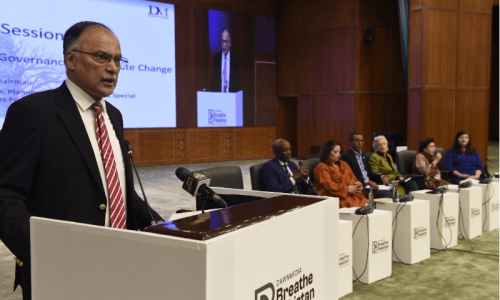
Later, in an address to a forum on sustainable development, Iqbal noted that with only five years remaining until the 2030 deadline, the world faces mounting challenges arising from economic shocks, climate change, geopolitical instability and rising debt burdens.
“He reaffirmed Pakistan’s unwavering commitment to the Sustainable Development Goals through the implementation of URAAN Pakistan, the country’s national economic transformation framework,” according to the press release.
The planning minister also highlighted Pakistan’s climate vulnerability, despite contributing less than one per cent to global greenhouse gas emissions.
He called for greater climate justice, reforms to the international financial architecture, increased access to concessional finance and fulfilment of international climate finance commitments.
Iqbal also stressed that India’s unilateral suspension of the Indus Water Treaty has threatened the livelihoods of 240 million Pakistanis while undermining international treaty obligations.
“He concluded by calling for renewed multilateralism, stronger global solidarity and collective action to accelerate progress towards the SDGs.”
The minister also held bilateral meetings with counterparts from Norway, Egypt and Saudi Arabia to strengthen Pakistan’s international development partnerships.
“The Norwegian minister expressed interest in further expanding bilateral cooperation and conveyed his intention to visit Pakistan.”
Iqbal and his Egyptian counterpart “agreed to establish a joint working group and pursue a Memorandum of Understanding to advance cooperation in development planning, youth empowerment, innovation, entrepreneurship and institutional collaboration.”
Discussions with the Saudi minister focused on advancing the strategic economic partnership between the two countries.