Every winter, Lahore disappears into a thick grey haze that leaves its citizens gasping for breath. Similar conditions are being experienced by residents of other major cities, including Multan, Karachi and Faisalabad.
Many Pakistani cities now regularly compete with one another to top global rankings for the world’s worst air quality. Transport exhaust is one of the biggest contributors. The government knows this. Its under construction New Energy Vehicle (NEV) Policy is an attempt to change course, aiming for 30 per cent clean vehicle penetration by 2030 by encouraging investments in pure electric mobility.
The policymakers explicitly acknowledge that the country can no longer afford petrol-driven vehicles for a very long time if they are to fight deteriorating air quality and its health burden.
But a policy built almost entirely on the supply side — encouraging assembly of electric cars and two- and three-wheelers — misses the harder part of the problem: how to persuade consumers to buy electric vehicles? As policymakers move towards final approval of the framework, they don’t have to look far for a demand-side blueprint.
Manufacturers will build what people are willing to buy, and people are willing to buy what doesn’t feel like a financial sacrifice
Just across the border, New Delhi — a city that shares Lahore’s exact smog crisis every winter — announced an EV policy worth roughly $1.6 billion over four years. Its centrepiece isn’t a manufacturing subsidy. It’s a direct payment of more than $1,000 to anyone scrapping a pre-2020 vehicle for an EV, full exemption from road tax and registration fees on EVs, and cash incentives for two-wheeler buyers that front-load the biggest payout to accelerate early electric mobility adoption.
It’s a policy built around a simple insight: manufacturers will build what people are willing to buy, and people are willing to buy what doesn’t feel like a financial sacrifice.
The underlying principle is straightforward. Governments seeking rapid electrification of mobility cannot rely solely on supply-side measures and incentives. They must also reduce the financial barriers preventing consumers from switching to cleaner vehicles.
Pakistan’s draft NEV policy is heavily weighted towards supply-side measures, and rightly so. It seeks to attract investment, develop domestic manufacturing capacity and create the infrastructure needed for an electric mobility ecosystem. These are essential reforms. However, without meaningful demand-side incentives, the pace of adoption is likely to remain slower than expected, limiting both environmental and economic gains.
The timing is critical.
Pakistan’s cities are experiencing increasingly severe episodes of smog and hazardous air pollution. Economic losses emerge in the form of reduced productivity, increased healthcare burden and disruption to daily life as schools face shutdown for days and air and road traffic is disrupted.
While crop burning and industrial emissions remain major contributors, transport emissions continue to account for a significant share of the deterioration in urban air quality.
Transport also represents one of Pakistan’s largest external vulnerabilities. The sector consumes nearly four-fifths of the country’s petroleum products, making it heavily dependent on imported fuel. Every increase in international oil prices widens the import bill, weakens the balance of payments and places additional pressure on foreign exchange reserves.
Electrifying transport therefore serves multiple policy objectives simultaneously. It reduces oil imports, strengthens energy security, improves urban air quality and supports Pakistan’s climate commitments.
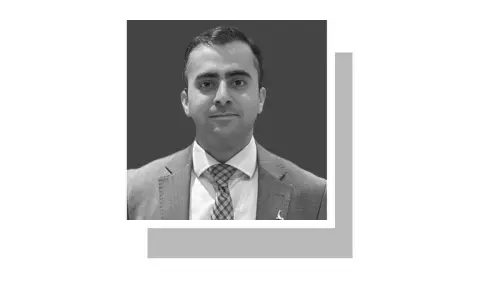
“The environmental arithmetic is compelling,” observes Shehbaz Iqbal, a Lahore-based energy finance expert. “Every litre of petrol burned releases approximately 2.3 kilograms of carbon dioxide, besides emitting pollutants that contribute directly to smog and poor air quality. Replacing internal combustion engine and hybrid vehicles with battery electric vehicles offers a permanent reduction in tailpipe emissions.”
International experience increasingly favours direct support for fully electric vehicles. “India offers lower taxes, purchase subsidies and registration benefits that strongly favour battery electric vehicles. European governments have adopted similar strategies through tax exemptions, purchase grants and other financial incentives. China, now accounting for well over half of global electric vehicle sales, has combined industrial policy with sustained consumer support over many years,” highlights Mr Iqbal.
The results are visible. Global electric vehicle sales exceeded 20 million units in 2025, with China accounting for nearly 13m vehicles. Europe’s EV market grew roughly a third that same year, driven not by purchase subsidies, tax breaks, and perks like free parking that make the electric choice the obvious one for a household shopping for its next car. While Europe recorded robust double-digit growth, emerging markets outside China expanded by almost 80pc.
Pakistan’s transition is still at an early stage, but the same economic logic applies. Charging companies will invest only when enough electric vehicles are on the road. Battery manufacturers require predictable market growth before committing capital.
Financial institutions develop specialised lending products only when demand reaches commercial scale. Consumers, meanwhile, need confidence that charging facilities, servicing and resale markets will continue to expand.
“Demand creates the ecosystem,” Mr Iqbal notes. “That is why public incentives matter during the initial phase of market development. Purchase rebates, registration fee waivers, reduced road taxes, concessional financing and vehicle scrappage schemes can accelerate adoption until economies of scale begin lowering costs naturally.”
He is of the view that such incentives should not be viewed merely as subsidies. “They represent investments that generate returns through lower fuel imports, improved public health, cleaner cities and greater private investment in new industries.”
None of this means copying Delhi’s numbers wholesale; Pakistan’s fiscal space, vehicle fleet, and income levels are different. But the structure is worth adopting. A scrappage incentiveb for older, high-polluting vehicles trading up to full EVs; tax and registration waivers that make the electric option cheaper at the point of sale; and front-loaded cash incentives for e-bikes and e-rickshaws, the vehicle class where Pakistan’s neighbours have already proven mass adoption is possible.
Pakistan’s NEV policy is an opportunity to reshape the country’s transport future. But supply-side reforms alone are unlikely to deliver the pace of change needed to confront worsening smog, rising oil dependence and mounting climate risks. Provincial governments can support the early transition to public transport by incentivising EV taxis and three-wheelers, and by helping a growing number of young men and women engaged in delivery services purchase electric bikes.
“If the objective is cleaner air, lower fuel imports and a competitive electric mobility ecosystem, public policy must make clean vehicles not only available, but also affordable,” stresses Mr Iqbal. “Delhi’s latest initiative demonstrates that demand-side incentives play a decisive role in accelerating that transition.”
Pakistan would do well to incorporate the same lessons before its own policy is finalised.
Published in Dawn, The Business and Finance Weekly, July 6th, 2026