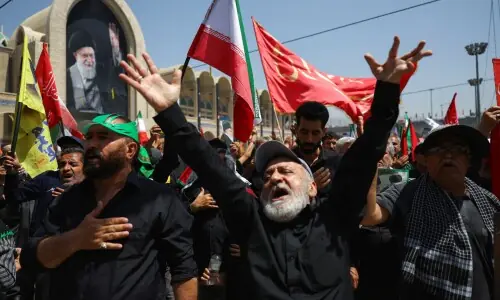
THE funeral ceremonies for Iran’s assassinated supreme leader Ayatollah Ali Khamenei and his family members, which began in Tehran on Friday, are evidence that the joint US-Israeli endeavour to break the Islamic Republic has failed. If anything, their aggression has rallied Iranians, who appear prepared to defend their country from hostile external forces.
The ayatollah’s funeral has attracted dignitaries from around the world; clearly, the attempt to isolate Iran has also failed. Millions of ordinary Iranians are expected to pay their respects to the late leader as the ceremonies continue over the next few days. Observers are of the view that the ceremonies could attract more mourners than those that participated in the last rites of Ayatollah Ruhollah Khomeini, founder of revolutionary Iran.
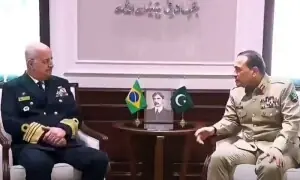
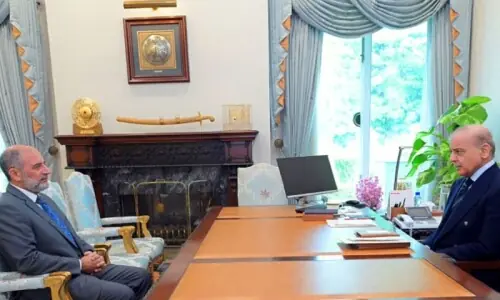
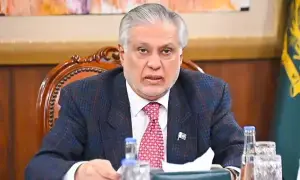
Pakistan had sent a high-powered delegation, led by the prime minister and the chief of defence forces, indicating the importance Islamabad gives to ties with Tehran. Dignitaries from Russia, China, Saudi Arabia and nations around the world also paid their last respects.
After Tehran, funeral ceremonies will be held in Qom, Iran’s spiritual heart, as well as the Iraqi holy cities of Najaf and Karbala. This indicates the transnational importance of the late Khamenei. Apart from being Iran’s supreme leader, he was also a marja-i-taqleed — a religious guide for millions across the world. He will be laid to rest in Mashhad, his birthplace, at the tomb of Imam Raza.
The Trump administration, and its allies in Israel, thought that by wiping out the top echelon of Iran’s religious, military and political leadership they could make the Islamic Republic collapse. Instead, the war has unified a fractured nation and exposed, once again, the follies of external regime change experiments.
Iran has faced, and continues to face, many internal problems. But these issues are best left to the Iranians themselves to deal with. The war has shown that foreign ‘saviours’ are not welcome; instead of greeting the attackers with flowers, the people have staunchly defended their homeland, while their participation in the late ayatollah’s funeral shows that despite deep internal political rifts, millions within the country had a strong bond with their leadership that transcended all divisions.
Iran has shown that despite the assassinations of key state functionaries, its internal system is strong enough to quickly fill the positions, and not leave a power vacuum. New Supreme Leader Mojtaba Khamenei has not been seen publicly since the start of the war, yet he appears to be in control.
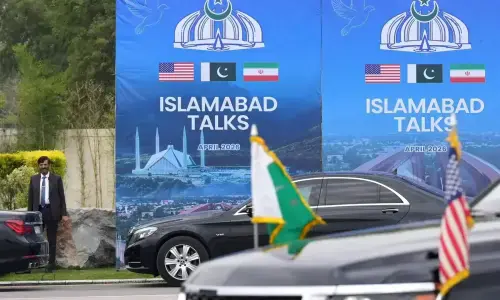
The fate of the MoU with the US is still up in the air. However, instead of issuing fresh threats to Iran, the US would be advised to keep pursuing the diplomatic track, and abandon the goal of destroying the Islamic Republic.
Published in Dawn, July 5th, 2026