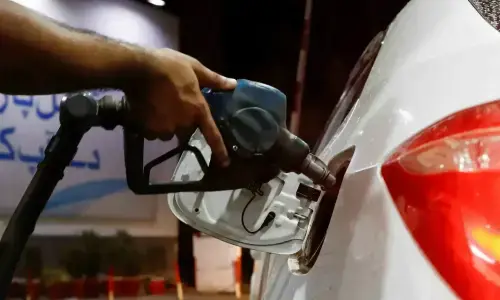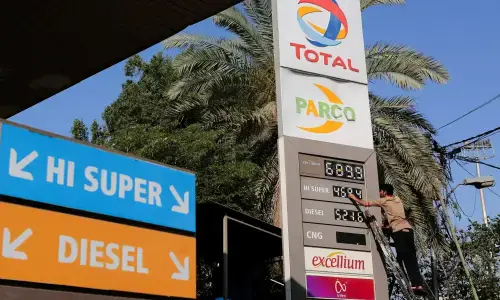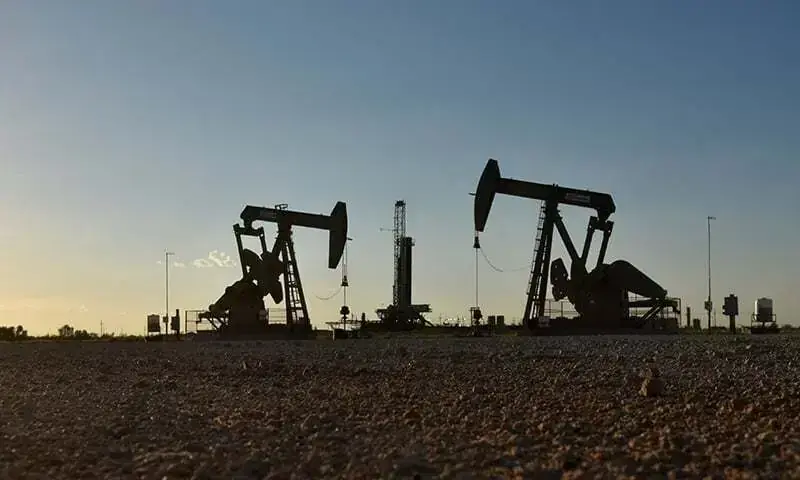
HYDERABAD: High petroleum prices were not only increasing production costs but also disrupting the industrial supply chain, warned a trade and industry leader.
In a statement on Saturday, Adeel Siddiqui, a member of the executive committee of the Federation of Pakistan Chambers of Commerce and Industry (FPCCI) from Hyderabad, expressed concern over the government’s decision to increase the Petroleum Development Levy (PDL) at a time when global crude oil prices have plummeted to a four-month low.
He noted that world oil prices had fallen significantly from their post-war peak but consumers and industries had seen no tangible relief. He said the government had doubled the climate support levy on petrol and high-speed diesel from Rs2.50 to Rs5 per litre while maintaining a high PDL under the IMF programme.
He said consumers and industries should benefit from falling global crude oil prices but, unfortunately, the government was using them as a tool to increase taxes under the guise of climate support while the industrial sector bore the brunt. He said the cascading effect of petroleum levies had dealt a severe blow to Pakistan’s industrial competitiveness and export performance.
FPCCI member warns high costs hit exports
Citing the Pakistan Bureau of Statistics’ (PBS) June trade data, he pointed out that exports declined to $2.24bn, down 16.7pc from May and 9.6pc from June 2025. He said imports surged to $6.77bn, up 24.1pc month-on-month and 26.3pc year-on-year.
He said the trade deficit ballooned to $4.53bn, a staggering increase of 63.8pc over May and 57.1pc over June 2025.
He cautioned that the annual trade deficit for FY26 had reached $39.46bn, up 22pc from FY25, with exports declining 6pc to $30.13bn while imports rose 8.1pc to $69.59bn.
He said the figures reflected the growing challenges facing the productive sectors, adding that high financing costs, expensive energy, heavy taxation and an uncompetitive business environment continued to weaken export competitiveness.
Published in Dawn, July 5th, 2026