PESHAWAR: Lack of awareness about organ donations has been forcing patients to rely on lifelong dialysis as only one per cent of people with both damaged kidneys receive renal transplants, according to health experts.
“Dialysis is a temporary and time-consuming solution. It needs travelling to hospitals to undergo long sessions while renal transplants ensure better quality of life, freedom from machines and is a long-term solution,” Dr Samiur Rahman, renal transplant surgeon at Institute of Kidney Diseases (IKD) of Hayatabad Medical Complex, told Dawn.
He said that hundreds of kidney patients lost lives while waiting for transplants, mostly because there was no culture of organ donations in Pakistan. He said that effective deceased donor programme was the only way forward to give a new lease of life to people from lifelong dialysis.
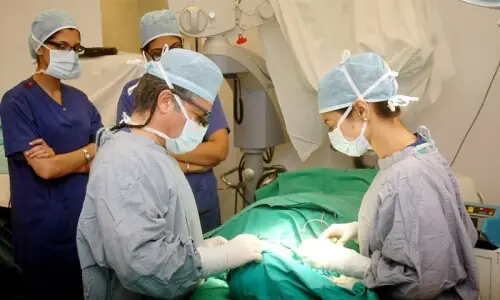
Dr Sami, head of IKD transplant unit, said that the institute was conducting two transplants every day and could enhance cases provided people donated kidneys. According to him kidneys, lung, liver, heart and other organs of deceased person can save lives of terminally ill people. “We need to scale up public awareness about this noble cause,” he added.
Health experts term dialysis temporary and time consuming solution
A health department report said that 966,466 dialysis sessions had taken place since 2016 under Sehat Card Plus (SCP) initiative. It said that 28,657 patients with damaged kidneys required dialysis on monthly, fortnightly and even weekly basis to stay alive.
It said that of those patients, 300 were in age group of one to10 years, 1,291 in 11 to 20 years, 1,365 in 20 to 30 years, 3,682 in 30 to 40 years, 4,597 in 40 to 50 years, 6176 in 50 to 60 years, 6,114 in 60 to 70 years and 4,132 in 70 and above.
“A total of Rs5.104 billion has been spent on their dialysis,” the report said. Patients had to go to district headquarters hospitals or medical teaching institutions in Peshawar, Mardan, Swabi, Charsadda, Swat, Nowshera, Abbottabad and Mansehra for dialysis, it added.
Dr Sami said that if a patient was medically fit and a suitable donor was available, then kidney transplantation was generally the preferred long-term treatment while dialysis was usually a supportive or bridging therapy. He called for promotion of organ donations.
Medical Transplantation Regulatory Authority (MTRA) was established by provincial government in 2017 to cope with illegal trade of organ transplants. So far, more than 900 transplants have been carried out in the province. All the donors were members, including 410 women.
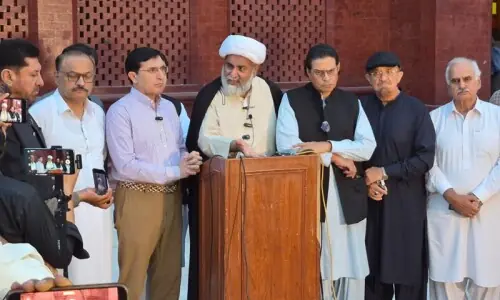
MTRA has been scaling up awareness about deceased organ donor and has enlisted support of religious scholars to ensure that people requiring transplants get kidneys.
Asif Masood, the deputy administrator of MTRA, said that scores of people were awaiting renal and other organ transplants but the number of donors was less and couldn’t meet the demand, therefore, deceased organ donation programme was launched.
“We have more than 100 potential donors, who have been registered through our online portal. However, random verification has shown that some registrations require further validation,” he said.
Transplant surgeons said that under the deceased donor programme organs of the people with dead brain could save life of those with damaged organ. “There is lack of organ donation awareness. We need to counsel families to allow the transplantation of kidneys from their deceased members into patients direly needing them to stay alive,” they said.
In June 2025, doctors for the first time in Khyber Pakhtunkhwa, retrieved organs from a 14-year-old boy, Jawad Khan, who was declared brain dead, before transplanting them to five deserving patients. Jawad’s uncle Farhad Khan was invited to a seminar “deceased donor transplant” at Pakistan Kidney and Liver Institute and Research Centre Lahore where he shared his thoughts with participants.
He said that they had also established Jawad Khan Shaheed Organ Donor Foundation to promote deceased organ donation.
Published in Dawn, June 28th, 2026