What challenges lie ahead for the US-Israel-Lebanon agreement?
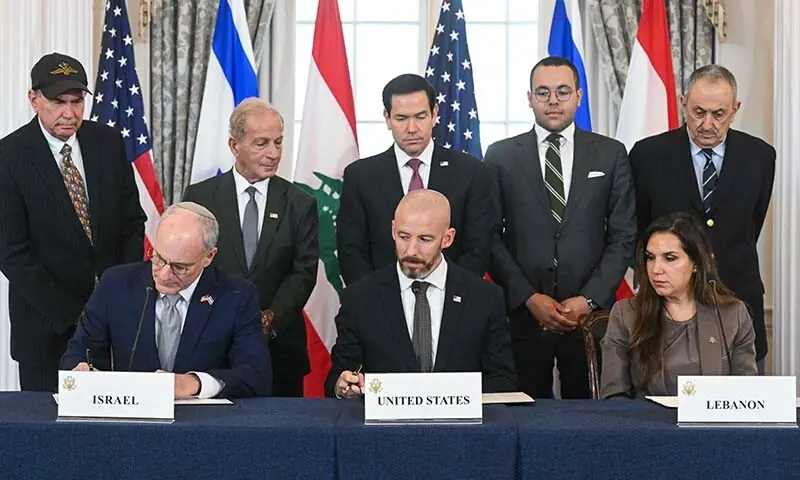

Lebanon and Israel, under the United States’ sponsorship, signed an agreement on Friday, hoping to end hostilities between them, but experts say it does not guarantee Israeli withdrawal from Lebanon, and its implementation depends on Hezbollah and Iran.
Lebanon took the historic step of negotiating directly with Israel despite them having no diplomatic relations, as a reaction to Hezbollah drawing the country into the Middle East war on March 2.
But with Israel saying it will not leave occupied Lebanese territory unless the militant group is disarmed, what traps and challenges lie ahead for the agreement?
Will Israel withdraw?
Although the framework agreement officially mentions Israeli “redeployment” from Lebanon, where its troops occupy swathes of the south, Israeli Prime Minister Benjamin Netanyahu immediately set the tone on Friday, saying his soldiers will remain in the self-declared “security zone” stretching 10 kilometres from the border, “as long as Hezbollah has not disarmed”.
Imad Salamey, head of the Political and International Studies Department at the Lebanese American University, told AFP that one of the agreement’s shortcomings was that it made “no guarantee that Israel will fully withdraw from occupied areas or significantly restrict its military operations in southern Lebanon”.
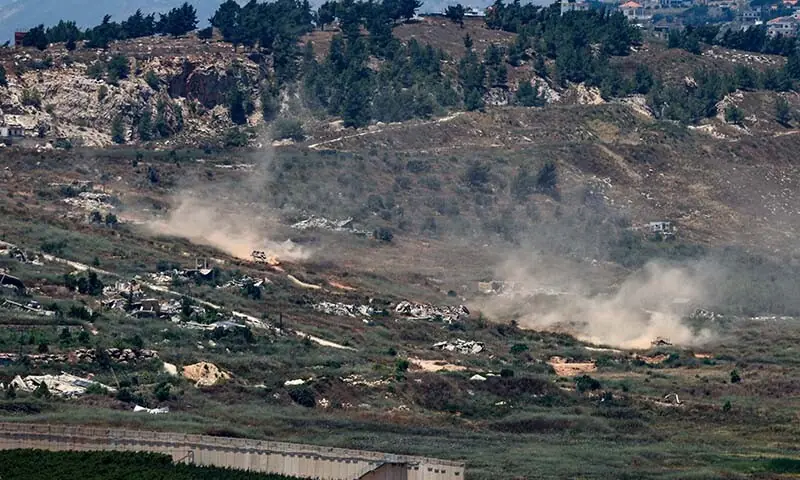
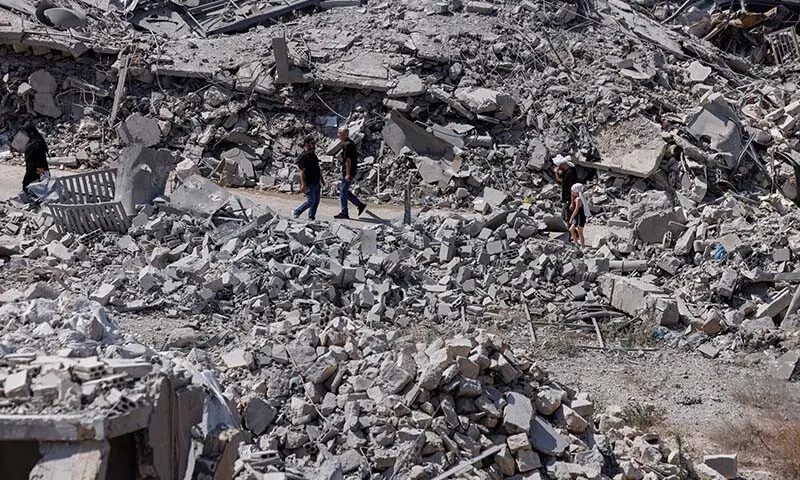
“Without firm Israeli commitments, many residents of the south may continue to face insecurity, delayed reconstruction,” he said.
Netanyahu added on Friday that displaced Lebanese civilians will not be allowed to return home to occupied areas.
The agreement merely mentions “pilot zones”, where the Lebanese military will take control after an Israeli “redeployment”. An initial two zones have been agreed to by the two sides, and future pilot zones are supposed to be determined by mutual consent.
However, the Lebanese army would only assume full security responsibility for these zones upon external “confirmation” that non-state armed groups, most notably Hezbollah, are disarmed there.
Where does Hezbollah stand?
From the moment Lebanese authorities announced direct talks with Israel in April, Hezbollah branded the move a “sin”.
The group’s leader, Naim Qassem, on Saturday called the framework agreement a “grave blunder” that is “legitimising” Israeli occupation, urging the government to withdraw from it.
Hezbollah lawmaker Hassan Fadlallah said that the government will not be able to implement it “unless they go, with American support, to civil war” inside Lebanon.
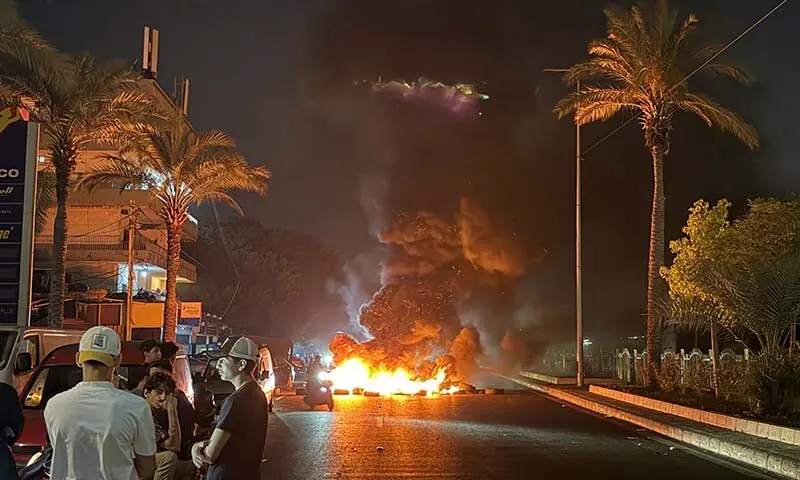
Supporters of the group took to the streets of Beirut on Friday night to protest the framework.
Lebanese Parliament Speaker and Hezbollah ally Nabih Berri warned on Saturday against internal “strife”.
In the capital’s Hamra street, Ahmad Shamas, a 48-year-old taxi driver, told AFP the agreement was “an agreement of humiliation and shame”.
“Never in the history of the Lebanese Republic has anyone made an agreement like this one,” he said.
Husam al-Beiruti, 43, was “neutral”.
“What is the other solution? Is there any solution? Give us a solution we can follow,” he asked.
Salamey said that while Hezbollah’s rejection of the agreement was expected, “the real question is whether opposition remains political or evolves into direct confrontation with the Lebanese army, particularly if the state receives expanded military and financial support from the United States and its partners”.
In the agreement, Lebanon requested international and Arab support to achieve “the complete and verified disarmament of all non-state armed groups,” hinting at Hezbollah.
What about Iran?
According to experts, the implementation of the agreement will depend in large part on Iran.
Iran has used Lebanon as a key bargaining chip in its negotiations with the US, sometimes closing the Strait of Hormuz and threatening to walk away from talks over continued Israeli attacks on the country.
Heiko Wimmen, researcher at the International Crisis Group, told AFP that while the government may be able to “take control of the process” after the latest agreement, “Iranian influence in Lebanon is still alive and kicking”.
According to Salamey, the implementation “will depend primarily on Iran’s strategic calculations”.
“Tehran must decide whether the benefits of continued engagement with Washington and sanctions relief outweigh the costs of preserving its military leverage in Lebanon, which has become increasingly expensive”.